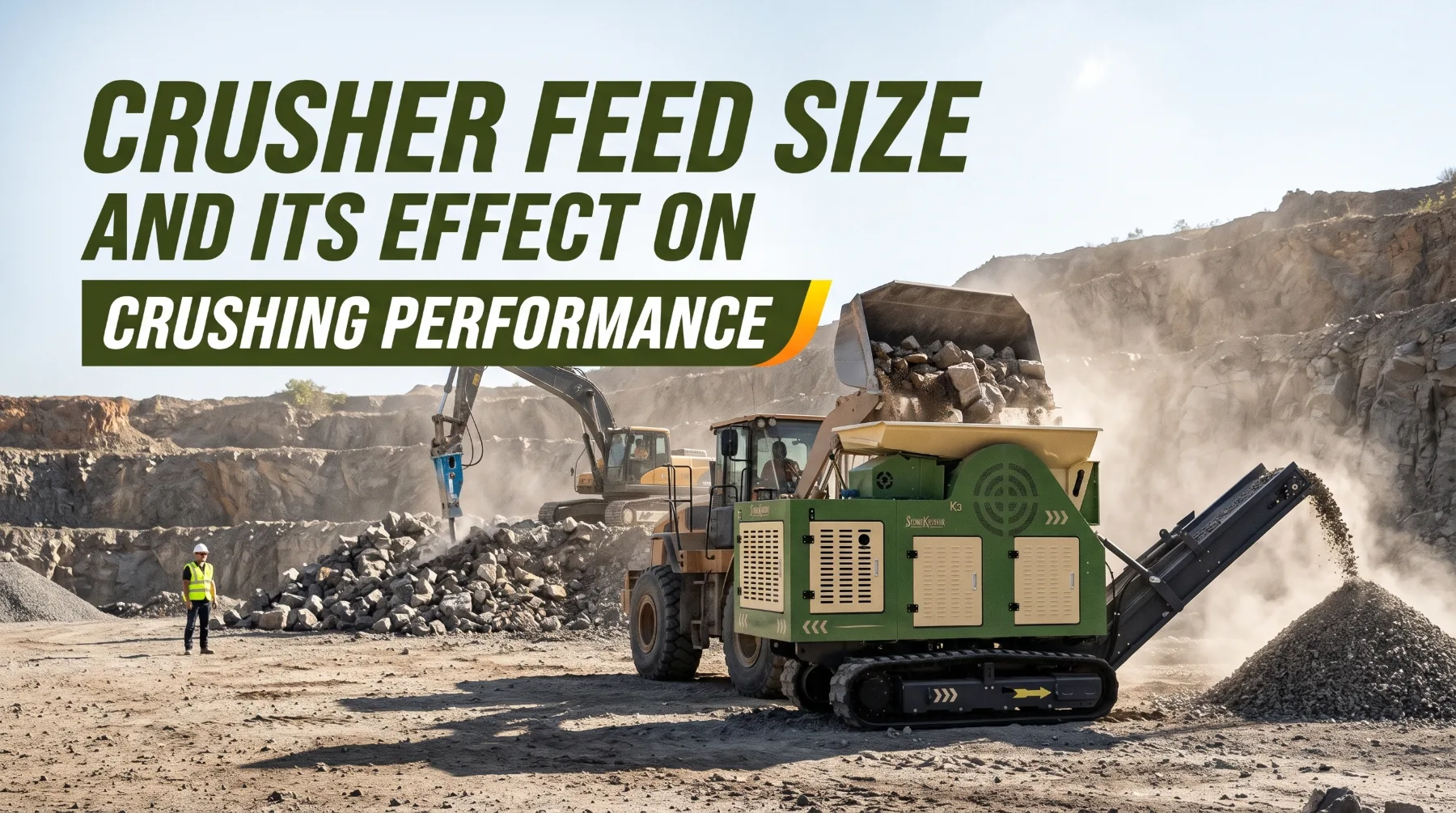
A crusher can have a powerful engine, a well-designed chamber, and an experienced operator, and still fall short of its production target. Very often the cause is the material going in rather than the machine. An oversized slab of reinforced concrete bridges across the feed opening. A load of flat, slabby rock slides through without breaking cleanly. A loader operator dumps three buckets at once, and the chamber chokes before it clears. Each of these problems starts with feed, and each one costs time, output, and money.
Crusher performance depends on more than engine power or chamber design. The size, shape, hardness, and consistency of incoming material all affect how efficiently a crusher reduces rock, concrete, asphalt, and other suitable feedstock. Feed that matches the machine's design moves through the chamber predictably and produces consistent output. Feed that doesn't match it causes blockages, uneven product, and faster wear on the components that keep the plant running.
Feed management is also a safety issue. Blockages and bridging are among the most common reasons workers approach a crusher outside normal operation, and clearing them carries serious hazards if the machine and its stored energy aren't fully controlled. Good feed preparation reduces how often those situations arise.
Understanding Crusher Feed Size
Feed size refers to the dimensions of the material entering the stone crusher. In practice, the figure that matters most is the largest piece in the feed, because that piece decides whether material can enter the chamber and break as designed. A load that is mostly small material can still cause trouble if it contains a few oversized pieces.
The maximum permitted feed size is set by the crusher's feed opening, chamber design, and operating specifications. Jaw crushers, cone crushers, and impact crushers each accept material differently, so their limits differ as well. Many manufacturers specify a maximum feed size that is noticeably smaller than the physical opening itself. That margin allows material to enter the chamber and be gripped and broken, rather than simply wedging across the top.
Material that is too large may bridge across the opening, where two or more pieces lock together and stop flow. It can also become lodged in the crushing chamber, where it cannot be nipped or broken effectively. Either situation interrupts production and may require the crusher to be stopped and the blockage cleared.
Operators should check the manufacturer's feed-size limits for the specific machine and configuration, then prepare incoming material to meet them. Visual estimates from a loader cab or excavator seat are unreliable, especially with irregular demolition material. Measuring representative pieces, setting clear sizing rules for the crew, and using scalping or pre-screening where available give far more consistent results.
Key takeaway: Feed size is defined by the largest pieces entering the crusher, so confirm the manufacturer's maximum feed-size limit for your machine and prepare material to meet it rather than relying on visual estimates.
Wear, Maintenance, and Production Costs
Incorrect feed size and inconsistent material quietly raise operating costs. They increase component wear, cause more frequent stoppages, and push production below target. A structured maintenance and monitoring program helps catch problems early and keeps the crusher producing reliably. Build your routine around these five practices.
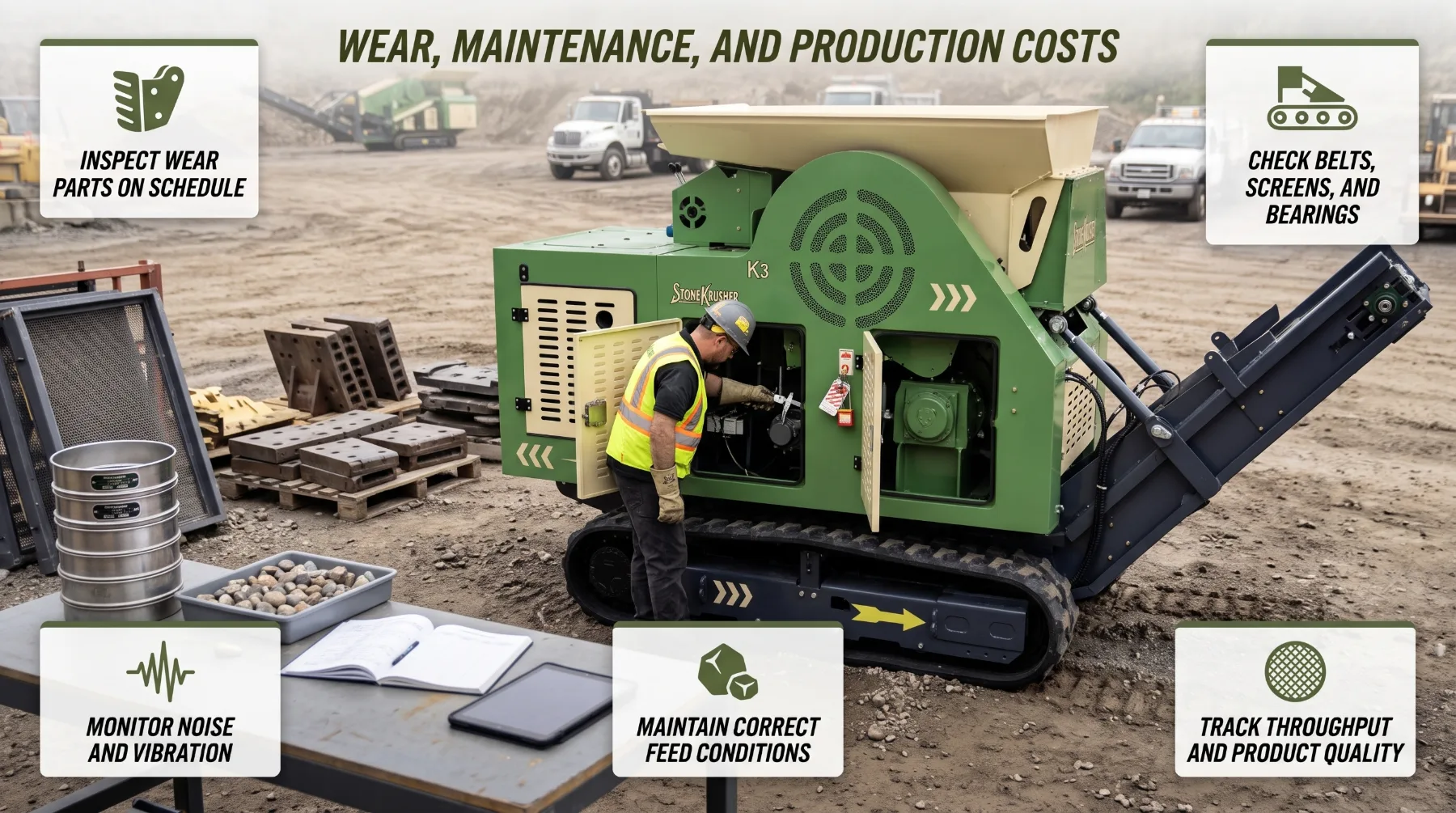
- Wear Part Inspection: Check jaw plates, liners, blow bars, and other wear parts on schedule, and replace them before wear affects product size or machine safety.
- Belts, Screens, and Bearings: Inspect conveyor belts, screen media, and bearings for damage, buildup, unusual heat, or wear according to the manufacturer's schedule.
- Noise and Vibration Monitoring: Watch for changes in sound or vibration, which may indicate loose components, bearing problems, or uncrushable material in the chamber.
- Throughput and Product Quality Checks: Track production rates and product gradation so declines can be traced to feed conditions, settings, or worn parts.
- Correct Feed Conditions: Keep feed within size limits, remove contaminants, and maintain a steady rate to reduce stress and slow component wear.
Key takeaway: Regular inspection of wear parts, belts, screens, and bearings, along with monitoring noise, vibration, throughput, and product quality while maintaining correct feed conditions, helps control wear, downtime, and production costs.
Feed Size and Product Gradation
Product gradation describes the range of particle sizes in the finished material. For many projects, gradation is the specification that matters most, whether the product is base course aggregate, drainage stone, or recycled concrete fill. Feed size plays a role in reaching that specification, but it is only one part of the picture.
The relationship between feed size and final product size depends on the crusher type, chamber design, adjustment settings, and material characteristics. On jaw and cone crushers, the closed side setting largely controls the top size of the product. On impact crushers, rotor speed, apron settings, and screen configuration all influence the result. Each crusher also has a practical reduction ratio, which describes how much it can reduce material in a single pass.
Smaller, more consistent feed may pass through the crushing process more predictably, but it does not guarantee a particular output size. Feed that is too fine for the chamber can even reduce crushing efficiency in some designs. When the required reduction exceeds what one crusher can achieve, a multi-stage setup with primary and secondary crushing is often the better approach.
Set up the machine according to the manufacturer's instructions and check the finished material regularly. Settings can drift as wear parts wear down, so a product that met specification at the start of the week may not meet it by the end. When exact specifications matter, verify gradation through suitable sampling and screening rather than visual inspection.
Key takeaway: Feed size influences gradation, but crusher type, settings, and material characteristics also shape the final product, so check output regularly and verify gradation through proper sampling when specifications matter.
How Oversized Material Affects Performance
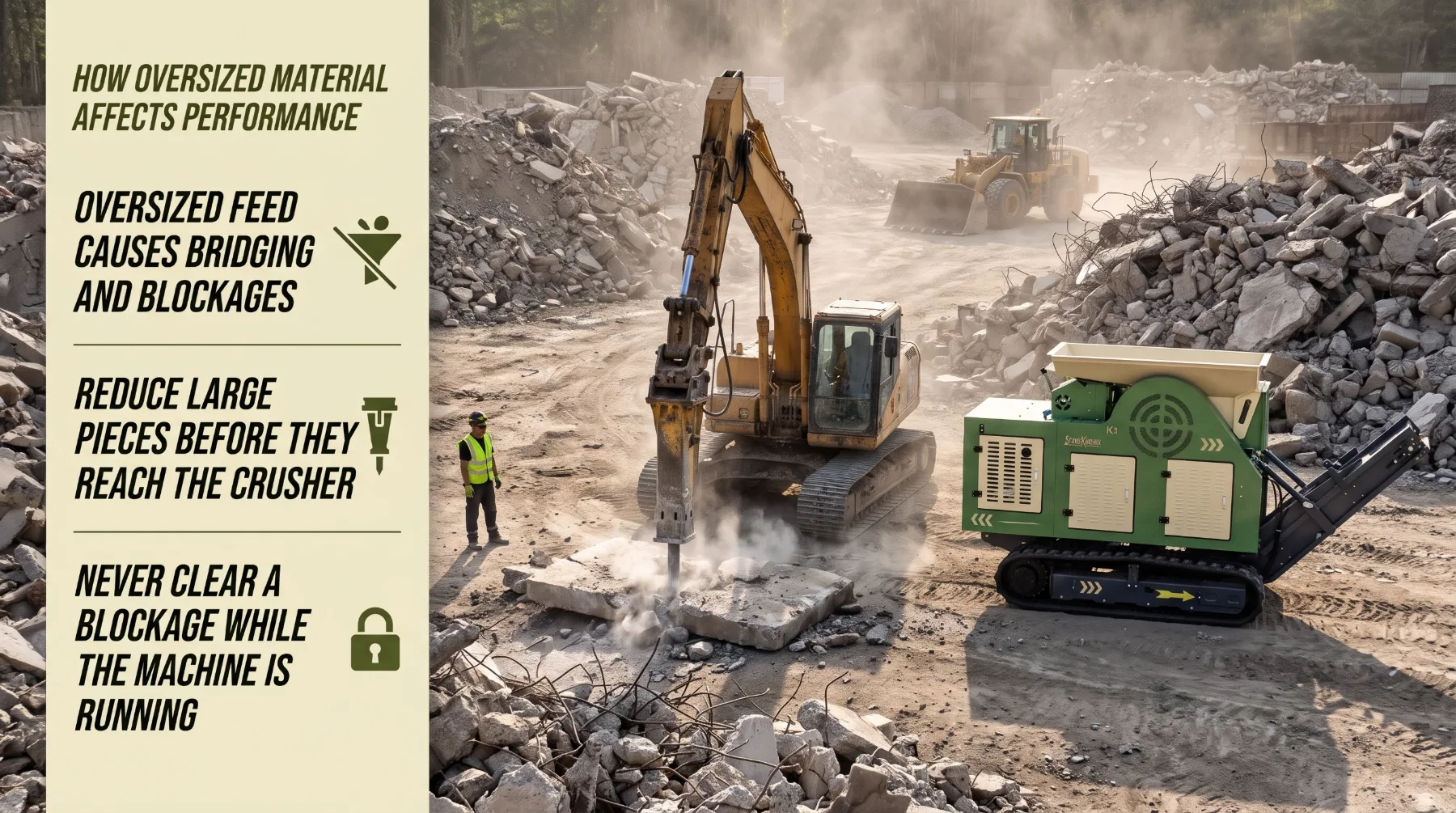
Oversized feed is one of the most common causes of lost production. Large pieces restrict material entry, slow the flow of smaller material behind them, and can stop the crushing process entirely. Even when oversized pieces eventually break, the chamber often spends more time working on them than it would on correctly sized feed, which lowers overall throughput.
Blockages are the most visible consequence. A single slab can bridge the feed opening, or a large block can sit in the chamber without being drawn down. Each blockage means stopped production, idle loaders and trucks, and a crew waiting for the machine to restart.
Oversized material can also place excessive stress on components if the machine is not designed to handle it. Jaw plates, liners, blow bars, bearings, and drive components all experience higher loads when the crusher works on material beyond its design limits. That added stress can shorten component life and, in some cases, contribute to damage that requires unplanned repairs.
When material exceeds the permitted size, reduce it before it reaches the crusher using an appropriate, approved method. Common approaches include secondary breaking with a hydraulic breaker on an excavator, drop-ball methods where permitted, or setting oversized pieces aside for separate handling. Never attempt to clear a blockage while the machine is running or while stored energy remains uncontrolled. Follow the manufacturer's procedures and your site's lockout and isolation requirements, and use only the clearing methods and equipment the manufacturer approves.
Key takeaway: Oversized feed causes bridging, blockages, lost throughput, and excess component stress, so reduce large pieces before crushing and never clear a blockage while the machine is running or stored energy is uncontrolled.
Material Hardness and Shape
Two loads with the same maximum dimension can behave very differently in the same crusher. Hardness, abrasiveness, shape, and contamination all affect how much energy crushing requires, how quickly components wear, and how evenly material moves through the chamber.
Hard rock such as granite or basalt typically requires more energy to break and causes greater wear than softer material like limestone. Highly abrasive material wears liners, jaw plates, and blow bars faster, even when it is not especially hard. Matching the crusher type and wear-part selection to the material helps control both energy use and replacement costs.
Shape matters as well. Flat, elongated, or slabby pieces can feed differently from more cubical fragments. They may slide through the chamber without being properly nipped, bridge more easily, or produce a less consistent product shape. Demolition material often arrives in irregular slabs and chunks, which makes size and shape control especially important on recycling projects.
Understanding the material source helps operators plan feed preparation and adjust the workflow. Contaminants such as rebar, wire mesh, wood, plastic, and other unsuitable debris should be managed according to the crusher's operating requirements. Many recycling setups use magnetic separators to remove steel, but large or embedded metal may still need to be cut or removed before feeding. Uncrushable material that enters the chamber can damage components and create unsafe conditions.
Key takeaway: Hardness, abrasiveness, shape, and contamination change how material behaves during crushing, so understand your material source, select suitable wear parts, and remove unsuitable debris before it reaches the chamber.
Maintaining a Consistent Feed Rate
A crusher performs best when material arrives at a steady, controlled rate. Consistent feed keeps the chamber working evenly, stabilizes power demand, and produces more uniform output. Uneven feed, by contrast, causes the crusher to swing between overloaded and empty, which reduces efficiency and increases the chance of interruptions.
Feeding too quickly can cause material buildup in the hopper or chamber. The crusher may stall, trip overload protection, or spill material around the feed area. Feeding too slowly leaves the chamber underused and lowers production. On some crusher types, an empty or lightly filled chamber can also produce a less consistent product and uneven wear patterns.
Operators should follow the machine's rated capacity and recommended feeding method. Many crushers use a vibrating feeder or grizzly that regulates flow into the chamber, and some include automatic feed control that adjusts based on chamber level or engine load. Loader and excavator operators play a large role too. Placing material into the hopper in measured amounts, rather than dumping oversized loads all at once, helps the feeder do its job.
Where screening or pre-sorting is available, separating fines, unsuitable material, and excessively large pieces before crushing helps maintain a more consistent flow. Removing fines that already meet specification can also free up crusher capacity for the material that actually needs reduction. Clear communication between the loading crew and the crusher operator keeps the whole system working at a steady pace.
Key takeaway: A steady feed rate within the crusher's rated capacity reduces overloads, empty-chamber running, and interruptions, so use proper feeding methods, pre-screen where possible, and coordinate closely with the loading crew.
Conclusion
Feed size is one of the most important factors in crusher performance because it shapes material entry, processing consistency, final gradation, and component wear: understanding the manufacturer's maximum feed-size limit and preparing material to meet it keeps flow into the chamber predictable, reducing oversized pieces before crushing prevents bridging and blockages while protecting components from excess stress, feed size works alongside crusher type, settings, and material characteristics to determine product gradation, which should be verified through regular sampling, hardness, abrasiveness, shape, and contamination all change how material behaves and how quickly wear parts deteriorate, a steady feed rate within rated capacity keeps the chamber working evenly and limits interruptions, and disciplined inspection of wear parts, belts, screens, and bearings, combined with monitoring of noise, vibration, throughput, and product quality, controls long-term operating costs. Before your next crushing project, confirm the feed-size limit for your machine, identify the material source and any contaminants, plan how oversized pieces will be reduced, set clear loading practices for your crew, schedule regular gradation checks, and make sure every team member understands the lockout and isolation procedures required before approaching a stopped or blocked crusher.
Frequently Asked Questions
What happens if material is too large for a crusher?
Oversized material can bridge across the feed opening, lodge in the crushing chamber, and stop production. It can also place excessive stress on wear parts, bearings, and drive components. Keep feed within the manufacturer's permitted limits, and reduce oversized pieces with an approved method before crushing.
Does smaller feed always produce smaller crushed material?
Not necessarily. Final product size also depends on crusher type, chamber design, settings such as the closed side setting, and material properties. Feed that is too fine for some chamber designs can even reduce crushing efficiency, so verify output through sampling and screening.
Why is a consistent feed rate important?
A steady feed rate helps the crusher work predictably and produce more uniform output. It reduces interruptions caused by overloading, stalling, or running with an underfilled chamber. Following the machine's rated capacity and recommended feeding method supports both production and component life.
How can operators improve crusher performance?
Prepare material to the specified feed size, remove contaminants such as rebar and wood, and maintain an appropriate feed rate. Use the manufacturer's recommended settings, check product gradation regularly, and inspect wear components on schedule. Monitoring noise, vibration, and throughput also helps catch developing problems early.