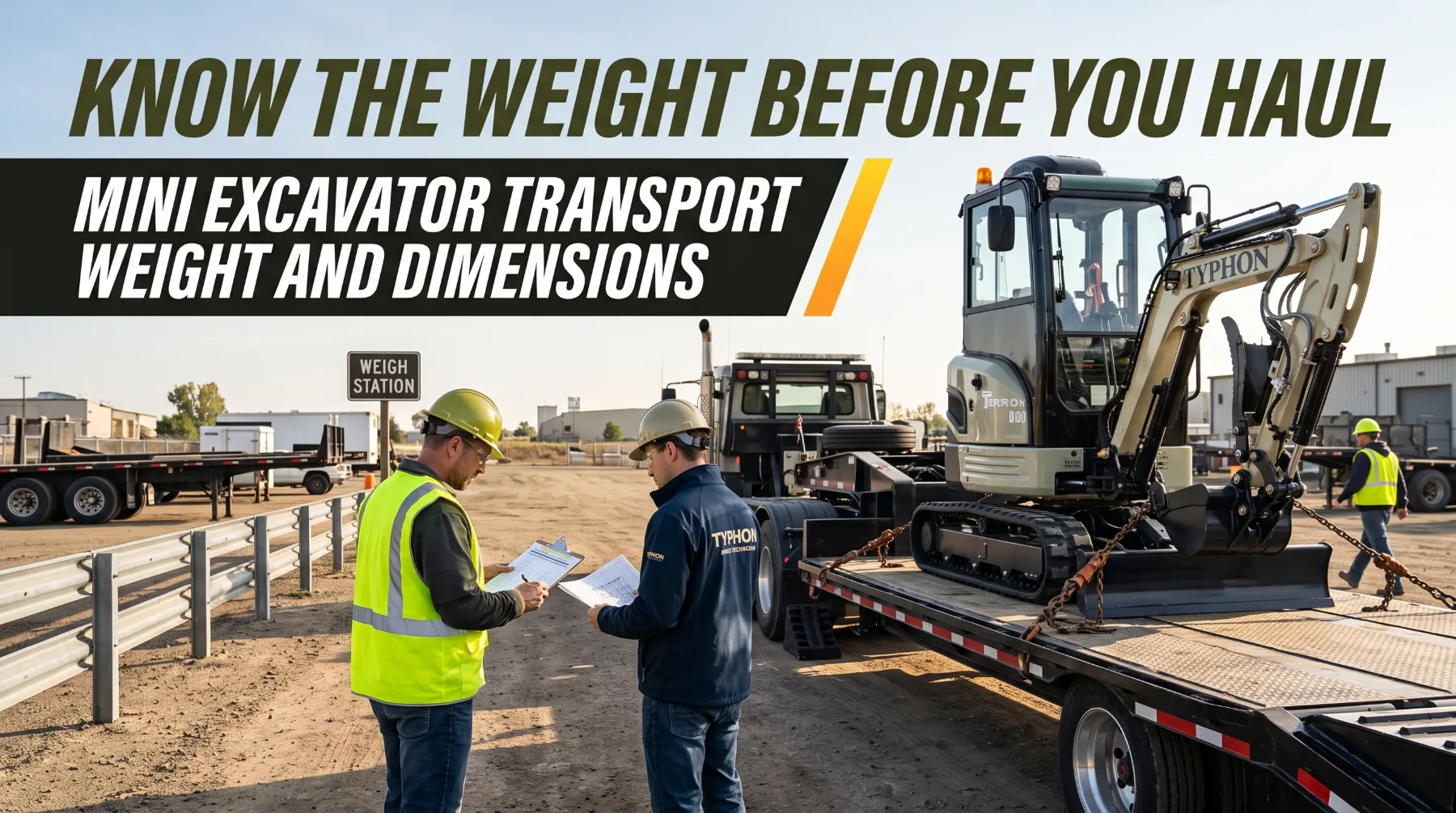
Mini Excavator Weight and Transport Requirements for Construction Jobsites
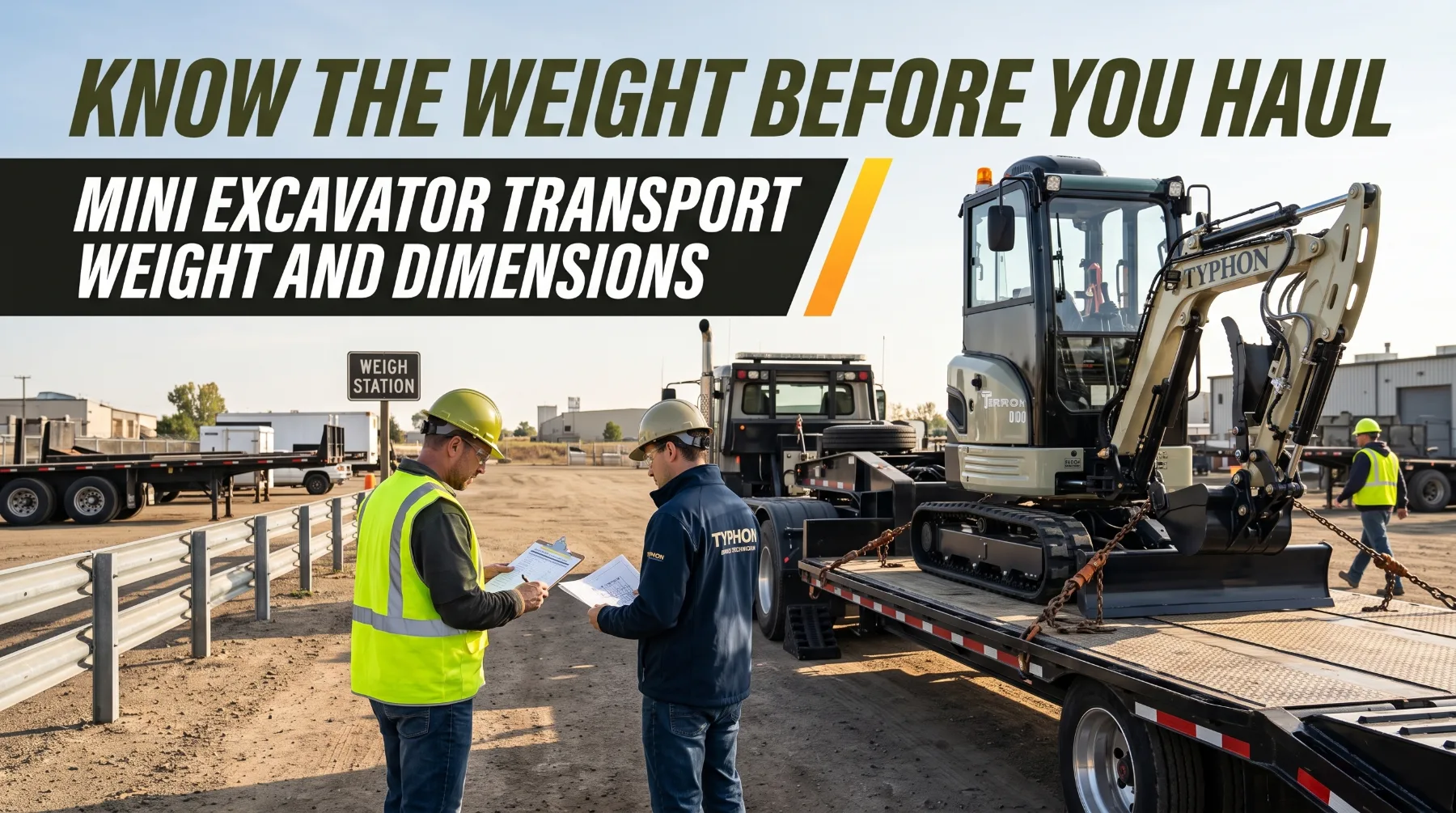
Mini excavators move from job to job more often than almost any other piece of construction equipment. A single machine may dig a utility trench on Monday, prepare a residential foundation on Wednesday, and finish landscaping work across town by Friday. Every one of those moves requires the excavator to be loaded, secured, hauled, and unloaded safely. Each step depends on accurate information about the machine’s weight and dimensions.
Transport planning is easy to underestimate because mini excavators look compact. They are dense, heavy machines for their size, and their weight sits on a small footprint. A trailer that seems large enough, a ramp that looks sturdy, or a gate that appears wide enough can all turn out to be unsuitable once the real numbers are checked. When transport is poorly planned, the results can include damaged equipment, damaged property, delayed projects, and serious injuries to operators, drivers, and bystanders.
This guide covers the full transport process. It explains the difference between operating weight and transport weight, how to measure transport dimensions, and how to select a suitable trailer. It also covers how to load and unload safely, how to secure the excavator for travel, and how to plan site access and delivery. When contractors verify these details before every move and follow the manufacturer’s instructions, mini excavators arrive on time, in working condition, and ready to perform.
Selecting a Suitable Trailer
The trailer carries the full weight of the mini excavator and any equipment hauled with it. Choosing the right trailer protects the machine, the towing vehicle, and everyone on the road. A trailer that is too small, too light, or poorly matched to the towing vehicle can affect braking, steering, and stability, and it may not comply with applicable road and load requirements.
Start with the trailer’s rated capacity. Every trailer has a maximum load it is designed to carry, and the excavator’s transport weight plus all additional equipment must stay within that limit. Leave a reasonable margin rather than loading the trailer to its exact maximum.
Weight distribution affects how the trailer handles on the road. Position the excavator on the deck so the load is balanced between the axles, with the correct amount of weight on the hitch as specified by the trailer and vehicle manufacturers. Too little tongue weight can cause the trailer to sway. Too much can overload the rear of the towing vehicle and reduce steering control.
Inspect the trailer before every trip. Check the deck for damage or rot, the frame for cracks, the tires for wear and inflation, the lights and brakes for correct function, and the tie-down points for damage. A suitable trailer only stays suitable when it is properly maintained.
Key takeaway: Select a trailer with sufficient rated capacity, axle ratings, deck size, and rated ramps, and confirm the towing vehicle’s limits so the combined setup complies with applicable road and load requirements.
Loading a Mini Excavator Safely
Transporting a mini excavator begins with preparing a stable loading area and selecting ramps rated for the machine’s weight and track configuration. Park the tow vehicle and trailer on firm, level ground, apply the parking brake, and use wheel chocks as required. Secure the ramps according to the trailer manufacturer’s instructions, inspect their surfaces, and confirm that the ramp angle stays within the equipment manufacturer’s limits.
Before loading, position the excavator squarely in front of the ramps and align both tracks with their centers. The operator should wear the seat belt, follow the manufacturer’s loading procedure, and move slowly using smooth, controlled inputs. Keep the boom, arm, bucket, and upper structure in the specified transport-loading position, and avoid sudden turns or movements that could shift the machine’s balance.
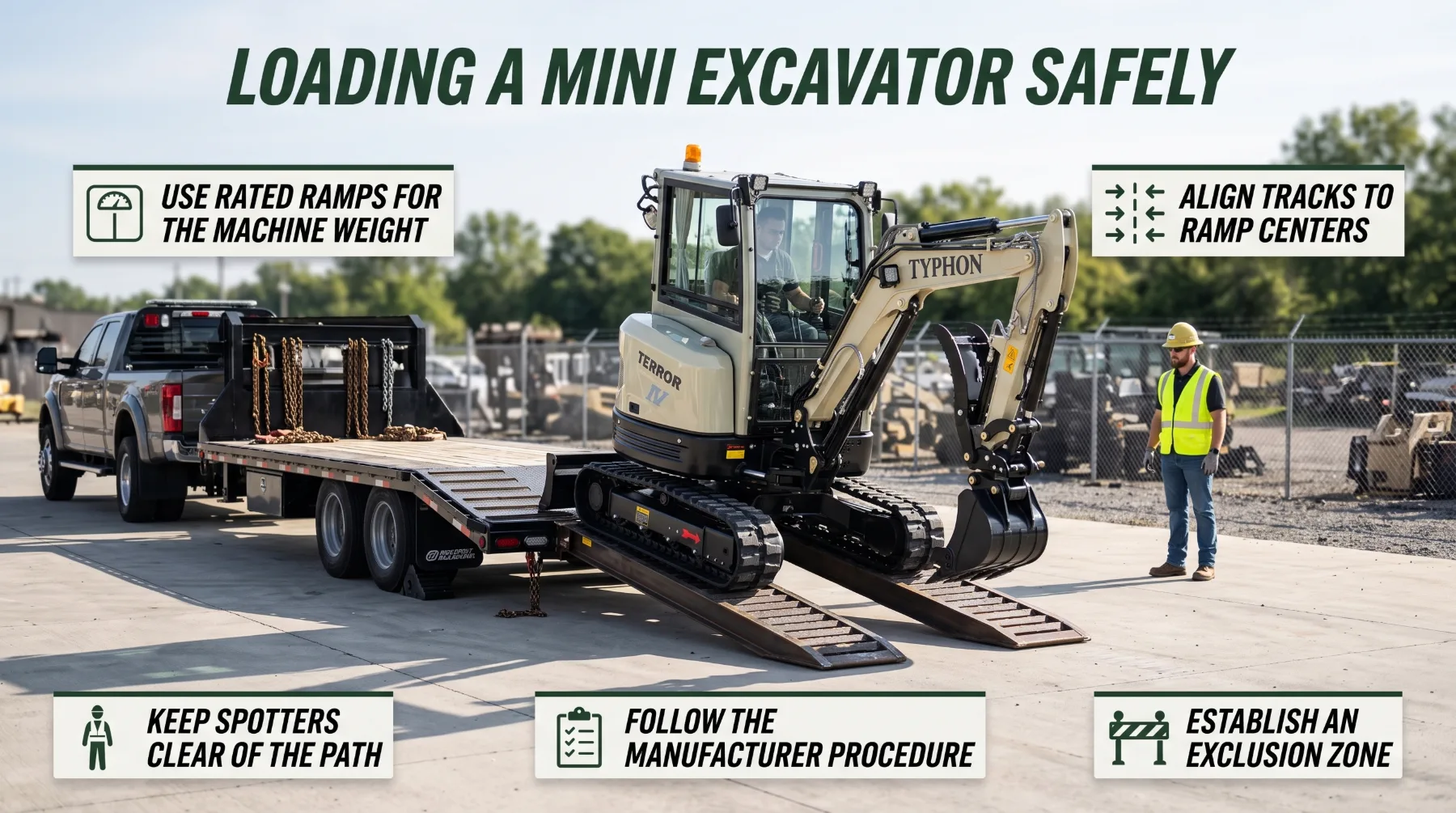
A trained spotter can help guide the operator by maintaining clear communication and a safe position outside the machine’s travel path. Establish an exclusion zone around the trailer and ramps, and stop immediately if the operator loses sight of the spotter or the machine becomes misaligned. Never allow anyone to stand directly behind, beside, or below the excavator while it is moving onto the trailer.
Key takeaway: Use properly rated and secured ramps, align the tracks carefully, and follow the manufacturer’s loading procedure while keeping everyone clear of the machine’s path.
Measuring Transport Dimensions
Transport dimensions determine whether the mini excavator fits on the trailer deck, passes through gates and entrances, and clears overhead obstacles along the route. These measurements include the machine’s overall length, width, and height in its designated transport configuration.
Unlike a fixed object, an excavator changes shape depending on how its components are positioned. The boom, arm, bucket, blade, and upper structure can all move, and each position produces a different overall outline. A machine with the boom raised may stand far taller than the same machine with the boom lowered and folded. A bucket extended forward adds length, while a bucket curled under the arm shortens the overall profile.
Manufacturers typically specify a transport position in the operator’s manual. This position often involves:
Boom position: The boom lowered and the arm folded to bring the machine’s height and length within the published transport dimensions.
Bucket placement: The bucket curled in and resting on the trailer deck, or positioned as the manufacturer directs.
Upper structure alignment: The upper structure rotated so the boom faces the direction specified, usually aligned with the tracks.
Blade position: The dozer blade lowered to the deck or set as instructed.
Swing lock: Engaged where the machine is equipped with one.
Optional equipment and attachments can change the dimensions. A wide grading bucket may extend past the machine’s track width. A breaker or auger may add significant length. An enclosed cab, roof-mounted beacon, or work light can add height. A long arm changes the folded length. Check the specifications for the exact model and configuration rather than relying on a general figure for the machine’s size class.
Measure the complete transport setup, not just the excavator. The combined height of the trailer deck and the machine is the figure that must clear bridges, overhead lines, tree branches, parking structures, and building entrances. The combined length of the towing vehicle, trailer, and excavator affects turning space and maneuvering on narrow streets. The widest point of the load, including any attachment, determines whether the setup fits within lane widths and applicable road limits.
Record these measurements and keep them with the transport documents. Drivers and dispatchers can then check routes in advance instead of discovering a clearance problem halfway to the jobsite.
Key takeaway: Transport dimensions depend on boom position, bucket placement, attachments, and optional equipment, so measure the excavator in its approved transport position and add the trailer to find the full clearance required.
Loading and Unloading Safely
Loading and unloading are among the highest-risk moments in moving a mini excavator. The machine travels up or down an incline onto a narrow surface with limited margin for error. A track sliding off a ramp, a trailer shifting under the load, or a sudden movement on the incline can cause the excavator to tip or fall. Careful preparation and a consistent procedure keep this step under control.
Choose a loading area that is stable, level, and large enough to maneuver. Soft ground can allow the trailer to settle or tilt as the excavator’s weight moves onto it. Sloped ground can cause the trailer to roll or the machine to drift sideways on the ramps. Park the towing vehicle and trailer in a straight line, set the parking brake, and chock the wheels where required.
Establish an exclusion zone around the loading area. Keep all workers, bystanders, and vehicles clear of the trailer’s sides and rear and away from the path the machine could take if it slipped. Only the operator and a trained spotter, if one is needed, should be involved in the loading process.
If the machine begins to slip or drift out of alignment, stop, assess the situation, and correct it before continuing. Never improvise when the approved procedure cannot be followed. Using unrated ramps, stacked blocks, or an uncertain loading bank puts the operator and bystanders at serious risk. Unloading at the jobsite deserves the same care, using the same procedure in reverse on stable, level ground.
Key takeaway: Load and unload on stable, level ground using rated, secured ramps, keep everyone outside the exclusion zone, follow the manufacturer’s approved procedure, and never improvise when conditions are unsafe.
Securing and Inspecting Before Every Haul
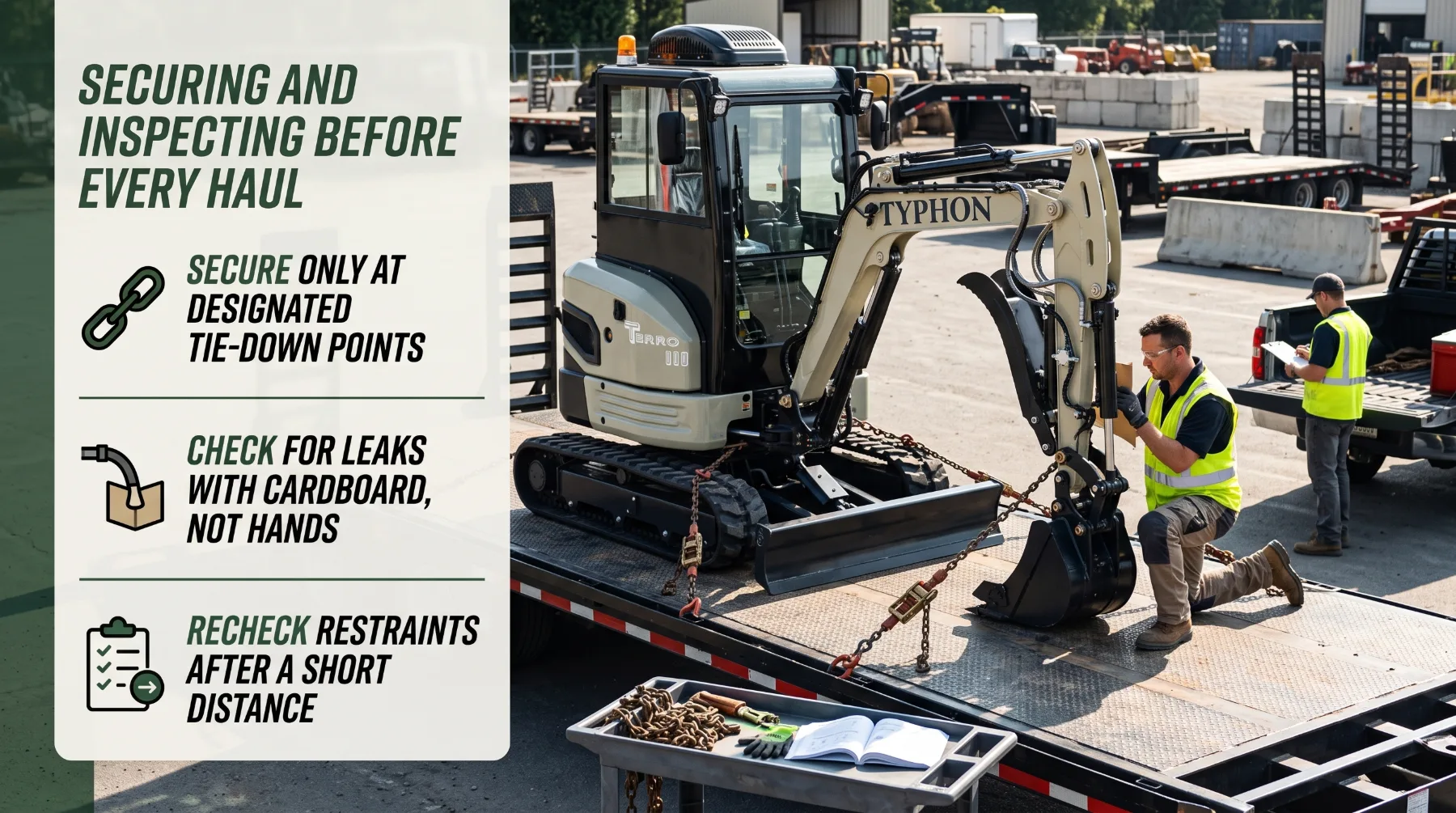
Before transporting a mini excavator, confirm that the machine is positioned according to the manufacturer’s transport instructions. Lower the attachments into the specified transport position, engage the required swing lock, shut down the engine, remove the key, and secure the controls as directed. Use only designated tie-down points and rated chains, binders, or straps suitable for the machine and transport setup.
Inspect each restraint for damage, correct placement, and secure tension. Chains and binders should be rated for the application, and the combined working load limits must meet applicable securement requirements. Position the restraints in opposing directions as specified by the securement plan, and verify that the excavator cannot shift, roll, or swing during transit. Keep all hydraulic hoses, cylinders, and other vulnerable components clear of chains and binding hardware.
A final inspection should cover the restraints, attachment position, trailer condition, lights, tires, and transport documents. Check hydraulic hoses and fittings for signs of leakage before departure. If a leak is suspected, shut down and relieve stored hydraulic pressure according to the operator’s manual, then use cardboard or another suitable method to locate the leak. Never use your hands because high-pressure hydraulic fluid can penetrate the skin. Recheck the securement after traveling a short distance and at intervals required by applicable regulations.
Key takeaway: Secure the excavator at designated tie-down points, inspect the machine and trailer before departure, and recheck the restraints during transport to help prevent shifting and equipment damage.
Planning Site Access and Delivery
A successful delivery depends on knowing the destination before the trailer leaves the yard. Mini excavators often work on residential properties, commercial lots, urban streets, and active construction sites, where access can be tight and conditions vary widely. A quick review of the site in advance can reveal problems that would otherwise stop the delivery at the gate.
Assess the access route and destination for the following before dispatch:
Gate and entrance width: Confirm that the towing vehicle and trailer can enter, and that the excavator can travel through gates, fence openings, and driveways once unloaded.
Turning space: Make sure the towing vehicle and trailer can turn, reverse, and position for unloading without striking curbs, walls, landscaping, or parked vehicles.
Overhead clearance: Look for power lines, tree branches, signs, building overhangs, and carport or garage structures along the route and at the unloading point.
Ground conditions: Check that the route and unloading area can support the loaded trailer and the excavator without sinking, rutting, or damaging surfaces.
Unloading space: Confirm there is enough room behind or beside the trailer for the ramps and for the machine to move clear once unloaded.
Road restrictions: Identify weight limits, height limits, narrow streets, and time-of-day restrictions that may affect the route or delivery schedule.
Restricted residential sites often require extra planning. A narrow driveway, soft lawn, or tight cul-de-sac may call for a different delivery route, a smaller trailer, an unloading point on the street, or protective mats to spread the load across grass or finished surfaces. Coordinate delivery times with the property owner or site supervisor so the access route is clear of parked cars, material deliveries, and other trades. Where the trailer will be unloaded on a public road, consider whether warning signs or traffic control are needed.
Communicate the plan clearly to the driver. Provide the exact address, the unloading location, known hazards, contact details for the person receiving the machine, and any special instructions. A driver who knows what to expect can arrive prepared rather than making decisions under pressure.
After unloading, inspect the excavator for any damage that may have occurred during transport. Check the tracks, hydraulic hoses, cylinders, attachment coupler, lights, and glass. Never check for hydraulic leaks by running your hand along a hose, since pressurized fluid can penetrate skin and cause serious injury. Use a piece of cardboard instead. Then complete the full pre-operation checks before beginning work. Report any defects and keep the machine out of service until they are corrected.
Key takeaway: Assess gate width, turning space, overhead clearance, ground conditions, and unloading space before dispatch, communicate the plan to the driver, and inspect the excavator after unloading before it goes to work.
Conclusion
Mini excavator weight and transport dimensions determine the equipment, preparation, and planning needed for every safe delivery. An accurate transport weight, built from the correct manufacturer figure plus every attachment and item on the trailer, ensures the trailer, towing vehicle, ramps, and restraints are all suitable for the load. Measuring the machine in its approved transport position confirms that the complete setup clears every gate, entrance, and overhead obstacle along the route. Careful trailer selection keeps axle ratings, deck size, and towing limits in balance, while a disciplined loading procedure with rated ramps and a clear exclusion zone controls the most hazardous part of the move. Proper securement at designated tie-down points keeps the machine in place throughout the journey, and advance site planning prevents delays and damage at the destination. When you verify the correct weight rating, trailer capacity, loading method, securement points, and site access conditions before every move, and follow the manufacturer’s instructions throughout, your mini excavator arrives safely and ready to deliver dependable performance on the job.
FAQs
Is operating weight the same as transport weight?
Not always. Operating weight reflects the machine in a specified working configuration, while transport weight depends on the actual setup being hauled. Definitions vary, so check what the manufacturer’s figure includes and add the weight of any attachments and additional equipment.
What should be checked before choosing a trailer?
Verify the excavator’s transport weight and dimensions, then confirm the trailer’s rated capacity, axle and tire ratings, deck size, ramp ratings, tie-down points, and brakes. Also check the towing vehicle’s towing capacity, hitch weight limit, and combined weight limit.
Why must access routes be measured?
Narrow gates, low overhead clearances, restricted turning space, and weak ground can all prevent safe delivery or unloading. Measuring the route in advance allows you to adjust the trailer, route, or unloading point before the delivery begins.
How should a mini excavator be secured for transport?
Place the machine in the manufacturer’s approved transport position, engage the swing lock where fitted, and secure it at the designated tie-down points using restraints rated for the load. Recheck the restraints after a short distance and at required intervals.
Can a mini excavator be loaded on any ramp?
No. Ramps must be rated for the machine’s weight, spaced to match the track width, securely attached to the trailer, free of slippery material, and set at an angle within the manufacturer’s limits.
What should happen after the excavator is unloaded?
Inspect the machine for transport damage, including tracks, hoses, cylinders, the coupler, lights, and glass. Complete the full pre-operation checks, and keep the machine out of service until any defects are corrected.