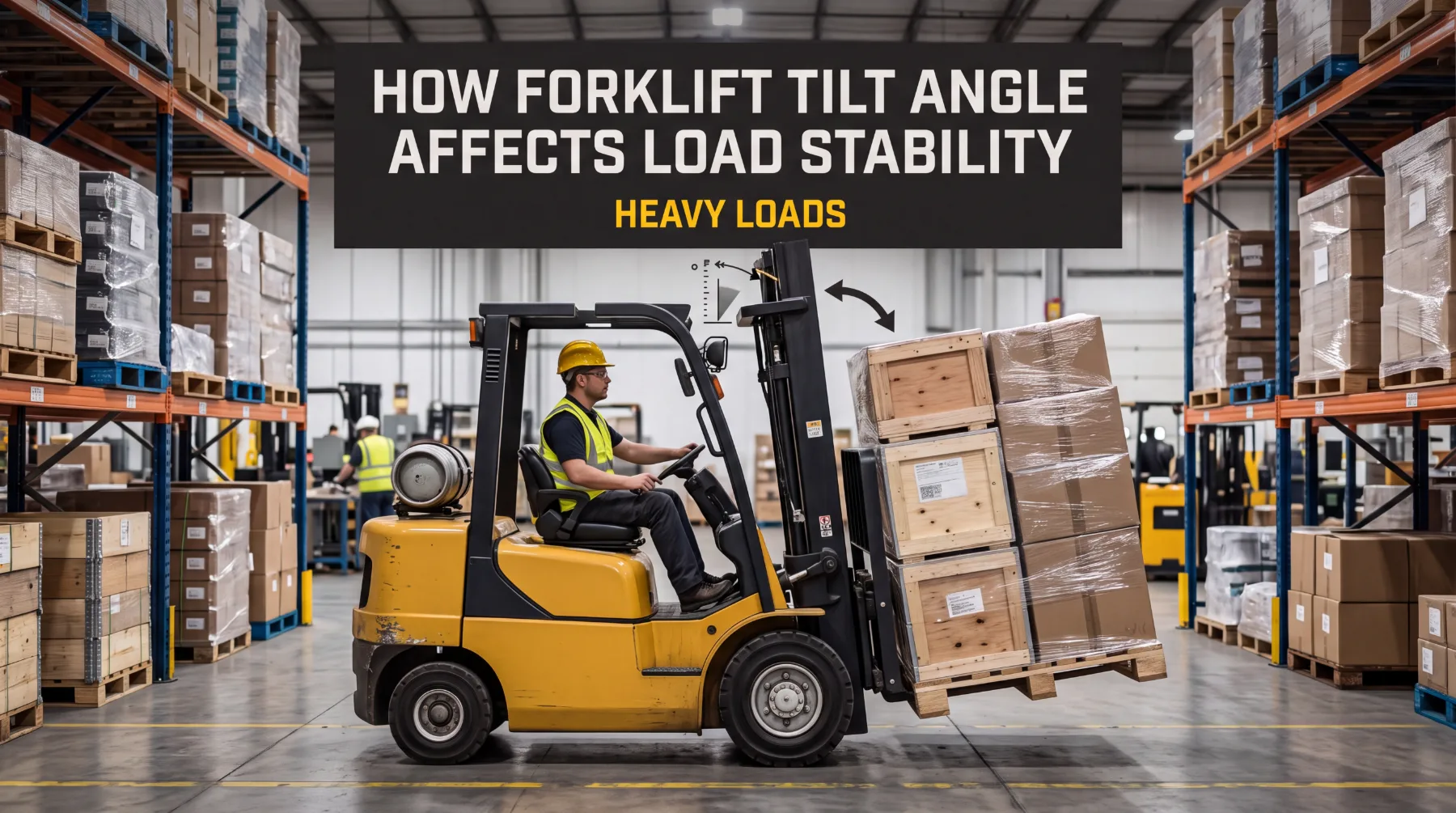
A forklift can lift an impressive load, but lifting it safely depends on more than raw capacity. How the mast is tilted plays a decisive role in whether that load stays secure or begins to shift. Tilt angle changes where the weight sits relative to the machine, and with heavy or elevated loads, even a small adjustment can affect how stable the forklift feels. Understanding this relationship helps operators handle loads confidently and avoid the instability that leads to spilled material or tipping.
This guide explains how forklift tilt angle affects heavy load stability across five practical areas. You will learn what tilt angle is, how backward tilt supports load retention, why excessive tilt can undermine stability, how load height and center of gravity come into play, and how to match tilt to the load you carry. By the end, you will have a clear, dependable understanding of how to use tilt to keep heavy loads secure.
Understanding Forklift Tilt Angle
Forklift tilt angle describes how far the mast and forks can move backward or forward from their upright vertical position. Most forklifts allow the mast to tilt in both directions, giving the operator control over the angle at which the forks meet and carry the load. This adjustment is a fundamental part of how a forklift handles material, because it changes the position of the load relative to the machine.
That change in position matters a great deal for stability. When the mast tilts backward, the load leans toward the forklift, shifting its weight closer to the machine’s body. When the mast tilts forward, the load leans away, moving its weight outward and ahead of the front wheels. Because a forklift’s stability depends on how the combined weight of the machine and load is distributed, any change in load position directly affects how securely the machine handles.
Think of tilt as a tool for positioning weight rather than a simple convenience. A backward tilt helps cradle the load against the machine, while a forward tilt is typically used for depositing or picking up a load at ground level or on a rack. Knowing that each direction moves the load’s weight in a specific way gives operators a practical framework for using tilt deliberately, which is the foundation for stable load handling in every situation that follows.
How Backward Tilt Supports Load Retention
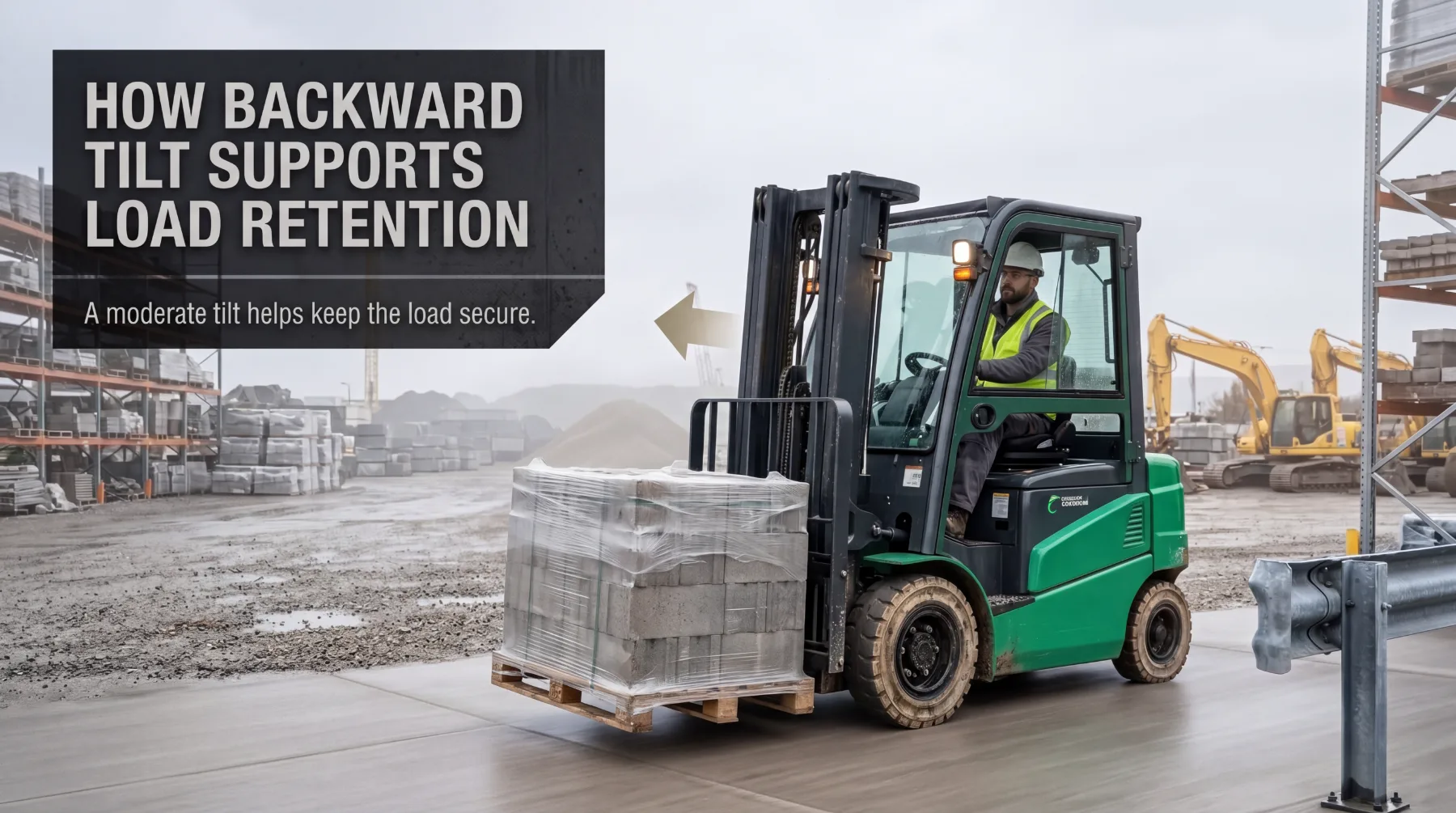
A moderate backward tilt is one of the most effective ways to keep a load secure while the forklift is in motion. By leaning the mast and forks back toward the machine, the operator brings a properly positioned load closer to the forklift’s body. This keeps the weight settled against the fork carriage and reduces the chance of the load sliding forward off the forks, especially during travel, braking, or movement over uneven ground.
The reason this works comes down to how gravity acts on the load. With the forks tilted slightly back, gravity helps hold the load against the mast rather than pulling it toward the fork tips. A pallet or stack that might creep forward on level forks stays put when a moderate backward tilt is applied. This simple adjustment adds a meaningful margin of security to routine handling, keeping material where it belongs throughout the cycle.
The key word here is moderate. The appropriate backward tilt depends on the load and the operating conditions. A stable, well-stacked pallet may need only a slight tilt to stay secure, while a load prone to shifting might benefit from a bit more. Conditions matter too, since rougher terrain or faster travel can call for closer attention to how the load is retained. The goal is enough backward tilt to hold the load reliably without overdoing it, which sets up the balance that keeps the whole machine stable.
Why Excessive Tilt Can Affect Stability
While a moderate backward tilt supports load retention, tilting the mast too far in either direction can work against stability. Excessive tilt shifts the combined center of gravity of the forklift and its load, and once that center of gravity moves outside the safe range, the machine’s handling changes for the worse. What begins as a helpful adjustment can become a genuine risk when pushed too far.
The concern grows with heavy or elevated loads. A heavy load carries more weight to shift, so tilting it excessively moves a large mass in a way that can compromise balance. When that same load is raised, the effect intensifies, because the weight sits higher and farther from the machine’s stable base. In these situations, excessive tilt may reduce stability and affect the forklift’s handling characteristics, making the machine feel less planted and more prone to instability.
The practical lesson is that tilt should be used with restraint, particularly under demanding conditions. Excessive forward tilt with an elevated load is especially risky, since it pushes weight out and ahead of the front wheels where the machine has the least stability. Keeping tilt within reasonable limits, and being especially careful when loads are heavy or lifted high, protects the balance the forklift depends on. Used thoughtfully, tilt supports stability; used carelessly, it undermines it.
Load Height and Center of Gravity
Tilt angle becomes particularly important as the load is raised higher. At ground level, the load sits low and the machine’s center of gravity stays close to the ground, giving the forklift a stable, forgiving base. As the mast lifts the load, that center of gravity rises with it, and the higher it climbs, the more sensitive the machine becomes to any factor that affects balance, including tilt.
A high center of gravity combined with an improperly positioned or tilted load can increase the risk of instability considerably. When a load is elevated, small changes in tilt translate into larger movements of weight at height, so an angle that would be harmless near the ground can have a much greater effect when the load is raised. This is why careful load positioning matters most during elevated handling, when the margin for error is at its narrowest.
The safest approach reflects this reality. Operators should be especially deliberate about tilt when a load is lifted high, keeping the load stable and well positioned before and during elevation. Many handling practices call for keeping loads low during travel precisely because a lower center of gravity is more stable, then lifting only when needed and with care. Recognizing how height and center of gravity work together helps operators treat elevated loads with the extra attention they require, keeping heavy material secure even at height.
Matching Tilt Angle to the Load
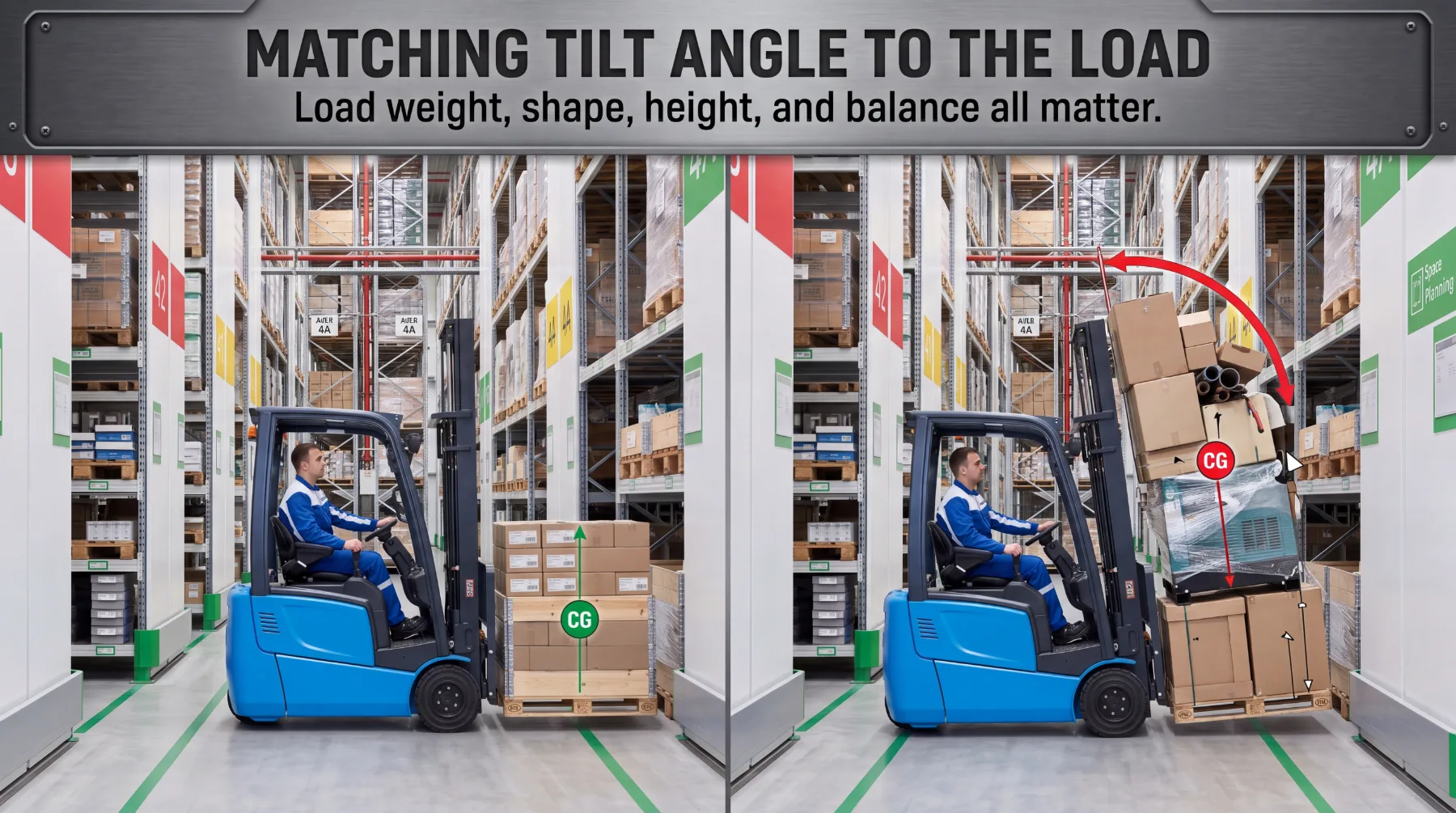
There is no single correct tilt angle for every situation, because the right position depends on the load itself. Operators should consider load weight, shape, height, and center of gravity together when determining the appropriate tilt. A heavy load asks for careful, restrained tilt to avoid shifting too much weight. An awkwardly shaped or top-heavy load may need particular attention to keep it stable, while a load’s height during handling shapes how sensitive it is to any adjustment.
Reading these factors together is what separates skilled load handling from guesswork. A dense, well-balanced pallet handled at low height gives the operator plenty of margin, while a tall, uneven, or elevated load demands a more cautious approach. Weighing weight, shape, height, and center of gravity as a connected picture helps the operator choose a tilt that holds the load securely without pushing the machine’s balance toward its limits.
Above all, following the forklift manufacturer’s operating guidance is essential for maintaining stable load handling. The manufacturer designs each machine with specific capacities and handling characteristics in mind, and their guidance reflects how the forklift is built to perform safely. Combining that guidance with sound judgment about each load gives operators a dependable foundation for handling heavy material. When you match tilt thoughtfully to the load and respect the machine’s design limits, you keep loads secure and the forklift stable across the full range of work.
Conclusion
Forklift tilt angle plays a defining role in how safely a machine handles heavy loads. It changes where the load’s weight sits relative to the forklift, and that position shapes stability throughout every cycle. A moderate backward tilt helps retain the load and reduce forward sliding, while excessive tilt can shift the combined center of gravity and undermine handling, particularly with heavy or elevated loads. As lift height increases, careful tilt becomes even more critical, since a rising center of gravity leaves less margin for error.
Before your next lift, take a moment to consider the load in front of you: its weight, shape, height, and center of gravity. Apply enough backward tilt to hold it securely without overdoing it, keep loads low when traveling, and take extra care whenever material is lifted high. Above all, follow your forklift manufacturer’s operating guidance, which reflects how your specific machine is built to perform. When you use tilt deliberately and respect these principles, you keep heavy loads stable and your operation safe. Reach out to discuss which forklift best suits your material handling needs.
Frequently Asked Questions
1. What is forklift tilt angle and why does it matter?
Forklift tilt angle describes how far the mast and forks can move backward or forward from their upright vertical position. Most forklifts allow the mast to tilt in both directions, giving the operator control over the angle at which the forks carry the load. This adjustment matters because it changes the position of the load relative to the machine, which directly affects stability. When the mast tilts backward, the load leans toward the forklift, shifting its weight closer to the machine’s body. When the mast tilts forward, the load leans away, moving its weight outward and ahead of the front wheels. Because a forklift’s stability depends on how the combined weight of the machine and load is distributed, any change in load position affects how securely the machine handles. Think of tilt as a tool for positioning weight deliberately rather than a simple convenience. A backward tilt helps cradle the load against the machine, while a forward tilt is typically used for depositing or picking up a load. Understanding that each direction moves the load’s weight in a specific way gives operators a practical framework for using tilt safely and keeping heavy loads secure.
2. How does backward tilt help keep a load secure?
A moderate backward tilt helps keep a load secure by leaning the mast and forks toward the machine, which brings a properly positioned load closer to the forklift’s body. This keeps the weight settled against the fork carriage and reduces the chance of the load sliding forward off the forks, especially during travel, braking, or movement over uneven ground. The reason it works comes down to how gravity acts on the load. With the forks tilted slightly back, gravity helps hold the load against the mast rather than pulling it toward the fork tips, so a pallet or stack that might creep forward on level forks stays put. This simple adjustment adds a meaningful margin of security to routine handling. The important thing to remember is that the tilt should be moderate, and the appropriate angle depends on the load and operating conditions. A stable, well-stacked pallet may need only a slight tilt to stay secure, while a load prone to shifting might benefit from a bit more. Rougher terrain or faster travel can call for closer attention to load retention. The goal is enough backward tilt to hold the load reliably without overdoing it.
3. Can too much tilt make a forklift unstable?
Yes, tilting the mast too far in either direction can work against stability. Excessive tilt shifts the combined center of gravity of the forklift and its load, and once that center of gravity moves outside the safe range, the machine’s handling changes for the worse. What begins as a helpful adjustment can become a genuine risk when pushed too far. The concern grows with heavy or elevated loads. A heavy load carries more weight to shift, so tilting it excessively moves a large mass in a way that can compromise balance. When that same load is raised, the effect intensifies, because the weight sits higher and farther from the machine’s stable base. In these situations, excessive tilt may reduce stability and affect the forklift’s handling characteristics, making the machine feel less planted and more prone to instability. Excessive forward tilt with an elevated load is especially risky, since it pushes weight out and ahead of the front wheels where the machine has the least stability. The practical lesson is to use tilt with restraint, keeping it within reasonable limits and being especially careful when loads are heavy or lifted high, which protects the balance the forklift depends on.
4. Why does load height affect how I should use tilt?
Load height affects how you should use tilt because raising a load changes the machine’s center of gravity. At ground level, the load sits low and the center of gravity stays close to the ground, giving the forklift a stable, forgiving base. As the mast lifts the load, that center of gravity rises with it, and the higher it climbs, the more sensitive the machine becomes to any factor that affects balance, including tilt. A high center of gravity combined with an improperly positioned or tilted load can increase the risk of instability considerably. When a load is elevated, small changes in tilt translate into larger movements of weight at height, so an angle that would be harmless near the ground can have a much greater effect when the load is raised. This is why careful positioning matters most during elevated handling, when the margin for error is at its narrowest. The safest approach reflects this reality: be especially deliberate about tilt when a load is lifted high, and keep the load stable and well positioned before and during elevation. Many handling practices call for keeping loads low during travel precisely because a lower center of gravity is more stable, then lifting only when needed and with care.
5. How do I choose the right tilt angle for a given load?
Choosing the right tilt angle means considering the load’s weight, shape, height, and center of gravity together, since there is no single correct angle for every situation. A heavy load asks for careful, restrained tilt to avoid shifting too much weight. An awkwardly shaped or top-heavy load may need particular attention to keep it stable, while the load’s height during handling shapes how sensitive it is to any adjustment. Reading these factors together is what separates skilled load handling from guesswork. A dense, well-balanced pallet handled at low height gives you plenty of margin, while a tall, uneven, or elevated load demands a more cautious approach. Weighing weight, shape, height, and center of gravity as a connected picture helps you choose a tilt that holds the load securely without pushing the machine’s balance toward its limits. Above all, following the forklift manufacturer’s operating guidance is essential for maintaining stable load handling. The manufacturer designs each machine with specific capacities and handling characteristics in mind, and their guidance reflects how the forklift is built to perform safely. Combining that guidance with sound judgment about each load gives you a dependable foundation for handling heavy material securely.