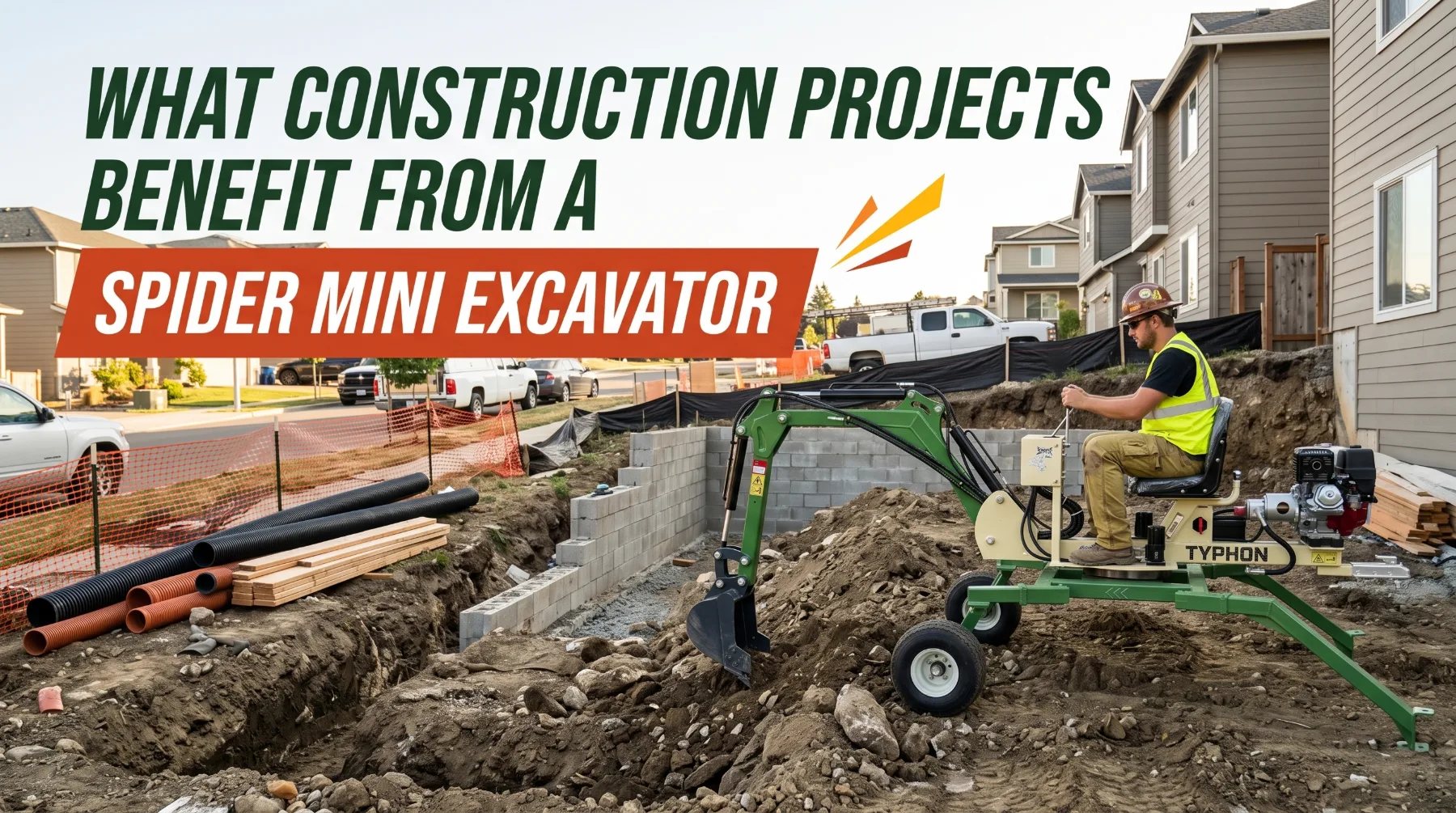
What Construction Projects Benefit From a Spider Mini Excavator
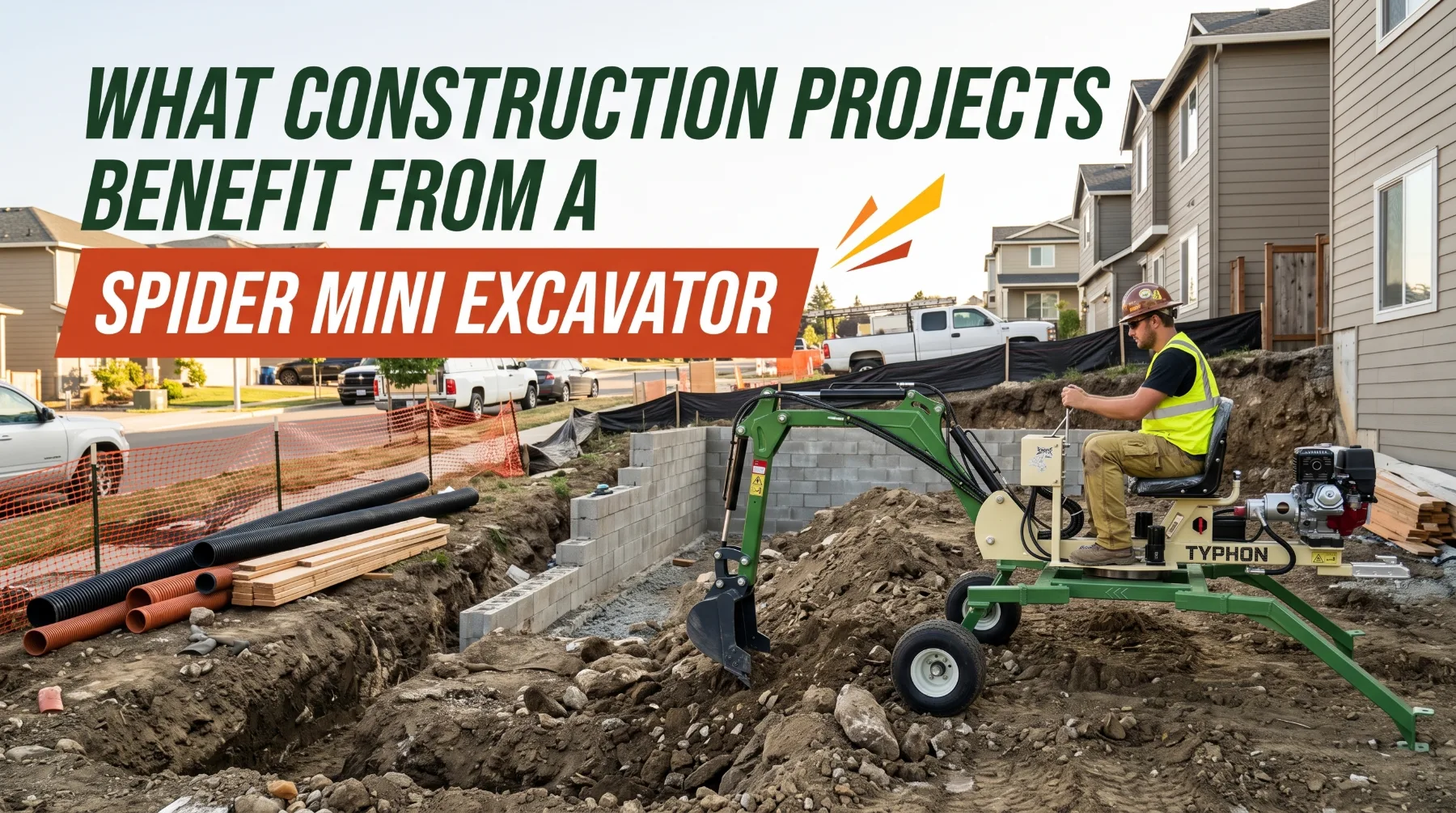
Working on a narrow hillside lot can make excavation difficult when neighboring buildings leave little room for equipment access. Foundation footings, utility connections, retaining walls, drainage lines, and landscaping may all require digging in areas where a conventional excavator cannot fit or maintain a stable working position. A spider mini excavator can access these restricted areas and adjust its legs to the changing grade, allowing excavation work to continue across different stages of construction.
Compact dimensions and adjustable leg configurations make spider mini excavators useful for projects with limited access and uneven terrain. The machine can support tasks such as trenching for water and sewer lines, preparing foundations, digging drainage routes, and working around retaining structures. Its ability to position itself on sloped ground can also reduce the need for extensive site preparation before excavation begins.
Using one machine across several phases can help contractors simplify equipment planning on challenging properties. Before starting work, operators should assess access width, slope, ground conditions, required digging depth, and the space available for machine positioning. Matching the spider mini excavator to these conditions can improve site access, reduce unnecessary preparation, and help keep construction work moving efficiently.
Residential Foundation Work
Residential foundation projects rarely come with open space. Additions, garages, infill homes, and rebuilds often sit close to existing structures, fences, and property lines. That leaves little room for a larger machine to set up, swing, or dig accurately.
A spider mini excavator handles these conditions well. Its compact footprint lets it reach backyards, side lots, and tight building pads through narrow access points. Its adjustable legs help it stay stable on sloped or uneven lots, so the operator can set up close to the footing line.
Working close to the dig improves accuracy. Operators can excavate footings to the required depth and width with controlled bucket movements, which reduces over-digging and hand finishing. Before excavating near an existing foundation, confirm footing locations, locate buried utilities, and follow the engineering requirements for the project.
Key takeaway: A spider mini excavator supports foundation digging and site preparation in narrow spaces around existing structures where larger machines have limited access.
Utility Installation
Utility work often follows routes that were not designed for heavy equipment. Water services, sewer laterals, electrical conduit, and communication lines may run between buildings, along fences, beneath landscaping, or across sloped ground. A spider mini excavator can work effectively in these restricted areas by traveling close to the trench line and maintaining a stable position while digging. With a narrow trenching bucket, it can remove only the soil needed for the installation, helping keep spoil piles smaller and making backfilling easier and faster.
Proper preparation is essential when digging around utility lines. Contact the local utility locating service before starting work, confirm that all marked lines are visible and accounted for throughout the job, and follow applicable trench safety requirements as excavation depth increases. Spoil should also be placed where it does not block access or interfere with the work area. Planning the route, equipment position, utility markings, and spoil placement in advance can help make restricted utility excavation safer and more manageable.
Key takeaway: Spider mini excavators support trenching and digging for drainage, electrical, water, and other underground installations along restricted routes.
Retaining Wall Construction
Retaining wall projects often require excavation on uneven or sloped ground for footing trenches, drainage areas, backfill, and final grading. A spider mini excavator can adapt to these conditions through independently adjustable legs, allowing the operator to maintain a controlled working position while preparing the wall site and handling material.
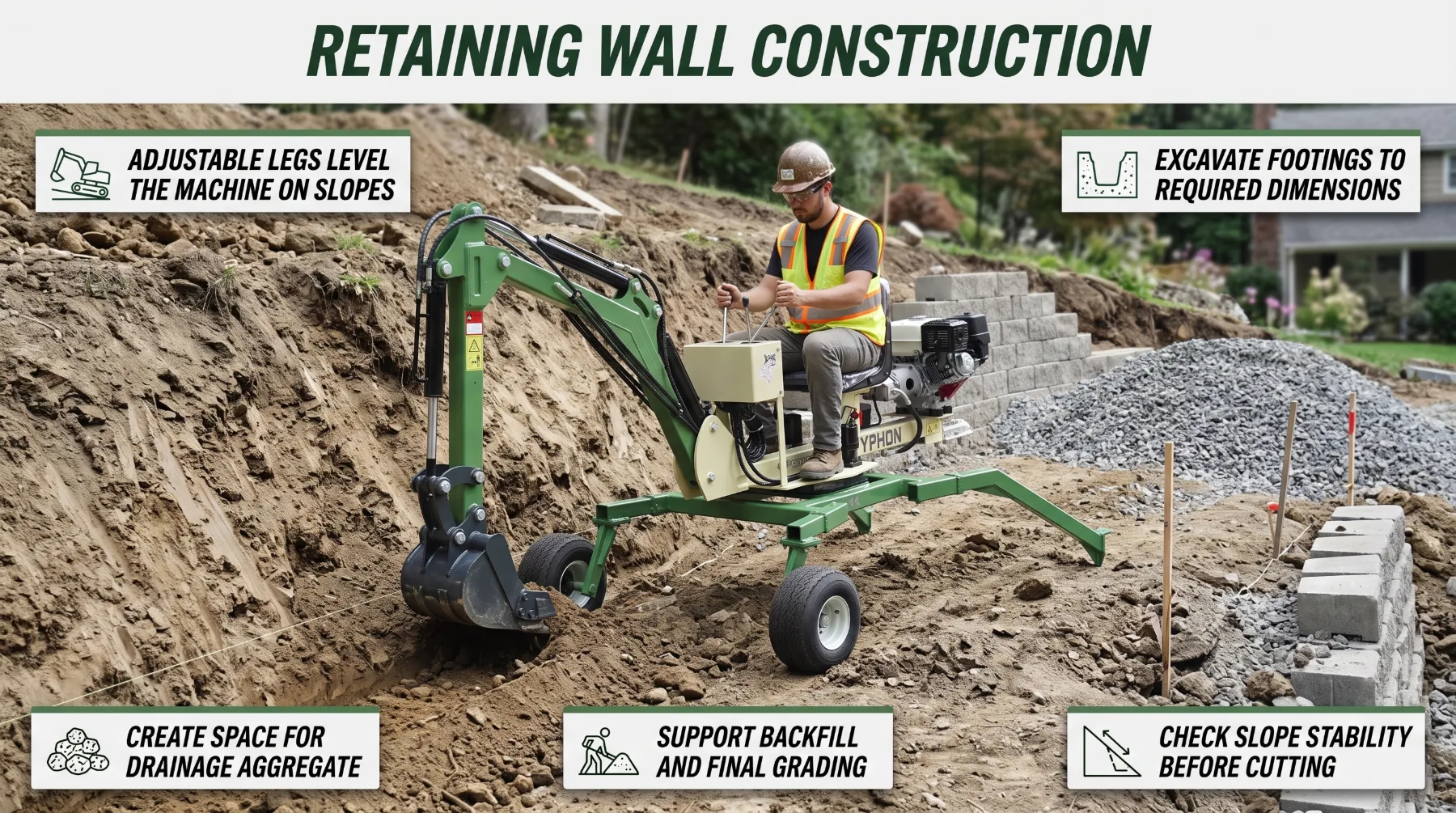
Slope Excavation: Adjustable legs help the machine work along hillsides and embankments while maintaining a stable position.
Footing Preparation: The excavator can dig and shape the footing trench to the required dimensions.
Drainage Preparation: Supports excavation and placement work for drainage aggregate behind the retaining wall.
Backfill Handling: Helps move and place suitable backfill material in controlled areas around the completed wall.
Ground Stability: Soil conditions should be assessed before excavation, with footing, drainage, and backfill work following the project design.
Key takeaway: A spider mini excavator can prepare footings and surrounding ground for retaining walls while working near existing landscaping, structures, and uneven terrain.
Roadside Construction
Roadside projects often have limited space because of traffic lanes, steep shoulders, drainage ditches, guardrails, and existing infrastructure. Larger equipment may require wider work areas, longer lane closures, or additional site preparation. A spider mini excavator can work in these restricted conditions because its adjustable legs allow it to position securely on sloped shoulders and embankments, while its compact size can reduce the space needed for setup. Crews can use it for cleaning and reshaping ditches, excavating around culverts, preparing foundations for signs or small structures, and completing repair work along roads and paths.
Safety planning is essential before starting any roadside excavation. Set up traffic control that meets local requirements and maintain a clear separation between the work zone and active traffic lanes. Buried utilities should be located before excavation begins, especially when working near existing infrastructure. The shoulder and embankment should also be evaluated for stability before positioning the machine. Proper setup and site planning help reduce risks while allowing the excavator to work effectively in narrow roadside areas.
Key takeaway: Compact excavation equipment is useful for roadside construction where traffic lanes, slopes, drainage areas, or existing infrastructure restrict access.
Landscaping Projects
Landscape construction often means significant earthwork on finished properties. Crews may need to remove soil, prepare planting areas, build drainage swales, form ponds, and reshape terrain. All of this happens around gardens, trees, pathways, and hardscape that the property owner expects to stay intact.
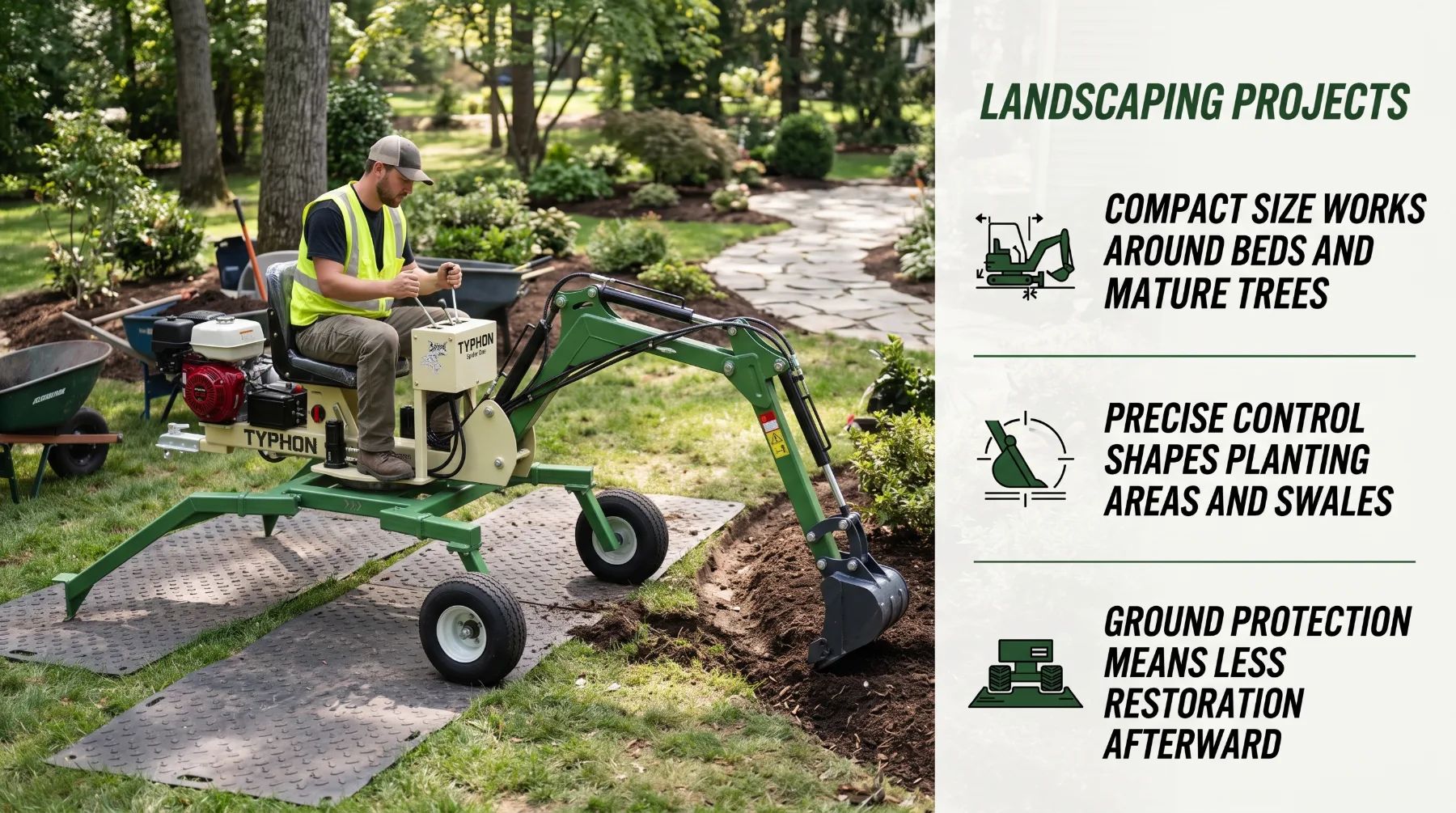
A spider mini excavator works carefully in these confined spaces. Its compact size lets it move between beds and around mature trees without the wide footprint of larger equipment. Its shorter, climbing, and crawling capability helps it access uneven and restricted areas, while precise boom and bucket control helps operators dig planting areas and shape slopes with minimal disturbance.
Less disturbance means less restoration. Protecting lawns, root zones, and finished surfaces reduces cleanup time and supports a professional result. Lay ground protection mats along travel routes where turf or pavers need protection, and keep the machine clear of tree root zones wherever possible.
Key takeaway: A spider mini excavator supports soil removal, planting-area preparation, and terrain shaping while working in confined spaces around finished property features.
Drainage and Pipeline Work
Drainage channels and small pipeline installations require controlled excavation along defined routes. The trench must hold a consistent line and grade so the pipe sits properly and water flows as designed. Many routes cross sloped yards, wet areas, or tight property edges.
A spider mini excavator supports each stage of the installation. It can dig the trench to the required depth, place bedding material, and support backfilling once the pipe is set. Its stability on uneven ground helps operators maintain accurate grade, even along a hillside or ditch line.
Handling excavation and backfill with one machine reduces the equipment needed on site. Check grades at regular intervals throughout the job, especially where elevation changes. In wet conditions, watch trench walls closely and follow trench safety requirements for the depth and soil type.
Key takeaway: A spider mini excavator supports drainage and small pipeline work along narrow routes where machine access and ground conditions make larger equipment difficult to use.
Conclusion
A spider mini excavator supports construction work in restricted areas where conventional equipment may have difficulty operating, including residential foundations, utility trenches, retaining walls, landscaping, roadside work, drainage, and pipeline installation. Its effectiveness depends on machine configuration, access, ground stability, slope, excavation dimensions, and the requirements of each project. Before mobilization, contractors should measure narrow access points and overhead clearances, confirm a firm unloading area, assess ground and slope conditions, verify excavation depth, width, and working radius, and locate underground utilities and nearby structures. Suitable buckets and attachments should be selected for each work stage, while traffic control should be arranged for roadside projects where required. Matching the machine to site access, ground conditions, excavation requirements, and attachments helps support controlled and productive work from initial excavation through final grading.
Frequently Asked Questions
What projects use spider mini excavators?Spider mini excavators can support foundation work, utility installation, retaining wall preparation, landscaping, roadside projects, drainage, and other excavation tasks. They are particularly useful where narrow access, slopes, uneven terrain, or restricted working areas limit conventional equipment. Their compact design and support-leg configuration can help operators position the machine for digging in challenging locations.
Are spider mini excavators useful in confined areas?Yes. Their compact dimensions make them suitable for excavation in side yards, backyards, narrow passages, and spaces between buildings or other structures. Before mobilizing, contractors should check gate widths, access routes, overhead clearances, and the space required to position the machine and operate its attachments safely.
Can they be used for landscaping?Yes. Spider mini excavators can support soil removal, ground preparation, trenching, drainage work, grading, and terrain shaping. Their ability to work in restricted areas can help reduce disturbance around trees, fences, gardens, and finished surfaces. Proper positioning and suitable attachments allow operators to complete excavation tasks while maintaining better control around existing landscape features.
What should be considered before using one?Evaluate site access, terrain, excavation depth, working radius, ground stability, support-leg positioning, and overall project requirements before mobilizing. Check whether the machine can safely reach the work area and operate within the site’s slope and load limits. Planning the working position in advance helps improve stability, reduce repositioning, and support efficient excavation.