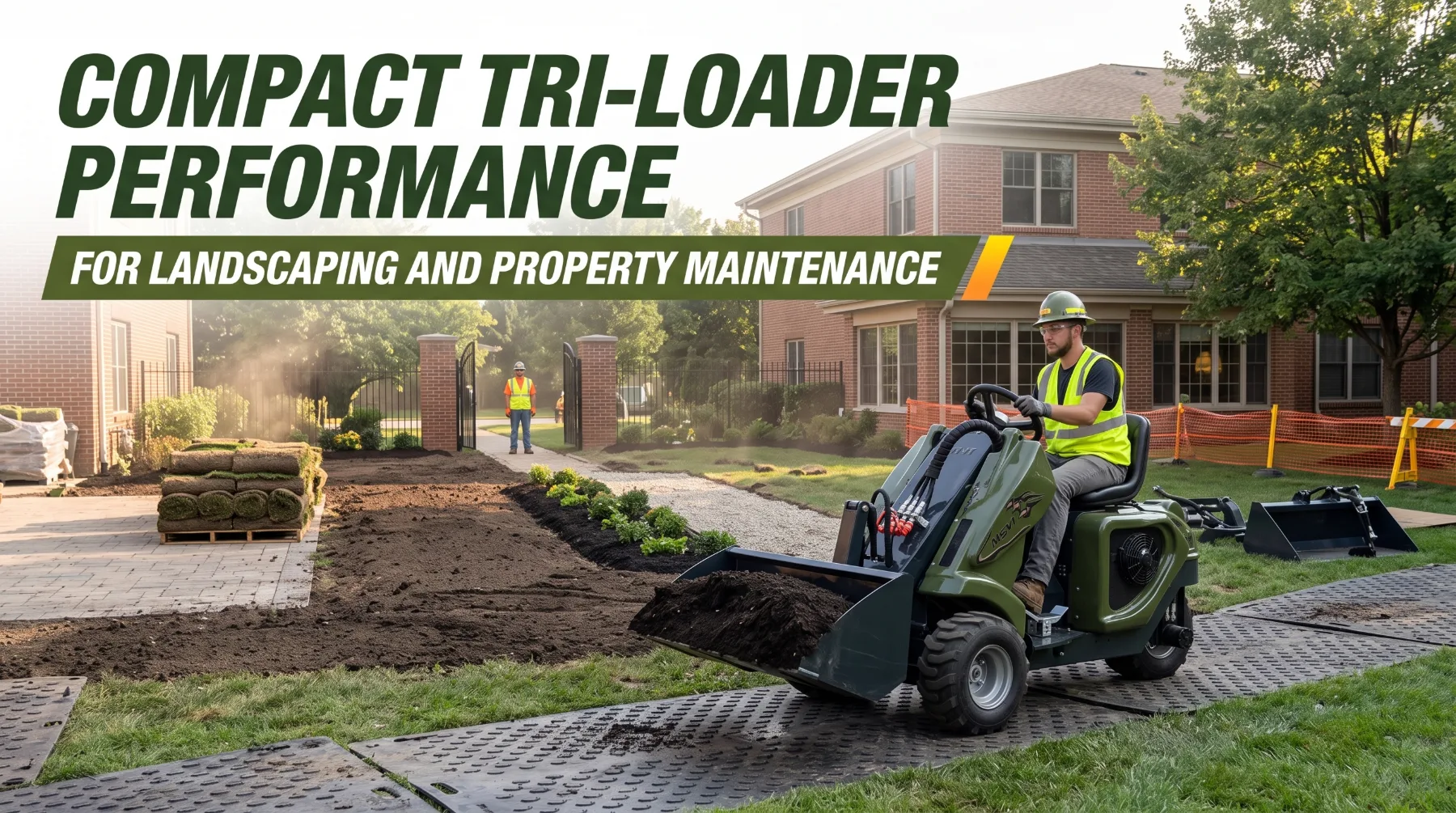
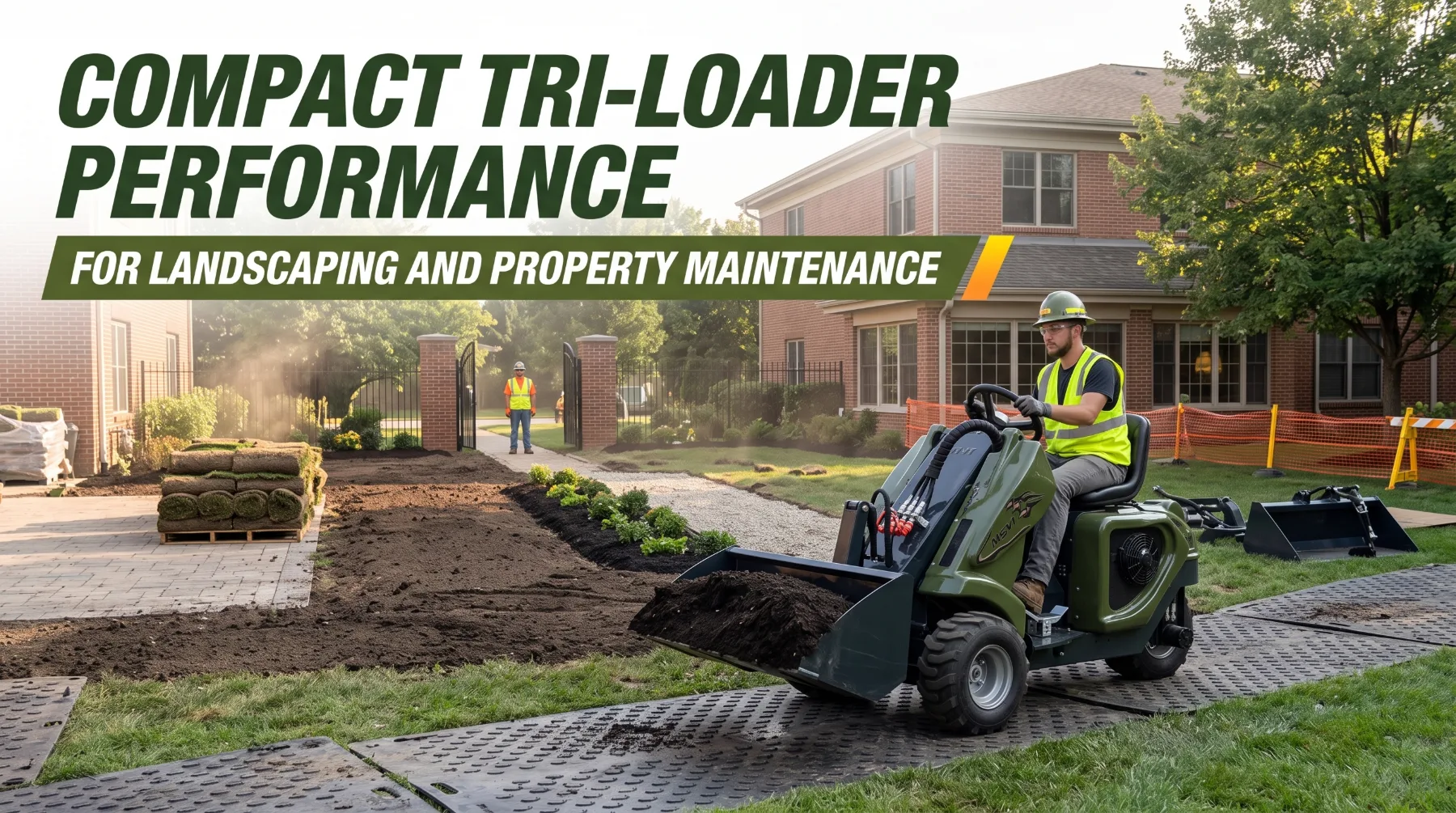
Landscaping projects in residential communities often require moving soil, mulch, gravel, sod, and debris through narrow gates and established outdoor spaces. Limited clearance, delicate surfaces, and pedestrian traffic can make routine material handling more complicated than expected. A compact tri-loader can support these tasks when its dimensions, attachments, and operating methods suit the property's layout and ground conditions.
Versatility comes from matching attachments to specific jobs, including buckets for loose materials, pallet forks for sod and supplies, and grading tools for surface preparation. Load size and distribution affect stability, particularly when carrying wet soil or traveling on slopes. Tire condition, turning technique, and ground protection also influence traction and surface damage, while coordinated work schedules help crews avoid disrupting residents.
Efficient performance depends on measuring restricted access with the intended attachment installed and confirming that loads remain within the machine's rated capacity. Suitable travel routes, properly inflated tires, and protective mats can help preserve lawns and paved surfaces. Coordinating deliveries, maintaining clear pedestrian routes, and selecting the right attachment for each task reduce rework and help crews complete property maintenance on schedule.
Material Handling and Loading
Material movement makes up most of a tri-loader's working day on landscaping and maintenance projects. Topsoil, mulch, compost, gravel, river rock, sod, plants, pavers, and debris all need to travel from a delivery point to beds, lawns, and paths across the property. A compact tri-loader collects, lifts, and moves these materials far faster than a crew working by hand, which frees laborers for planting, edging, and finishing work.
Attachment selection shapes every load. A general-purpose bucket suits topsoil, gravel, and mixed fill. A light-material bucket carries larger volumes of mulch, wood chips, and leaves without approaching the machine's weight limit. Pallet forks move sod, bagged products, pavers, and balled plants on pallets without breaking them apart. Grapples secure brush and branches that would slide off an open bucket. Matching the attachment to the material improves load security and reduces spillage and rehandling.
Appropriate load sizes keep handling efficient and safe. Every tri-loader has a rated operating capacity, listed on the capacity decal and in the operator's manual, and that figure includes the attachment's weight. Material density determines how quickly a load reaches the limit. A bucket of dry mulch weighs far less than the same bucket of wet topsoil or crushed stone, and rain can add significant weight overnight. Load by weight rather than by how full the bucket looks, and watch for warning signs such as a light feeling at the rear or slow lifting.
Loading technique keeps cycles consistent. Approach the pile squarely with the bucket flat, drive in at a steady pace, and curl the bucket back as it fills. Work the pile face evenly instead of digging into one spot, which can undercut the pile. Carry the load low and centered during travel, and raise it only at the placement point with the machine stopped. Consistent fills make each trip predictable and help the crew track progress.
Planning reduces unnecessary trips between storage and work areas. Where the property owner allows, stage stockpiles close to the beds and lawns that will use them, on firm ground away from walkways and entrances. Keep different materials in separate piles. Sequence the work so the machine starts at the farthest area and works back toward the access point, which shortens the remaining trips and keeps the machine off finished surfaces.
Key takeaway: Choosing the right attachment, sizing loads by weight within rated capacity, and staging materials close to the work help a compact tri-loader move landscaping materials efficiently with fewer trips.
Compact Size and Property Access
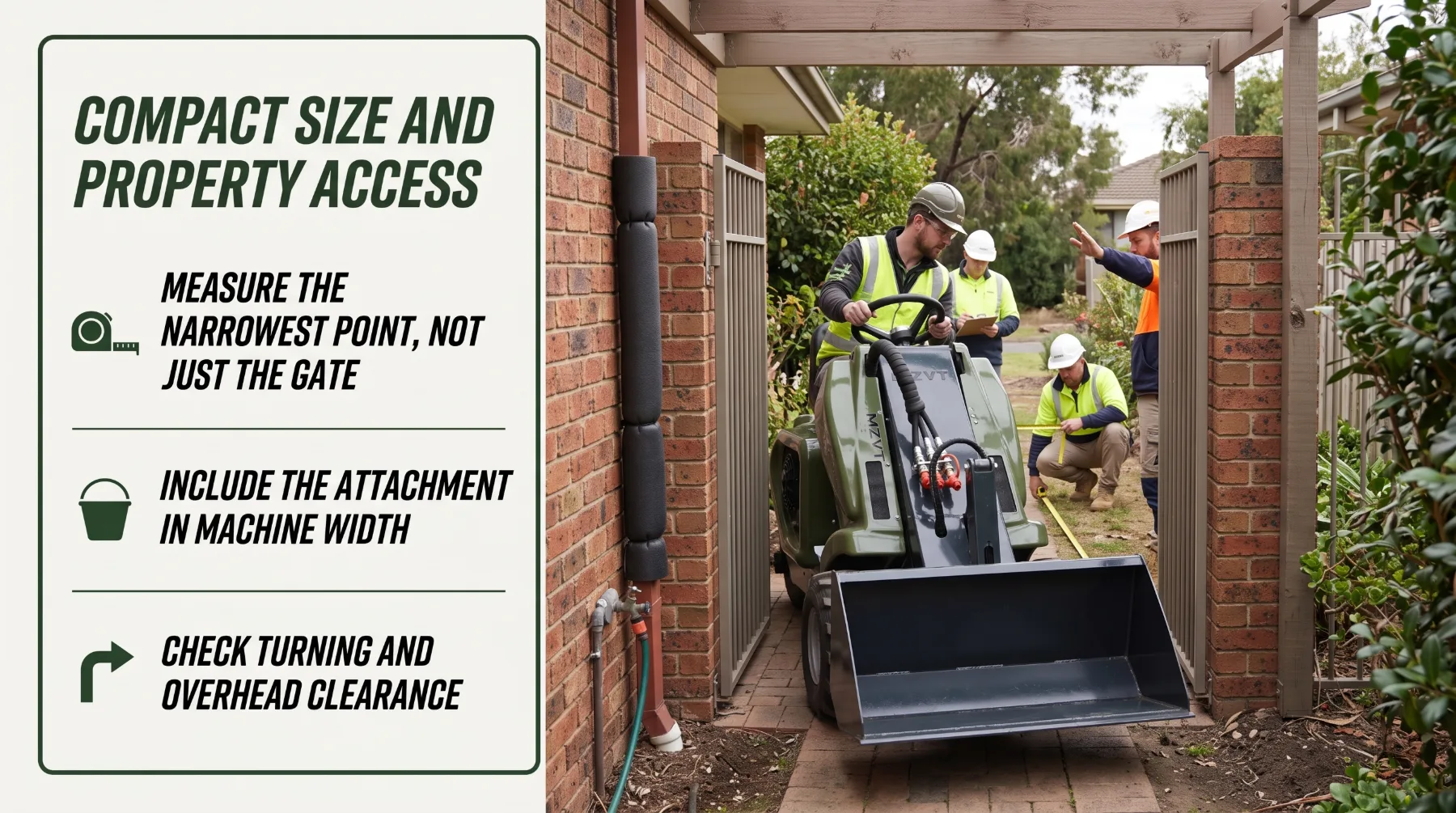
A compact tri-loader's greatest advantage on landscaping and property maintenance work is its ability to reach places larger machines can't. Backyards behind homes, courtyards inside commercial buildings, fenced gardens, and narrow side yards often sit behind gates and walkways that would stop a full-size loader. A compact machine can turn hours of wheelbarrow trips into a few efficient loads, as long as it actually fits the route.
Verify the machine's dimensions before entering any restricted area. Start with the manufacturer's specifications for overall width, height, and length. Then account for whatever is mounted on the machine. Many buckets, grading tools, and grapples are wider than the machine itself, and pallet forks with tines spread wide can extend beyond the wheels. The width that matters is the widest point of the machine and attachment together, not the figure printed in the brochure.
Measure the route at its tightest points, not just at the gate. Clear width often narrows at downspouts, hose bibs, utility meters, air-conditioning units, planters, fence posts, and garden lights. Overhead clearance can drop under pergolas, arbors, eaves, and low tree limbs. Walk the full path from the unloading area to every work zone, and note where the route bends, since a machine needs more width through a turn than on a straight run.
Turning clearance deserves the same attention as passage width. A tri-loader's compact three-wheel layout lets it turn in a small footprint, but the attachment and rear of the machine still sweep through space during every turn. Check that the machine and its attachment can turn without striking walls, fences, plantings, or furniture. Where a turnaround area doesn't exist, plan whether the machine can enter, work, and exit along the same line without long reversing moves.
Leave a working margin rather than planning to the inch. A route with only an inch or two of clearance leaves no room for steering correction or a slight lean on uneven ground. Where clearance is tight, carry a narrower attachment through the opening, move a gate or fence panel with the owner's permission, or protect fixed features with padding. Brief the operator and spotter on every pinch point before the machine moves.
Key takeaway: Verify the machine's actual width, height, and turning clearance, including any attachment that extends beyond the machine, against the narrowest and lowest points along the full access route before entering a restricted area.
Surface Preparation and Grading
Healthy lawns, level paths, and well-drained planting beds all begin with properly prepared ground. Compact tri-loaders are useful for this work because they spread soil, level surfaces, and prepare areas for planting, sod, seed, and hardscape installation. With compatible grading tools and controlled movements, the machine produces a consistent surface and reduces the hand raking a crew would otherwise need.
Spreading material well starts with moderate loads. Lower the bucket close to the ground and tilt it gradually as the machine moves, so material releases in an even layer instead of a single heap. Then smooth the surface by back-dragging, pulling the bucket backward with light down pressure. Where the machine offers a float function, use it to let the attachment follow the ground. Overlap each pass slightly so the strips blend together.
Compatible grading tools improve accuracy and speed. Depending on the model, leveling bars, land planes, box blades, and soil conditioners can distribute material more evenly than a bucket edge alone. They're especially valuable for finishing grading before sod or seed, where small humps and dips show clearly once the lawn grows in. Confirm every grading tool is approved for the machine and suited to its hydraulic capability before use, and review its operating instructions, since each tool handles differently from a standard bucket.
Drainage should guide every grading decision. Finished surfaces should move water away from buildings, patios, and walkways toward suitable outlets, beds, or drains. Set grade stakes or string lines before work begins, and check elevations frequently as material goes down. Small corrections during spreading are far easier than reworking a surface after sod is laid. Before any cutting, trenching, or deep grading, contact your local utility locating service and confirm lines are marked, and ask the owner about irrigation and lighting lines.
Controlled movements make the difference between rough and finished work. Smooth, gradual control inputs keep the attachment at a steady height and angle. Abrupt movements dig gouges, leave ridges, and send the crew back with rakes. Travel at a steady, moderate pace during grading, and adjust technique to the material, since sandy soil spreads differently from clay or compost blends.
Key takeaway: Compatible grading tools, moderate loads, careful back-dragging, and frequent elevation checks help a compact tri-loader spread soil and level ground evenly while reducing manual correction.
Ground Protection and Traction
Landscaping and property maintenance often involve working around lawns, paved areas, and garden beds that need protection. Proper route planning, careful driving, and good machine maintenance help prevent surface damage while maintaining traction and stability.
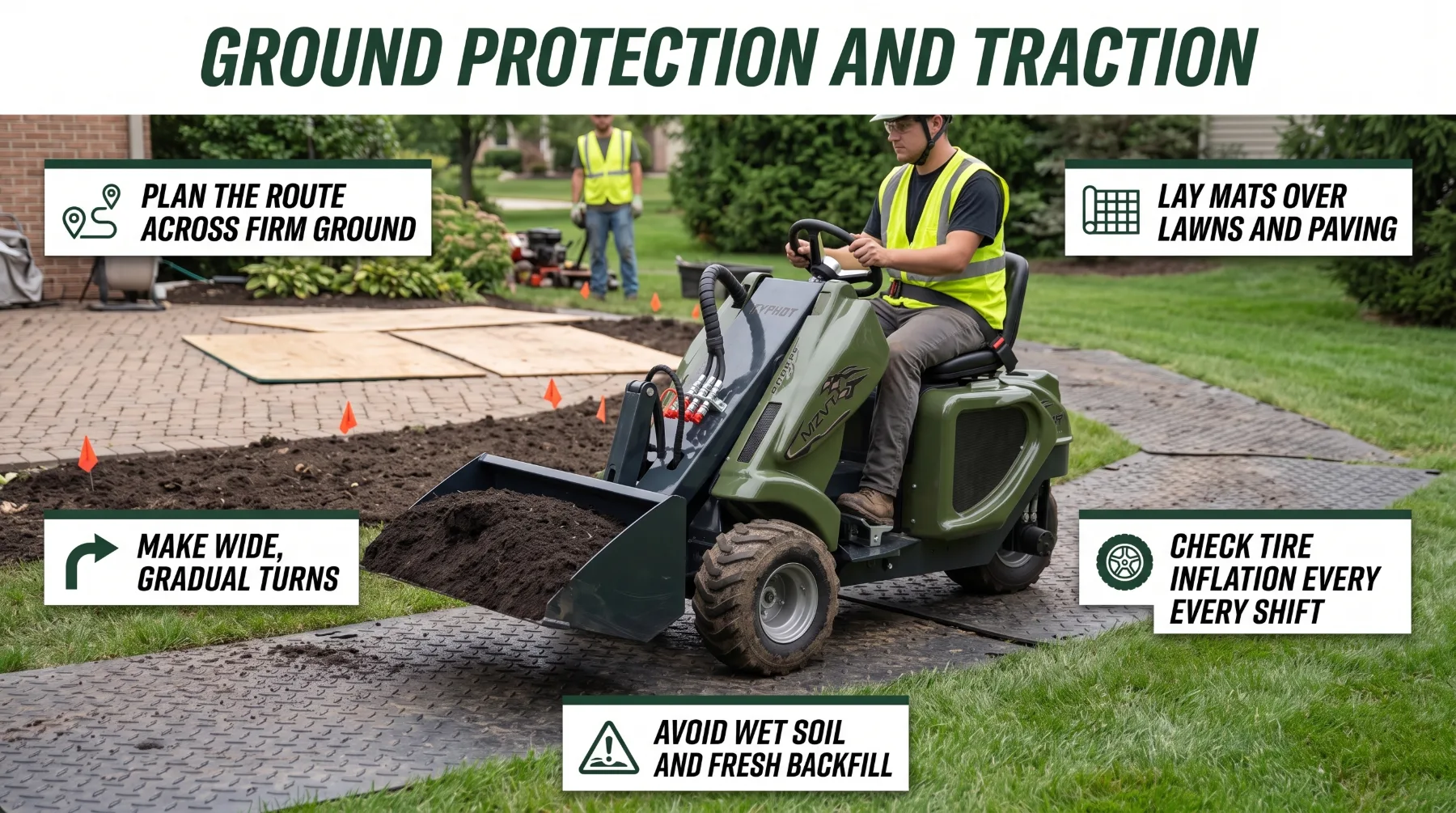
- Ground Contact and Machine Weight: Consider machine weight, tire type, tread, and track design when working on delicate surfaces. Avoid sharp pivot turns that can damage turf and paving.
- Soft and Wet Ground: Check for saturated soil, fresh backfill, and buried irrigation lines before travel. Avoid crossing weak ground when possible, especially after rain.
- Route Planning and Surface Protection: Choose firm, established paths and use suitable ground protection mats over lawns, pavers, and other sensitive surfaces.
- Tire and Track Maintenance: Check tire pressure and tread condition, or track tension and wear, according to the manufacturer's recommendations.
- Safe Travel and Traction Control: Carry loads low, reduce speed on rough ground, and travel straight up and down slopes when appropriate. Stop if a wheel spins rather than applying more power and deepening the rut.
Key takeaway: Machine weight, ground-contact design, tire or track condition, and turning technique all affect surface impact, so plan the travel route, protect lawns and paving with mats, and turn gradually to minimize disturbance.
Attachment Versatility
Attachments turn a compact tri-loader into a versatile machine for property maintenance. In a single day, the same machine can spread mulch, carry pallets of sod, level soil, and clear brush. This flexibility helps small crews complete different tasks without bringing several machines onto properties with limited access.
General-purpose buckets handle topsoil, gravel, sand, and mixed fill, while light-material buckets carry larger volumes of mulch, compost, and wood chips. Match the bucket size to the material density and the machine's rated capacity. When working in confined areas, use a bucket width that suits the available space.
Pallet forks move sod, bagged soil amendments, pavers, wall blocks, and plants on suitable pallets. Adjust the tine spacing to fit the pallet, insert the forks fully, and position the load against the backrest. Since forks carry loads farther forward than buckets, lift carefully and keep the load low during travel.
Grapples handle bulky materials such as brush, branches, small logs, and storm debris that may roll or slide out of an open bucket. Secure the material before lifting and watch for long branches that could swing into fences, buildings, or plants. Always confirm that both the attachment and the tri-loader are rated for the load.
Grading tools, including leveling bars and land planes, help smooth and shape soil before installing sod, spreading seed, or preparing paving areas. These attachments provide more consistent results than using a bucket alone and can reduce the amount of manual raking required.
Before using any attachment, confirm that it is compatible with the machine's mounting system, rated capacity, and hydraulic capability. The attachment's weight reduces the capacity available for carrying material. Clean the mounting plate before changing attachments, engage the locking mechanism according to the manufacturer's instructions, and verify that it is fully secured before lifting. Group similar tasks together to reduce unnecessary attachment changes and improve daily productivity.
Key takeaway: Compatible buckets, pallet forks, grapples, and grading tools let a compact tri-loader handle a wide range of property maintenance tasks, as long as each attachment is rated for the load and fully secured.
Maintenance and Daily Productivity
A compact tri-loader can only deliver consistent productivity when it's in good working condition. Landscaping work exposes the machine to dust, mulch fibers, wet soil, grass clippings, and long hours of repeated loading cycles. Regular inspection catches wear and faults early, before they slow the work or compromise safe operation on a customer's property.
Begin each inspection with the machine on firm, level ground, the attachment lowered, the parking brake engaged, the engine off, and the key removed. Check engine oil, coolant, fuel, and hydraulic fluid according to the manufacturer's procedure. Inspect hydraulic hoses, fittings, and cylinders for leaks, abrasion, and damaged rods. Never check for leaks by running your hand along a hose. Pressurized fluid can penetrate skin and cause serious injury, so use a piece of cardboard instead.
Look over the loader arms, pivot points, and pins for cracks, looseness, and missing retainers, and grease each pivot according to the manufacturer's schedule. Inspect the coupler closely, since packed mulch, soil, and grass can keep a locking pin from seating fully. A coupler that doesn't engage cleanly slows attachment changes and creates a serious safety hazard. Check tires for correct inflation, cuts, and uneven wear, or tracks for damage and tension, since ground-contact components affect both traction and surface protection.
Test controls and safety equipment before work begins. Confirm that the seat belt latches and releases cleanly, that controls move freely and return to neutral, and that the parking brake holds. Check lights, the horn, and the backup alarm, and watch for warning indicators to clear after start-up. Loader arms that drift down with the controls in neutral or respond unevenly need attention before the machine returns to work.
End-of-day care protects tomorrow's productivity. Clear grass, mulch, and debris from the engine compartment, cooling screens, and around hot components, since dry organic material can create a fire risk. Clean the attachment mounting plate and remove packed material from wheel areas. Record inspections, findings, and repairs in a maintenance log, and follow the manufacturer's schedule for filters, fluids, and detailed service. A well-maintained machine finishes more work each day and spends less time waiting for repairs.
Key takeaway: Regular inspection of hydraulic components, loader arms, couplers, tires or tracks, and controls, along with secure attachments and end-of-day cleaning, reduces downtime and supports consistent work across landscaping projects.
Conclusion
Compact tri-loader performance on landscaping and property maintenance work comes from matching the machine to the property and planning every task with the customer's finished surfaces in mind. Verifying the machine's real dimensions and turning clearance, including attachments, opens gates and narrow pathways without damage, while the right attachment and loads sized by weight move soil, mulch, gravel, sod, and plants efficiently with fewer trips. Compatible grading tools and controlled movements produce smooth, well-drained surfaces ready for planting, and planned travel routes, ground protection mats, proper tire condition, and gradual turns keep lawns, paving, and garden beds intact. Attachment versatility lets a small crew handle a full range of property maintenance tasks with one machine, and routine inspection and end-of-day care keep that machine dependable from the first job of the season to the last. Before your next landscaping project, walk the property with a tape measure, confirm your attachments clear every pinch point, check the capacity decal against the day's materials, and plan protected travel routes so your compact tri-loader delivers efficient work and leaves every property looking its best.
Frequently Asked Questions
What landscaping tasks can a compact tri-loader perform?
Depending on the model and compatible attachments, a compact tri-loader can move soil, mulch, gravel, plants, sod, and landscaping debris. It can also assist with grading, ground preparation, material distribution, and clearing work areas before planting or installation. Using suitable attachments allows one machine to handle several tasks without requiring separate equipment for every job. Operators should match the attachment and operating method to the material, terrain, and requirements of each task.
Why is compact size useful for property maintenance?
A compact tri-loader can access gated yards, courtyards, narrow pathways, and confined work areas where larger equipment may not fit. Its smaller footprint can also make it easier to maneuver around landscaping features, buildings, and existing structures. Before entering a restricted area, measure the machine's full width with the installed attachment and compare it with the narrowest point along the route. Check overhead clearance, turning space, and ground conditions to ensure the machine can move safely.
How can operators reduce damage to lawns and paving?
Operators can reduce damage by planning travel routes, checking ground conditions, avoiding unnecessary sharp turns, and using suitable tires or tracks for the surface. Wet or soft soil is more vulnerable to rutting, while sharp turns and repeated passes can scuff turf or mark paving. Ground protection mats may help distribute loads on sensitive surfaces, and correct tire inflation can improve performance where applicable. Keeping loads stable and minimizing unnecessary movement also helps protect finished landscaping.
Which attachments improve tri-loader versatility?
Compatible buckets, pallet forks, grapples, and grading tools allow a tri-loader to perform a wider range of landscaping and material-handling tasks. Buckets are useful for moving loose materials, forks help transport pallets and bundled supplies, grapples handle branches and bulky debris, and grading tools assist with leveling surfaces. Attachment selection should match the task, material, and machine's hydraulic or mounting requirements. Always confirm the attachment's compatibility and rated capacity before use.