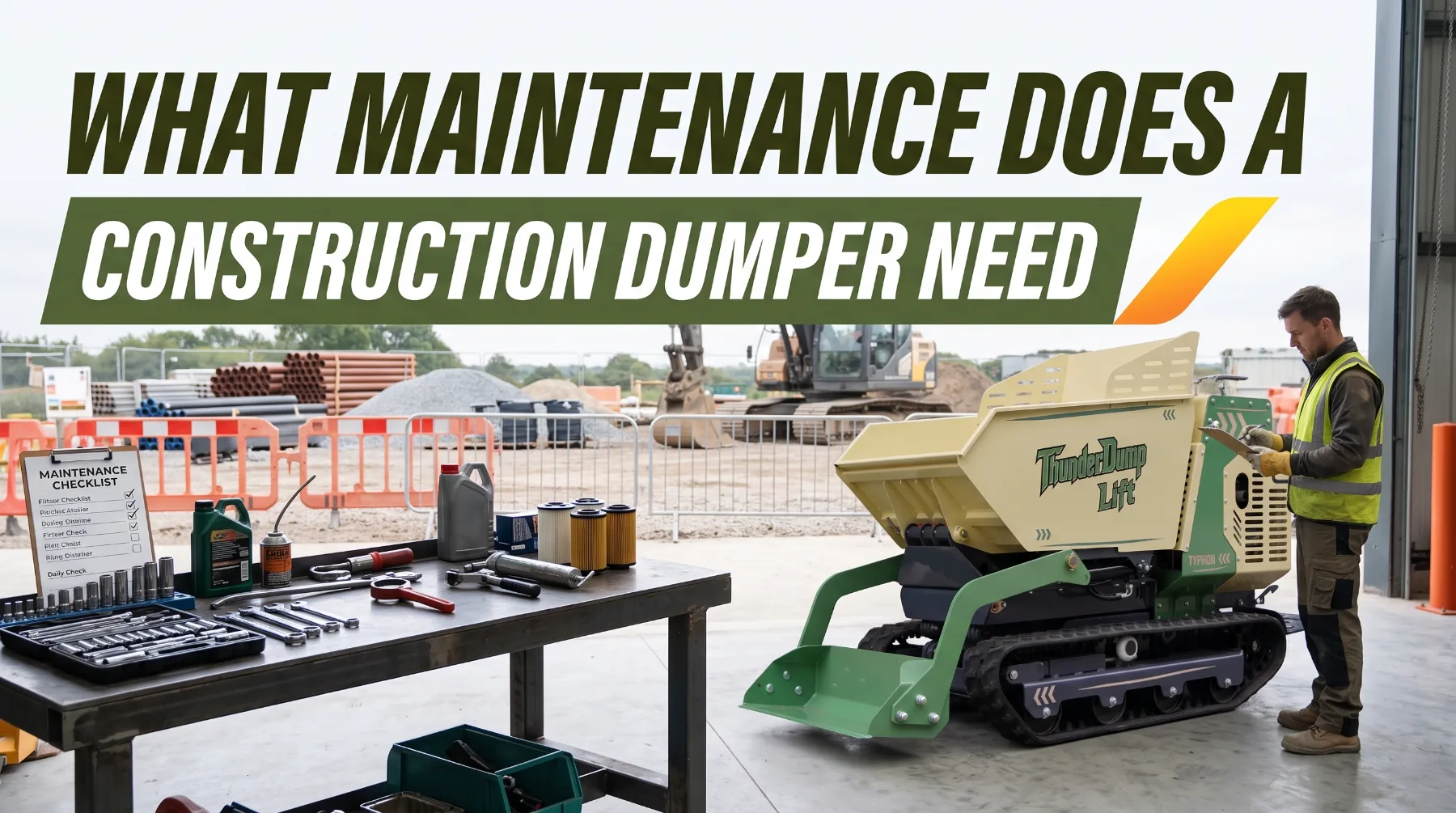
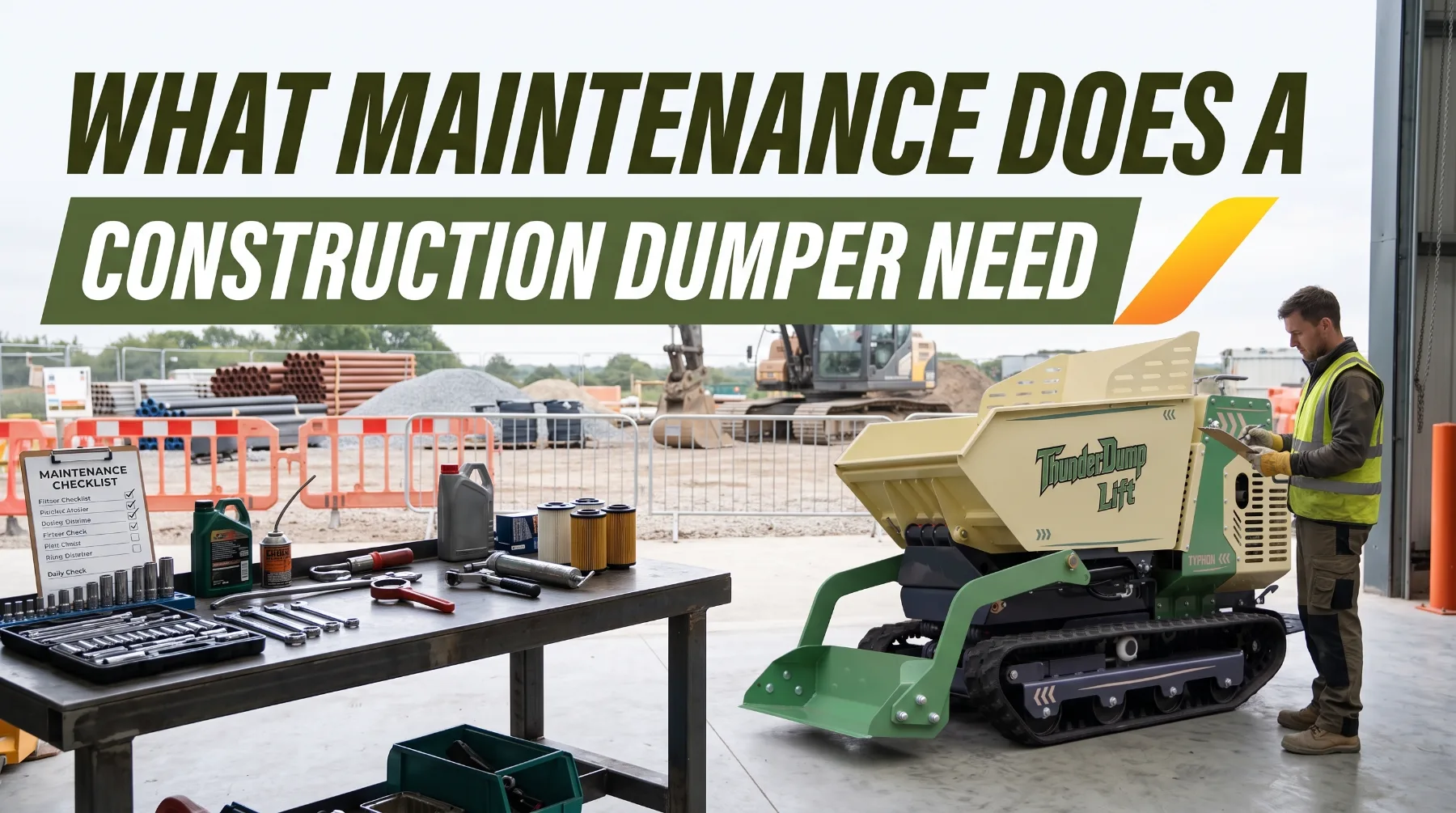
Running repeated loads from a stockpile to a fill area can put steady demands on a construction dumper throughout the workday. A hydraulic leak at a cylinder fitting may remain hidden beneath dried mud, while a crack near a dump-body hinge can gradually spread without causing an immediate failure. Problems like these may only become obvious when the body starts lifting unevenly or another component is already affected.
Regular inspections can reveal these developing issues before they interrupt the work cycle. Checking hydraulic cylinders, hoses, fittings, the dump body, hinges, frame, tires or tracks, and other high-wear areas gives operators an opportunity to spot leaks, cracks, loose connections, and damage early. Cleaning accumulated dirt and mud from inspection points can also make small defects easier to see.
Consistent maintenance helps keep minor problems from becoming unexpected downtime. A quick inspection before operation, followed by scheduled service and closer checks of heavily used components, can support more reliable dumper performance. Finding a defect while it is still manageable can also reduce the chance of an equipment stoppage that forces the crew to rely on slower alternative methods.
Inspect the Engine Before Operation
The engine is what lets a dumper carry heavy loads, climb grades, and cross the site shift after shift. When the engine runs short on fluids or develops a problem, every other part of the machine is affected. A pre-operation check keeps the engine ready for the demands of the day.
Start with the essentials. Check engine oil and coolant levels with the machine parked on level ground so readings are accurate. Inspect air and fuel filter indicators where equipped, since dumpers often work in dusty conditions that clog filters quickly. Look around the engine compartment and under the machine for fresh leaks of oil, coolant, or fuel. Follow the manufacturer’s maintenance requirements for each check, and use only the fluids the manufacturer specifies.
Pay attention once the engine starts. Unusual sounds, rough running, excess smoke, warning lights, or changes in how the engine responds under load can all point to a developing problem. Investigate these signs promptly rather than finishing the shift and hoping they go away.
Key takeaway: Check engine oil, coolant, filters, and visible leaks according to the manufacturer’s requirements, and investigate any unusual sounds or changes in engine behavior.
Check the Hydraulic System
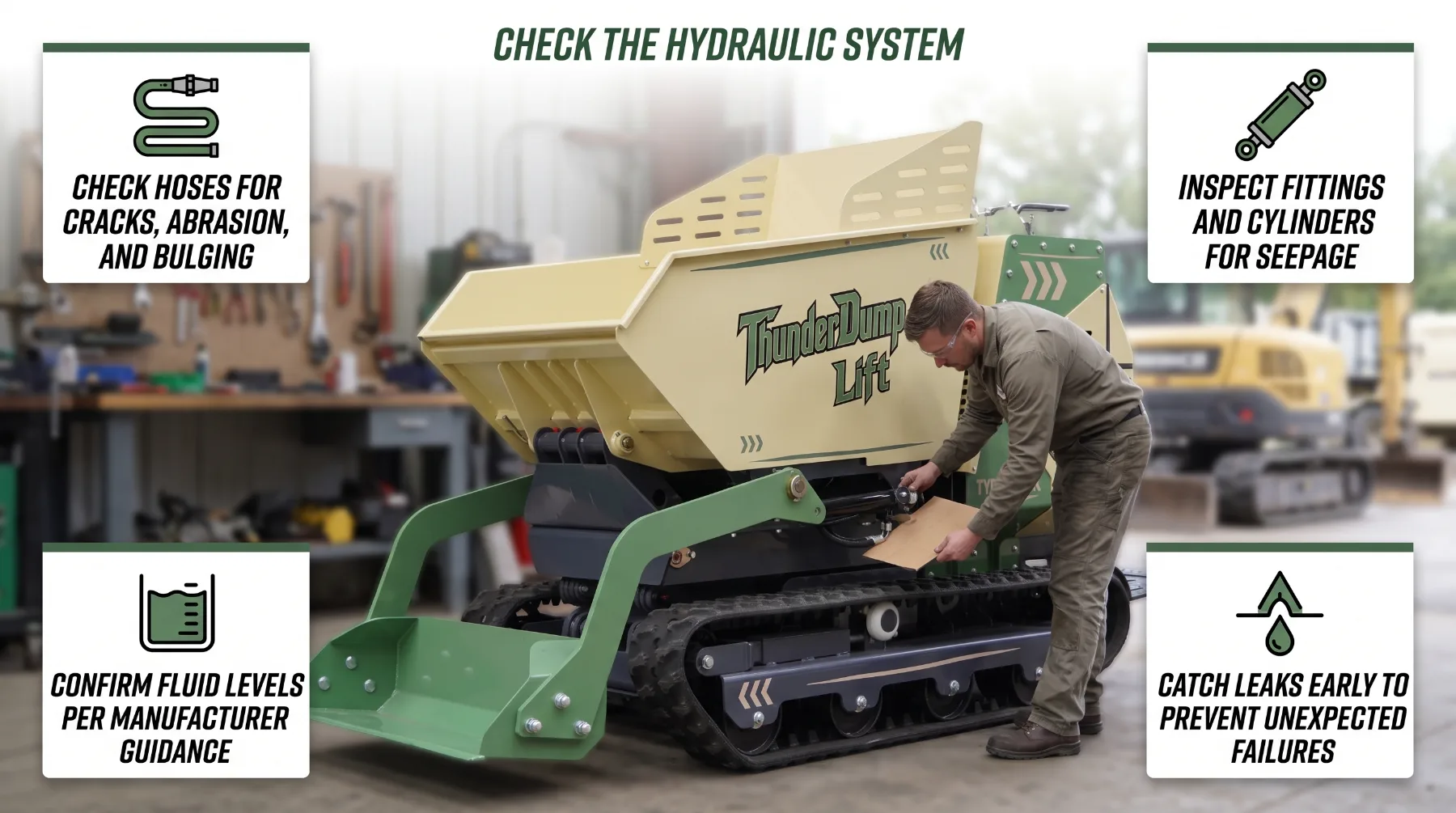
The hydraulic system controls important dumper functions such as raising and lowering the dump body. On swivel-bed and high-tip models, it may also control body rotation or elevated discharge. Because these functions involve high pressure and heavy loads, regular hydraulic inspections are important for maintaining reliable operation.
Inspect hoses, fittings, cylinders, and fluid levels according to the manufacturer’s guidance. Look for cracks, abrasion, bulging, kinks, dampness, seepage, or damage around cylinder seals and rods. Never check a pressurized hose for leaks with your hand; use cardboard or the manufacturer’s recommended inspection method. Finding small leaks early can help prevent reduced lifting performance, fluid loss, unexpected hose failure, and costly repairs.
Hydraulic Hoses: Check for cracks, abrasion, bulging, kinks, and damage around flexible areas.
Fittings & Cylinders: Inspect connections for seepage and cylinders for leaks, seal damage, or damaged rods.
Hydraulic Fluid: Confirm fluid levels according to the manufacturer’s recommended inspection procedure.
Leak Detection: Identify hydraulic leaks early to help maintain lifting performance and prevent unexpected failures.
Key takeaway: Inspect hoses, fittings, cylinders, and fluid levels regularly, since hydraulic leaks reduce performance and can become more serious if ignored.
Examine Tires or Tracks
Dumper ground-contact components take a constant beating. They carry the machine and its full load across uneven, rocky, and sometimes abrasive surfaces, often on slopes and through mud. Their condition has a direct effect on stability, traction, and safety.
On wheeled dumpers, check tires for cuts, punctures, embedded rock, and sidewall damage. Look for excessive or uneven tread wear, and confirm inflation according to the manufacturer’s guidance. Low or damaged tires reduce stability, especially when the machine is loaded or working on a grade.
Tracked dumpers need a close look at the track system and undercarriage. Inspect tracks for cuts, missing lugs, and damage. Check track tension, and examine rollers, idlers, and sprockets for wear. Clear packed mud, soil, rocks, and other material from the undercarriage, since buildup can affect tension and speed up wear. Good ground contact supports stable, predictable movement when moving soil and other heavy materials.
Key takeaway: Check tires for cuts, wear, and proper condition, or inspect the track system and undercarriage on tracked machines, to support stable movement with heavy loads.
Inspect the Dump Body
The dump body takes repeated impact every time rock, soil, concrete, or debris drops into it. It also flexes and carries stress each time it lifts and tips. Over weeks of hauling, that combination can wear or damage the structure in ways that affect safe discharge.
Look carefully at the body during each inspection. Check for cracks, particularly around welds, corners, and mounting points. Inspect panels for dents, holes, or distortion that could weaken the structure or cause material to hang up. Examine hinges and pivot pins for wear, looseness, or missing retainers. Pay close attention to the lifting points where the hydraulic cylinders connect, since stress concentrates there.
If you need to inspect underneath a raised body, always use the body support or safety lock the manufacturer provides. Never work beneath a raised body supported only by hydraulic pressure. Keeping the body in good condition helps it discharge material cleanly and reliably, load after load.
Key takeaway: Look for cracks, damaged panels, worn hinges, and problems around the lifting points to maintain safe and reliable material discharge.
Keep the Machine Clean
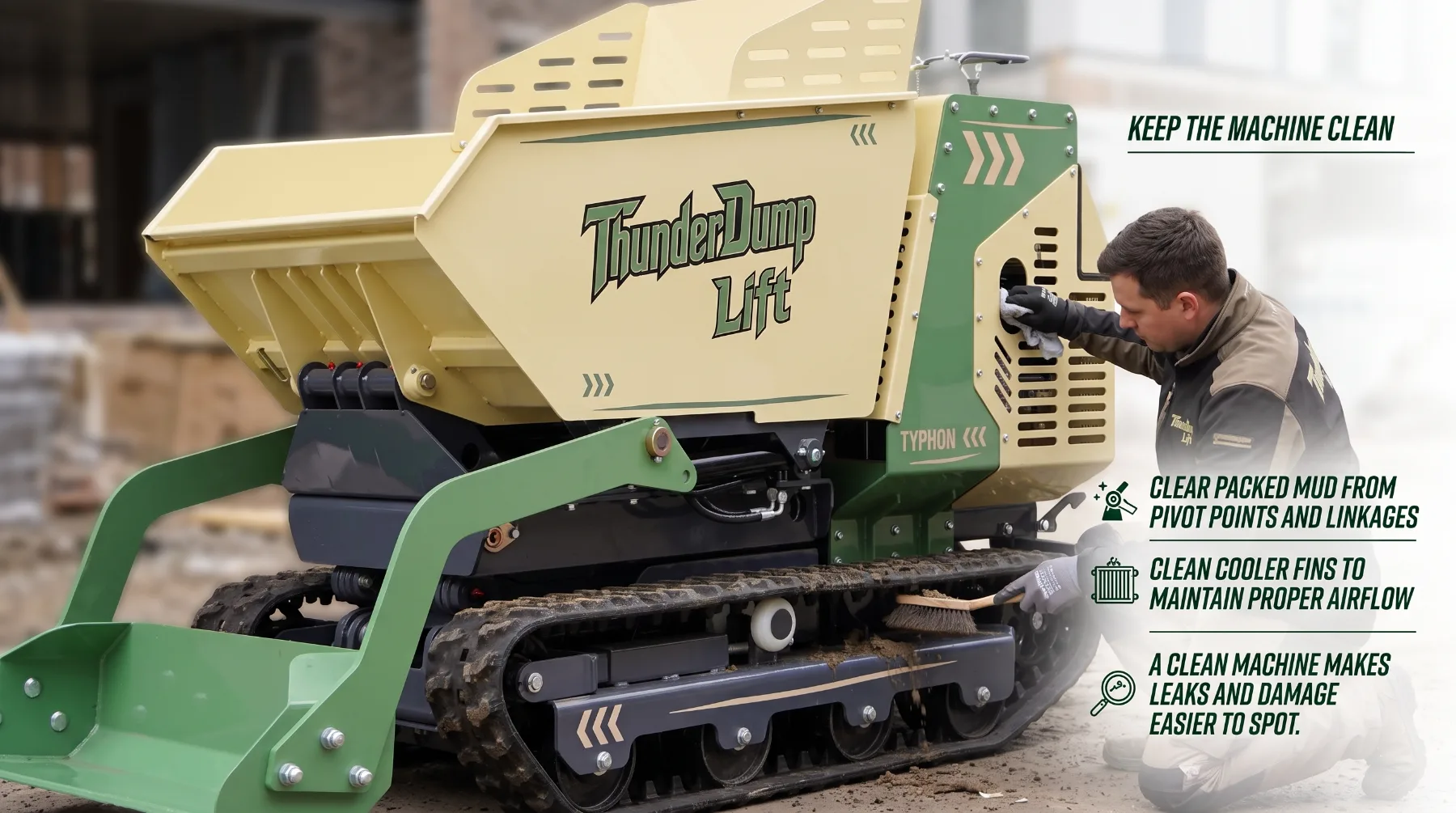
Construction sites are hard on equipment cleanliness. Mud, dust, and debris collect around moving parts, cooling areas, steps, and other components throughout the day. Left in place, that buildup can do more than make the machine look worn.
Packed material around pivot points, linkages, and the undercarriage can accelerate wear and interfere with movement. Debris in radiator and cooler fins restricts airflow, making it harder for the engine and hydraulic system to shed heat during heavy hauling. Mud on steps and handholds creates slip hazards for operators climbing on and off the machine.
Cleaning also makes inspection far more effective. Dirt can easily hide leaks, cracks, and damaged hoses, which is how small problems go unnoticed until they cause downtime. Give particular attention to areas where contamination tends to collect, such as around hydraulic fittings, the engine compartment, and the lower edges of the dump body. Clean using methods the manufacturer recommends, and avoid directing high-pressure water at seals, electrical components, or bearings.
Key takeaway: Cleaning mud and debris from moving parts, cooling areas, and steps makes inspection easier and prevents buildup from interfering with operation or hiding leaks and damage.
Follow Scheduled Service Intervals
Daily checks catch visible problems, but they are only one part of dumper maintenance. Many critical tasks happen on a schedule set by the manufacturer, usually based on operating hours, calendar time, or both.
Scheduled service typically includes oil and filter changes, air and fuel filter replacement, lubrication of pivot points and bearings, and hydraulic service such as fluid and filter replacement. Drivetrain components may also need inspection and service at defined intervals. Following these intervals protects internal components that daily inspections can’t reach. Machines working in especially dusty, wet, or demanding conditions may need closer attention, so review the manufacturer’s guidance for severe-duty operation.
Maintenance records tie the whole program together. You need to know what service has been completed, which parts were replaced, and what issues were found so you can keep track of upcoming maintenance and recurring problems. A clear maintenance log also helps meet warranty requirements and provides useful service history when the dumper is traded or sold.
Key takeaway: Follow the manufacturer’s service intervals for oil changes, filters, lubrication, and hydraulic service, and keep maintenance records to track completed work and identify recurring problems.
Conclusion
Regular construction dumper maintenance helps protect hauling performance, component life, and jobsite reliability. Pre-operation checks should cover engine oil, coolant, filters, leaks, and unusual operating behavior, while the hydraulic system requires inspection of hoses, fittings, cylinders, and fluid levels to maintain smooth dump-body movement. Tires should be checked for inflation, cuts, wear, and damage, while tracked machines also require inspection of track condition, tension, and undercarriage components. The dump body, hinges, panels, and lifting points should be examined for cracks, deformation, or excessive wear, while removing mud and debris from cooling areas, steps, and moving components keeps damage visible and supports proper operation. Controls, lights, alarms, mirrors, and seat belts should also be checked before work, with scheduled servicing performed according to the manufacturer’s intervals and maintenance records kept for future reference. Consistent inspections and servicing help reduce unexpected downtime, extend component life, and keep the dumper ready for demanding hauling cycles.
Frequently Asked Questions
What should be checked on a dumper every day?Operators should inspect fluids, leaks, tires or tracks, hydraulic components, the dump body, controls, and safety equipment before daily operation. Start with a walkaround for fresh leaks, loose parts, and visible damage. Check engine oil, coolant, and hydraulic fluid, then inspect hoses, fittings, cylinders, tires or tracks, and the dump body for wear or damage. Finally, confirm that controls, lights, alarms, mirrors, and the seat belt work properly. A daily check helps catch problems early before they affect hauling or safety.
Why is hydraulic maintenance important?Hydraulics operate the dump body, so leaks or damaged components can reduce lifting and dumping performance. Worn hoses, leaking fittings, or damaged cylinder seals can cause slow movement, fluid loss, or sudden failure. Regularly inspect hoses, fittings, cylinders, and fluid levels to identify problems early. Follow the manufacturer’s service intervals for hydraulic fluid and filter changes to keep the system clean and reduce component wear.
Does a dump body need regular inspection?Yes. Repeated loading and dumping can cause cracks, dents, and wear around welds, panels, hinges, pivot pins, and lifting points. Heavy materials such as rock and concrete can increase impact and stress on the body. Inspect the dump body during every daily check and address damage before it affects operation. Always use the manufacturer’s body support or safety lock before inspecting or working beneath a raised body.
How often should major maintenance be performed?Major maintenance should follow the manufacturer’s operating-hour or calendar-based intervals. Common tasks include engine oil and filter changes, air and fuel filter replacement, lubrication, hydraulic fluid and filter service, and drivetrain inspection. The exact schedule varies by model, while dusty, muddy, or heavy-duty conditions may require more frequent service. Keep maintenance records to track service intervals and recurring issues, helping protect components and maintain reliable operation.