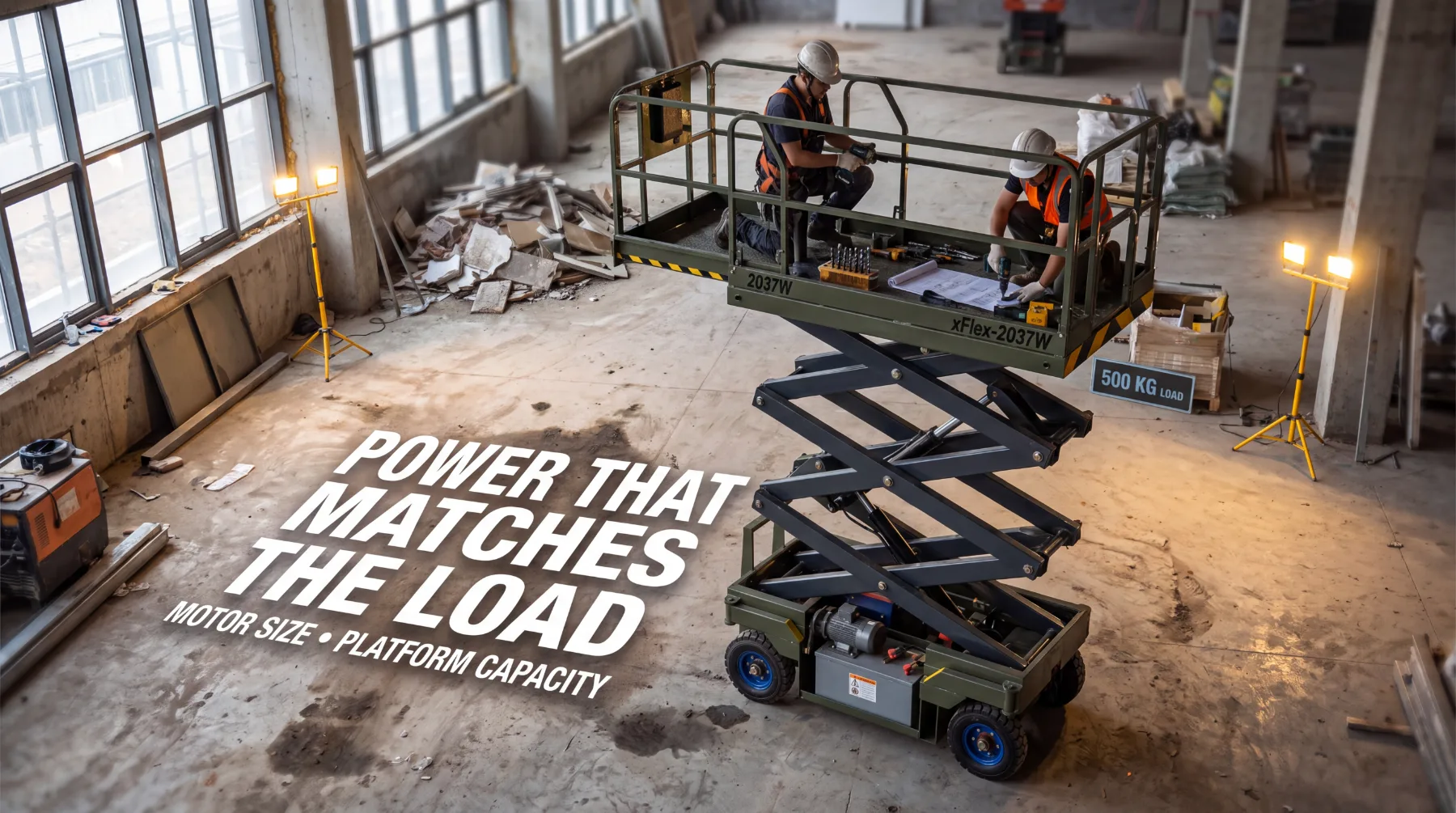
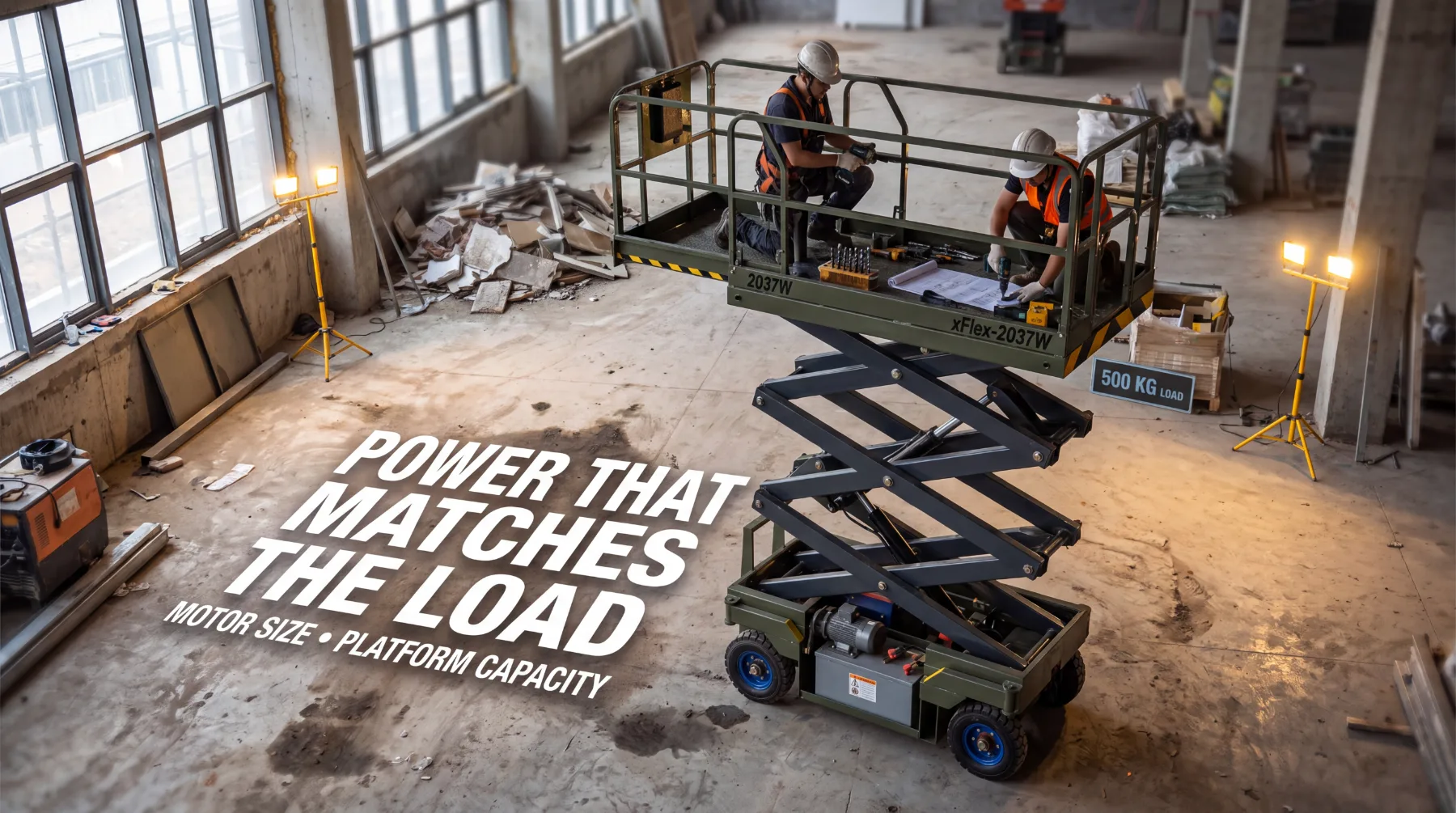
Motor size rarely tops the list when buyers compare scissor lifts, yet it plays a decisive role in whether a machine lifts its rated load smoothly and lasts as long as it should. The motor drives the lifting system that raises the platform, the people on it, and everything they carry. When motor power matches platform capacity, the machine performs reliably lift after lift. When it does not, you get slow, strained operation and premature wear. This guide explains how motor size should match scissor lift platform capacity, so you can choose and operate a machine that delivers dependable performance within its designed limits.
Matching Motor Power to Platform Load
Motor power and platform load are directly connected, because the motor must supply enough force to raise everything the platform carries without excessive strain. That load is not just the platform itself. It includes the operator, any additional workers, the tools they use, and the materials they bring up with them. All of that combined weight has to be lifted by the machine’s drive system, and the motor is what powers that effort. A motor sized correctly for the job moves the load steadily and comfortably, while an underpowered one struggles against a weight it was never built to handle.
The relationship becomes clearer when you consider how platform capacity scales. A higher-capacity platform is designed to carry more weight, so it naturally requires a motor and drive system sized to handle that greater working load. You cannot pair a large, heavy-duty platform with a small motor and expect dependable results. The two must be engineered together, with the motor’s output matched to the maximum load the platform is rated to lift.
Consider what a properly matched motor supports on a working machine:
- The platform structure itself, which carries its own significant weight before anything is added.
- The operator and workers who stand on the platform to perform the task.
- Tools and materials brought up for the job, which can add considerable weight.
- Slower lifting as the motor struggles to raise a load beyond its comfortable output.
- Reduced performance across the lifting cycle, making the machine feel sluggish and less productive.
- Increased component stress as the motor and drive system work near or past their limits.
- The hydraulic or electric lifting system, which has its own force and pressure limits.
- Scissor geometry, the structure that physically bears the load being raised.
- Machine weight and construction, which affect stability and structural strength.
- The control system, which governs safe operation throughout the lift.
- Controlled energy consumption, since a well-matched motor does not waste power straining against loads at its limit.
- Reduced heat generation, because a motor operating within its comfortable range runs cooler than one pushed to full output.
- Less wear during repeated cycles, as components under reasonable load last longer than those constantly stressed.
- Rated platform capacity, the maximum load the lifting system must raise.
- Lift height, which sets how far the platform travels each cycle.
- Duty cycle, or how frequently the machine lifts during operation.
- Lifting speed, the pace at which the platform must rise.
- Operating conditions, including the environment the machine works in.
When the motor is matched to this full combined load, it delivers the force needed to lift smoothly and without stress on the system. This is the foundation of reliable scissor lift performance. A machine whose motor comfortably handles its rated load works predictably every day, giving operators the confidence that the platform will rise steadily whether it carries a single worker or a full load of people and materials.
How Platform Capacity Affects Lifting Performance
Platform capacity has a direct effect on how much force the lifting system must produce, and that force requirement shapes the machine’s performance. As the load on the platform increases, the scissor mechanism needs more power to raise it. The scissor design multiplies force to lift the platform, but the motor still has to supply the energy that drives the whole action. A heavier load means the lifting system works harder, and the motor must be capable of meeting that demand if the machine is to perform as expected.
When the motor is not sized to match the platform’s capacity, the shortfall shows up quickly in daily operation. An undersized motor cannot deliver the force the lifting system needs, and the consequences affect both performance and the machine’s long-term health.
The most common effects of an undersized motor include:
Each of these effects carries a cost. Slow lifting stretches out every cycle, which reduces how much work the machine completes over a shift. Reduced performance makes the lift less dependable, especially when it carries loads near its rated capacity. Most seriously, the added stress on components accelerates wear, shortening the life of the motor and the parts of the lifting system it drives. A machine forced to work beyond its comfortable range steadily wears itself down.
Matching motor power to platform capacity avoids these problems. When the motor can supply the force the load demands, the platform rises smoothly and consistently, the machine stays productive, and the lifting system operates within healthy limits. That match between capacity and lifting performance is what keeps a scissor lift working dependably over its full service life.
Why Motor Size Alone Does Not Determine Capacity
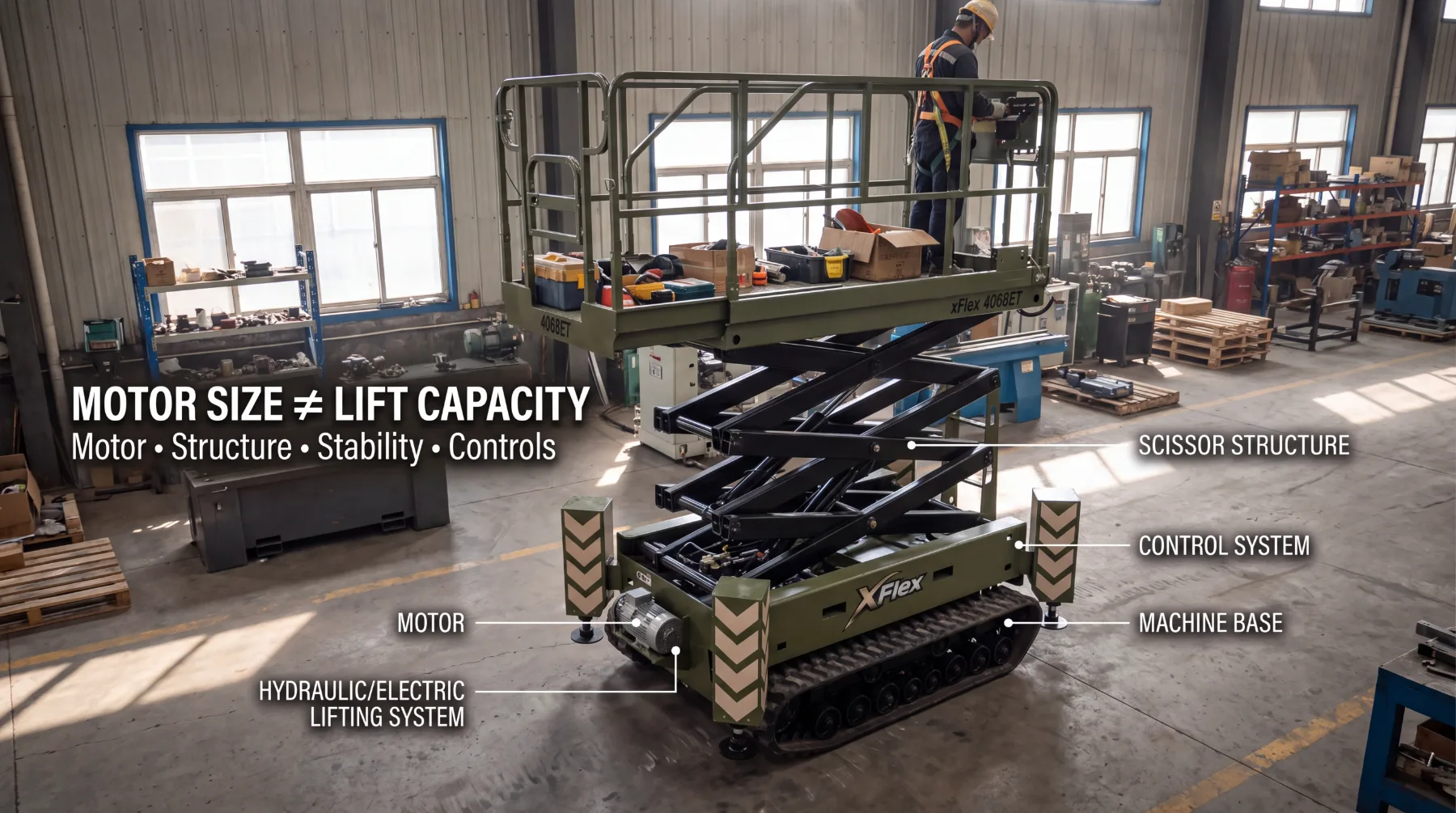
A common misunderstanding is that fitting a larger motor will raise a scissor lift’s safe capacity. It will not. Motor size is one important factor in lifting performance, but platform capacity depends on the whole machine working as an engineered system, not on any single component. Simply installing a bigger motor does not automatically increase the safe rated capacity, because the rating reflects the combined limits of everything involved in lifting and supporting the load.
Several systems and design elements determine what a scissor lift can safely carry. The lifting system, whether hydraulic or electric, has its own capacity limits that the motor drives but does not override. The scissor geometry, meaning the arrangement and strength of the scissor arms, defines how much load the structure can bear. The machine’s own weight and construction contribute to stability and to how much load it can lift safely. The control system manages the whole operation within safe boundaries. Each of these must support the rated load for the capacity to hold true.
Consider the elements that work together to set safe capacity:
Because capacity comes from all these elements together, changing the motor alone does not change what the machine can safely handle. A larger motor fitted to a structure not built for more load would only stress components never designed for it, creating a serious safety risk rather than added capacity. This is why the rated capacity set by the manufacturer must always be respected. It represents the safe limit of the entire engineered system, and no single upgrade can extend it. Understanding this protects both the machine and the people who depend on it.
Motor Efficiency Under Heavy Loads
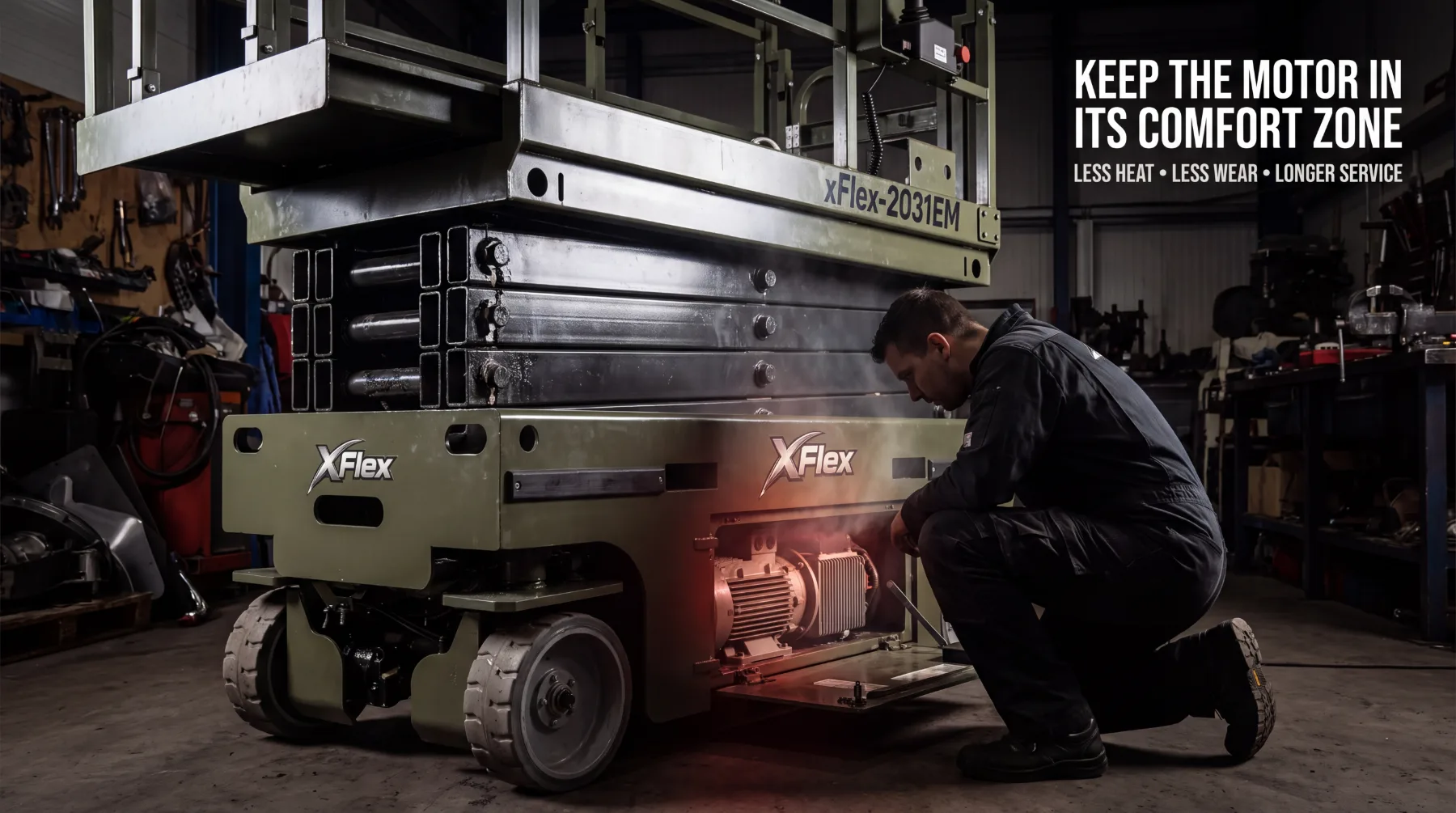
Efficiency matters just as much as raw power, especially when a scissor lift handles heavy loads through repeated cycles. A properly matched motor delivers the lifting performance the job requires without constantly operating at the edge of its capability. That margin between what the motor can produce and what the task demands is what keeps the machine running efficiently. A motor working comfortably within its range performs its job while avoiding the strain that comes from operating at its limit every time it lifts.
The benefits of this efficient operation are practical and add up over time. When a motor is not forced to work at full output on every cycle, it draws power more sensibly, generates less heat, and experiences less wear. These advantages protect both the running costs and the working life of the machine.
Efficient operation under load supports the machine in several ways:
Heat is worth particular attention, because a motor forced to work at its limit generates more of it, and excess heat accelerates wear on the motor and the surrounding components. Over many lifting cycles, that heat and stress take a toll, leading to more frequent maintenance and a shorter service life. A properly matched motor sidesteps much of this by working within a healthy range even when the platform carries a heavy load.
For any operation that lifts repeatedly throughout the day, this efficiency translates directly into reliability. A motor matched to the platform’s demands keeps energy use, heat, and wear under control, which means fewer interruptions and a machine that stays dependable through demanding, repeated use. Efficiency, in this sense, is what turns adequate power into lasting performance.
Choosing the Right Motor for the Application
Selecting the right motor means looking beyond a single power figure and considering how the machine will actually be used. Motor selection should account for the rated platform capacity, the lift height, the duty cycle, the lifting speed, and the operating conditions the machine will face. When these factors are matched thoughtfully, the scissor lift achieves reliable performance while staying comfortably within its designed limits. Overlooking any of them can leave you with a machine that underperforms or wears prematurely, even if its motor looks adequate on paper.
Each factor shapes the demands placed on the motor in its own way. Rated platform capacity sets the maximum load the motor must lift. Lift height affects how far and how long the motor works on each cycle. Duty cycle, meaning how often the machine lifts over a given period, determines how hard the motor works across a shift. Lifting speed influences how much power the motor must deliver to raise the load at the required pace. Operating conditions, such as temperature and environment, affect how the motor performs and how it manages heat.
Keep these factors in view when matching a motor to the work:
Matching all these factors together is what produces a dependable machine. A lift used for occasional, low work has very different motor demands than one lifting heavy loads to full height many times an hour. The sensible approach is to define your real working requirements first, then choose a machine whose motor and lifting system are engineered to meet them with a comfortable margin. Making the selection this way ensures the scissor lift performs reliably, respects its designed limits, and delivers the safe, consistent service that demanding work depends on.
Conclusion
Motor size and platform capacity are two parts of one engineered system, and matching them well is what keeps a scissor lift safe, efficient, and dependable. The motor must supply enough power to raise the platform, operator, tools, and materials without strain, and higher-capacity platforms demand a motor and drive system built to match. An undersized motor slows lifting, reduces performance, and stresses components, while raw motor size alone can never raise the safe capacity set by the machine’s structure, lifting system, and controls. A properly matched motor works efficiently under load, controlling energy use, heat, and wear across repeated cycles. Choose with rated capacity, lift height, duty cycle, lifting speed, and operating conditions in mind, and your scissor lift will deliver reliable performance within its designed limits for years of demanding work.
Frequently Asked Questions
1. Why does motor size need to match scissor lift platform capacity?
The motor must supply enough force to lift everything the platform carries, which includes the platform structure, the operator and any other workers, and the tools and materials brought up for the job. When the motor is matched to this full combined load, it raises the platform smoothly and without excessive strain on the drive system. A higher-capacity platform is designed to carry more weight, so it requires a motor and drive system sized to handle that greater working load. Pairing a large platform with an undersized motor leads to poor performance and added stress. Matching the two ensures the machine lifts its rated load dependably, whether it carries a single worker or a full load of people and materials.
2. What happens if a scissor lift has an undersized motor?
An undersized motor cannot deliver the force the lifting system needs to raise heavier loads, and the effects show up quickly. Lifting becomes slower as the motor struggles against a weight beyond its comfortable output, which stretches out every cycle and reduces how much work the machine completes. Overall performance suffers, making the lift feel sluggish and less dependable, especially near its rated capacity. Most seriously, the motor and drive system work at or past their limits, which increases component stress and accelerates wear. Over time, this shortens the service life of the motor and the parts it drives, leading to more frequent maintenance. Matching motor power to platform capacity avoids these problems and keeps the lifting system within healthy limits.
3. Can installing a bigger motor increase a scissor lift’s rated capacity?
No. Fitting a larger motor does not automatically increase the safe rated capacity, because capacity comes from the whole machine working as an engineered system. Several elements set that limit together: the hydraulic or electric lifting system with its own force limits, the scissor geometry that physically bears the load, the machine’s weight and construction that affect stability, and the control system that governs safe operation. Each must support the rated load for the capacity to hold true. A larger motor fitted to a structure not built for more load would only stress components never designed for it, creating a serious safety risk rather than added capacity. The rated capacity set by the manufacturer represents the safe limit of the entire system and must always be respected.
4. How does a properly matched motor improve efficiency?
A properly matched motor delivers the required lifting performance without constantly operating at the edge of its capability. That margin between what the motor can produce and what each lift demands keeps the machine running efficiently. Because the motor is not forced to work at full output on every cycle, it draws power more sensibly, generates less heat, and experiences less wear. Heat matters in particular, since a motor pushed to its limit runs hotter, and excess heat accelerates wear on the motor and surrounding components. Over many lifting cycles, keeping energy use, heat, and wear under control means fewer interruptions and a longer service life. For operations that lift repeatedly throughout the day, this efficiency translates directly into reliable, dependable performance.
5. What factors should I consider when choosing a scissor lift motor?
Motor selection should account for several factors together rather than a single power figure. Start with the rated platform capacity, which sets the maximum load the motor must lift. Consider the lift height, since it determines how far the platform travels on each cycle, and the duty cycle, meaning how often the machine lifts over a given period. Lifting speed matters too, because it affects how much power the motor must deliver to raise the load at the required pace. Finally, account for operating conditions such as temperature and environment, which influence how the motor performs and manages heat. Define your real working requirements first, then choose a machine whose motor and lifting system are engineered to meet them with a comfortable margin.