
Best Bucket Types for Every Skid Steer Application
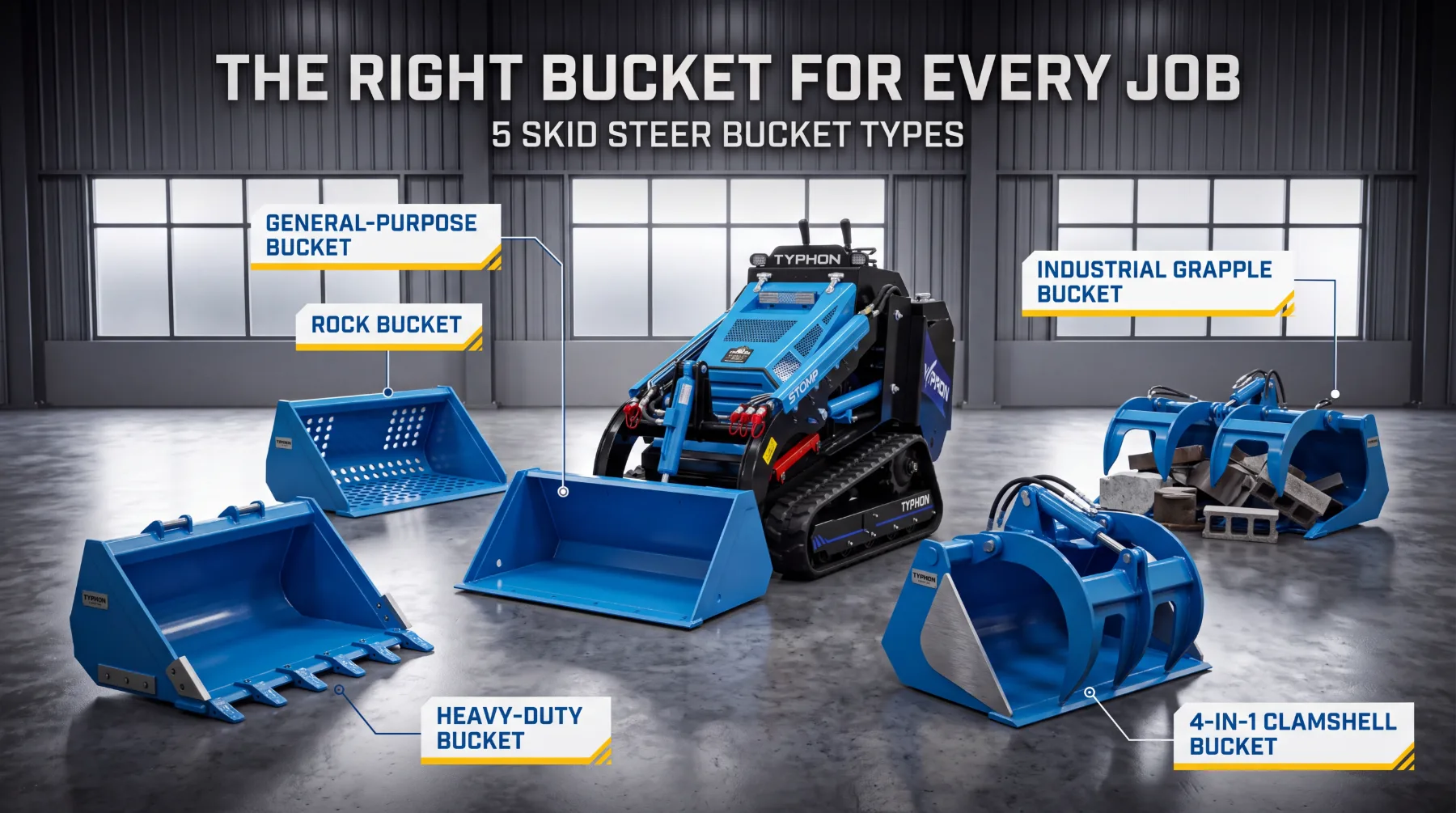
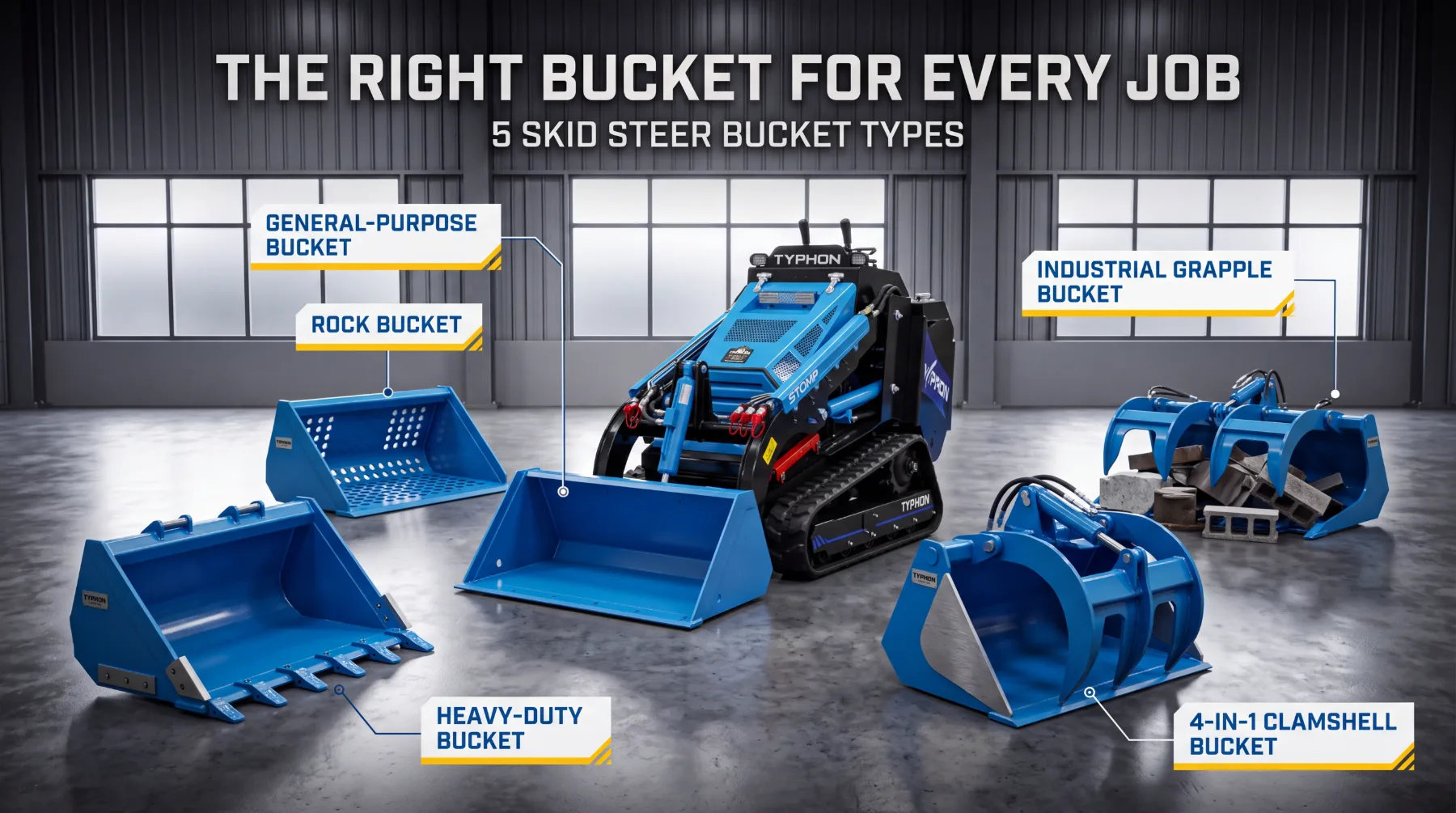 A skid steer is only as capable as the attachment on the front of it, and few attachments matter more than the bucket. The right bucket turns your machine into the perfect tool for the job, letting you move material faster, dig cleaner, and handle tough conditions without straining the equipment. The wrong one slows you down, wears out quickly, or simply can’t do what the work demands. Because skid steers tackle such a wide range of tasks, no single bucket fits every situation, and that’s exactly why matching the bucket to the application pays off. This post walks through five bucket types that cover the vast majority of skid steer work: the general-purpose bucket, the heavy-duty bucket, the rock bucket, the 4-in-1 bucket, and the grapple bucket. For each one, you’ll learn what it does best and the kind of job it’s built to handle, so you can equip your machine for the work in front of you.
General-Purpose Bucket
The general-purpose bucket is the workhorse of the skid steer world, and for most operators it’s the first attachment they reach for. Built as a versatile, all-around tool, it handles the everyday material movement that fills so much of a jobsite’s workday. Whether you’re pushing dirt, loading a trailer, or clearing a work area, this bucket does the job without fuss. Its straightforward design makes it easy to use and dependable across a broad range of tasks, which is exactly why it comes standard on so many machines. What makes this bucket so useful is its ability to handle common materials with ease. It’s well suited to moving:
- Soil and dirt, for grading, backfilling, and general site work.
- Gravel and aggregate, for spreading, loading, and material handling.
- Sand and loose fill, for scooping, transporting, and dumping where needed.
That versatility keeps the general-purpose bucket busy on nearly every project. It scoops, carries, and dumps loose material efficiently, and its smooth cutting edge lets you level and grade as you work. For contractors, landscapers, and property owners handling routine material movement, it delivers reliable performance day in and day out. If your work involves standard materials and everyday tasks rather than heavy digging or abrasive conditions, the general-purpose bucket is the practical foundation of your attachment lineup and the one you’ll use most often.
Heavy-Duty Bucket
When the work gets tougher, the general-purpose bucket reaches its limits, and that’s where the heavy-duty bucket earns its place. Built specifically for demanding jobs and harder materials, it features stronger construction throughout to withstand stresses that would wear down or damage a standard bucket. Thicker steel, reinforced wear points, and a more robust cutting edge give this bucket the durability to dig into compacted ground and handle abrasive material without failing prematurely. For operators who push their machines hard, that added strength is well worth it. The heavy-duty bucket shines in conditions that combine digging force with rough, wearing materials. Compacted soil, dense fill, and abrasive aggregates all take a toll on equipment, grinding down cutting edges and stressing the bucket’s structure over time. A heavy-duty design stands up to that punishment, holding its shape and its edge through repeated hard use. This makes it the right choice for excavation work, demanding loading tasks, and any application where the material is coarse, heavy, or unforgiving. Choosing a heavy-duty bucket is ultimately about matching the tool to the intensity of the work. If your projects regularly involve digging into hard ground, handling abrasive materials, or working the machine through long, punishing shifts, the extra investment in stronger construction protects both your productivity and your equipment. A bucket that resists wear and damage keeps you working instead of repairing, and it holds up over the long haul where a lighter bucket would give out. For serious digging and demanding material handling, the heavy-duty bucket delivers the strength and dependability the job requires.
Rock Bucket
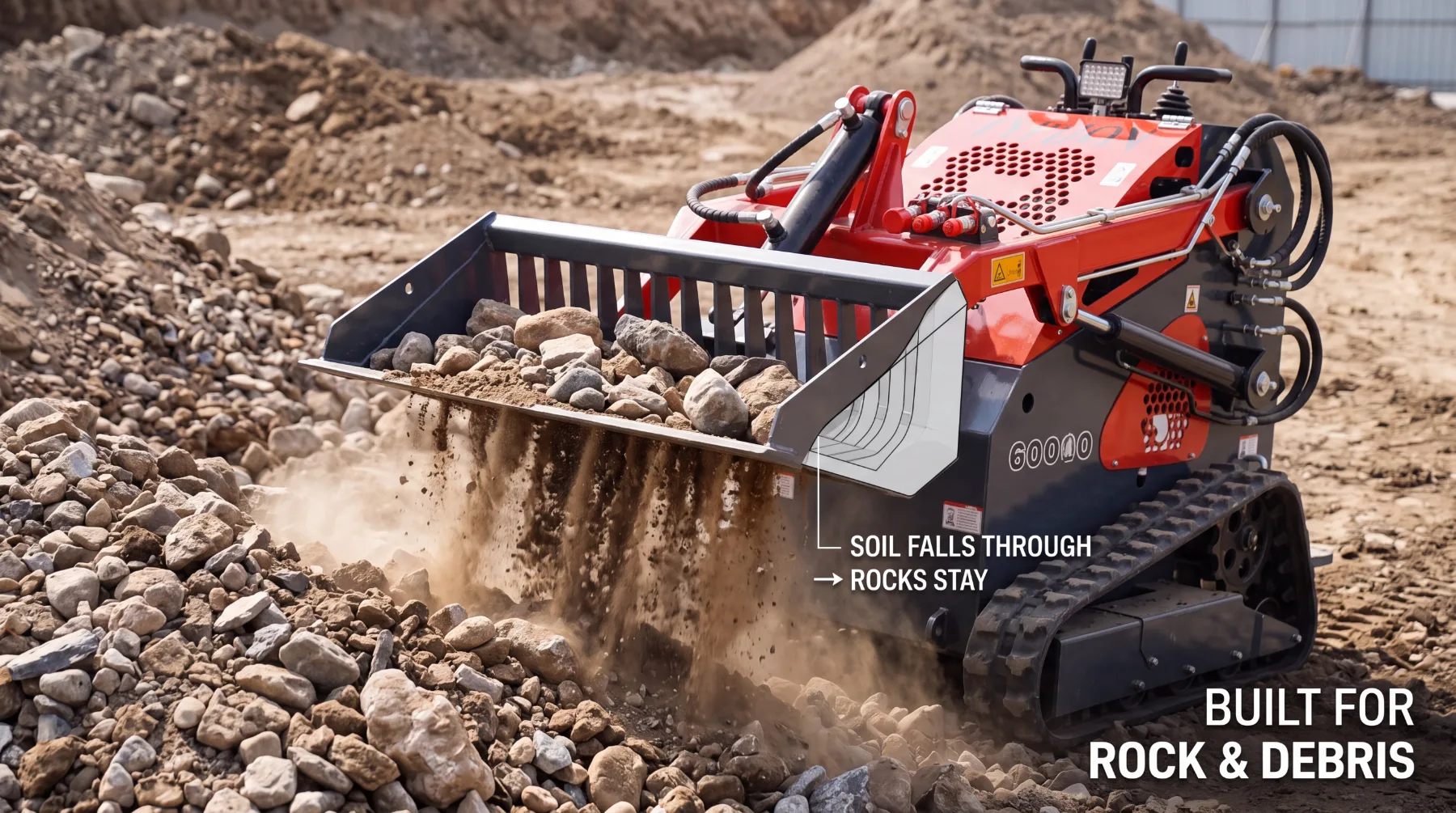 Handling rock, debris, and rubble calls for a bucket designed to separate the material you want from the material you don’t, and the rock bucket does exactly that. Its defining feature is a series of openings, often spaced tines or a slotted design, that allow soil, dirt, and fine material to fall through while retaining larger rocks and debris. This sifting action lets you clean up a site efficiently, pulling out stones and rubble while leaving the loose soil behind rather than hauling it all away together. Reinforced construction is the other half of what makes a rock bucket effective. Rocks and demolition debris are heavy and hard on equipment, so the bucket is built with extra strength to withstand the abuse of scooping and carrying rugged material. Key qualities set it apart:
- Reinforced build, standing up to the weight and roughness of rock and debris.
- Soil-shedding openings, letting dirt and fines fall away while rocks stay in the bucket.
- Strong tines or bars, digging into piles and raking material free of the surrounding soil.
This combination makes the rock bucket ideal for land clearing, site cleanup, and rock removal. On a property being prepared for construction or landscaping, it separates stones from usable soil, reduces the volume of material you have to transport, and leaves the ground cleaner and ready for the next stage. For operators dealing with rocky ground, demolition cleanup, or debris removal, the rock bucket turns a messy, labor-intensive task into an efficient one. When your work involves sorting rocks and rubble from soil, it’s the purpose-built tool that gets it done.
4-in-1 Bucket
Few attachments offer the versatility of a 4-in-1 bucket, which combines several functions into a single tool. As the name suggests, it performs four distinct jobs: it can open, clamp, scoop, and level. A hinged design lets the bucket split open and close like a clamshell, and that simple capability transforms what a single attachment can accomplish. Instead of switching between multiple buckets to complete a project, an operator can handle a range of tasks without ever leaving the machine, which saves considerable time and effort on a busy jobsite. Each of the four functions serves a practical purpose in day-to-day work:
- Digging, using the bucket in its closed position to excavate and scoop material.
- Grading and leveling, using the flat edge to smooth and finish surfaces.
- Grabbing, opening the clamshell to clamp and hold materials like pipe, debris, or logs.
- Site cleanup, scooping loose material and clamping bulky items to clear a work area.
This flexibility makes the 4-in-1 bucket a genuine multitasker and a favorite among contractors who value efficiency. On a job that involves digging a trench, grading the surrounding ground, moving materials, and cleaning up afterward, one 4-in-1 bucket can carry the work through every stage. That reduces the need for multiple attachments and cuts down on the downtime spent swapping them out. While it carries a higher cost than a basic bucket, the versatility often justifies the investment for operators who tackle varied tasks. When your work demands adaptability and you want a single attachment that digs, grades, grabs, and cleans up, the 4-in-1 bucket delivers capable, all-in-one performance.
Grapple Bucket
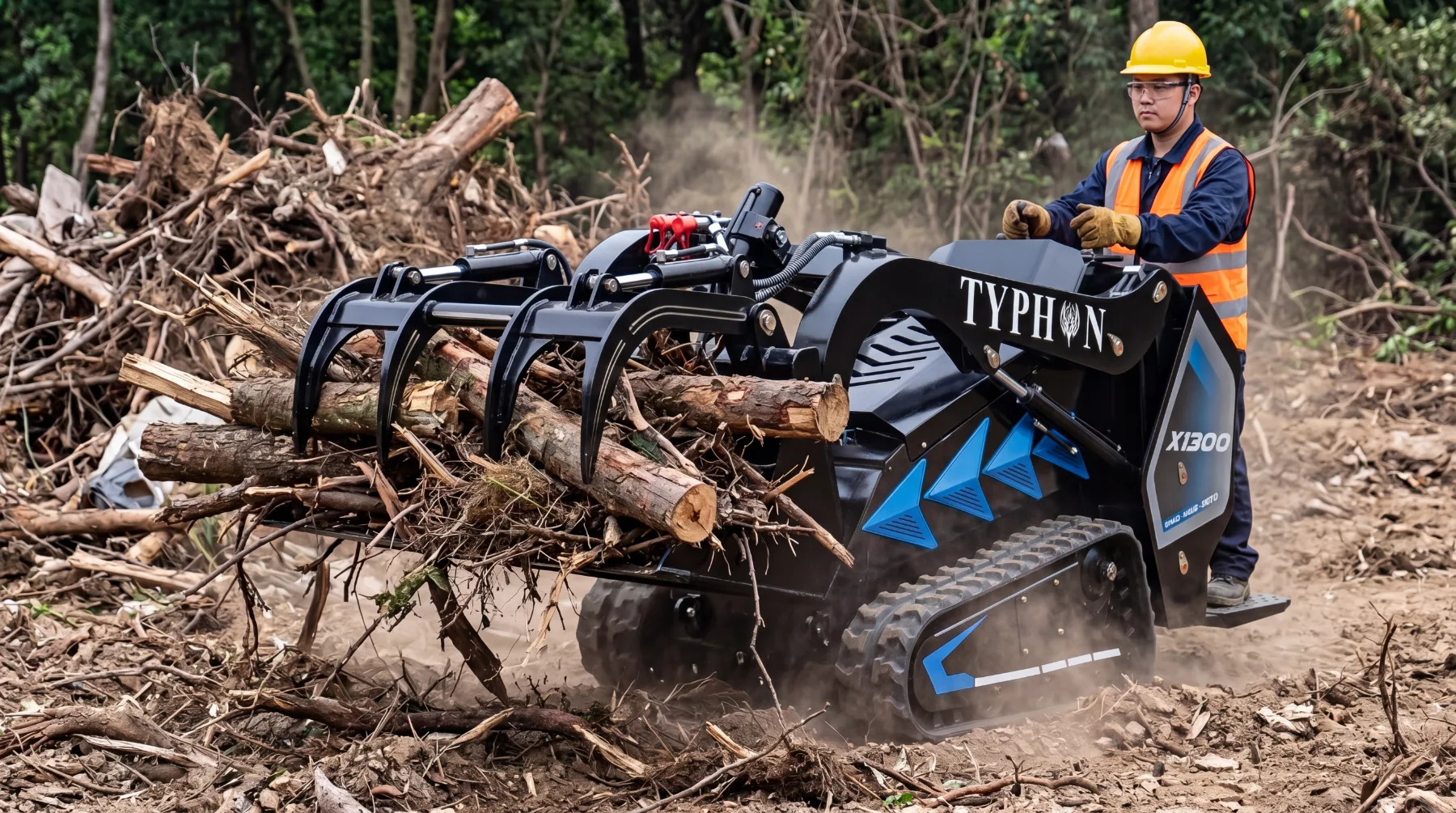 Some materials simply won’t stay in an open bucket, and that’s the problem the grapple bucket solves. By adding a clamping arm, or grapple, over the top of the bucket, it gains the ability to grab and hold irregular, bulky, or loose material securely. The grapple closes down onto whatever the bucket is carrying, pinning it in place so it doesn’t roll, slide, or fall out during transport. That clamping capability opens up a whole category of work that a standard bucket can’t handle safely or efficiently. The grapple bucket is especially valuable for handling material that’s awkward to move by shape or size. It’s ideal for jobs involving:
- Branches and brush, gripping tangled, irregular loads that would spill from an open bucket.
- Logs and timber, clamping down to carry heavy, rounded material securely.
- Demolition debris, holding broken concrete, wood, and rubble firmly in place.
- Irregular materials, grabbing odd-shaped items that won’t stack or scoop cleanly.
This makes the grapple bucket a go-to attachment for land clearing, demolition, and cleanup work. When you’re clearing brush from a property, hauling logs after tree work, or removing debris from a demolition site, the grapple’s secure hold lets you move loads that would otherwise require hand labor or multiple trips. It grabs, lifts, and transports difficult material in a single controlled motion, keeping the work safe and efficient. For operators who regularly handle brush, logs, or debris, the grapple bucket adds a capability that transforms messy, stubborn material into a manageable task, making it an essential tool for clearing and cleanup jobs.
Conclusion
The right bucket makes all the difference in how well your skid steer performs, and each of these five types earns its place by excelling at specific work. The general-purpose bucket handles everyday material movement with dependable versatility, while the heavy-duty bucket brings the stronger construction needed for tough materials and abrasive, demanding conditions. The rock bucket separates stones and debris from soil with its reinforced build and soil-shedding openings, and the 4-in-1 bucket combines digging, grading, grabbing, and cleanup into a single adaptable tool. Rounding out the lineup, the grapple bucket adds the clamping power that makes short work of branches, logs, and demolition debris. No single bucket does it all, which is why matching the attachment to the application is the key to getting the most from your machine. Take an honest look at the materials you handle and the tasks you tackle most often, and equip your skid steer accordingly. When the bucket fits the job, you’ll work faster, safer, and more efficiently on every project.