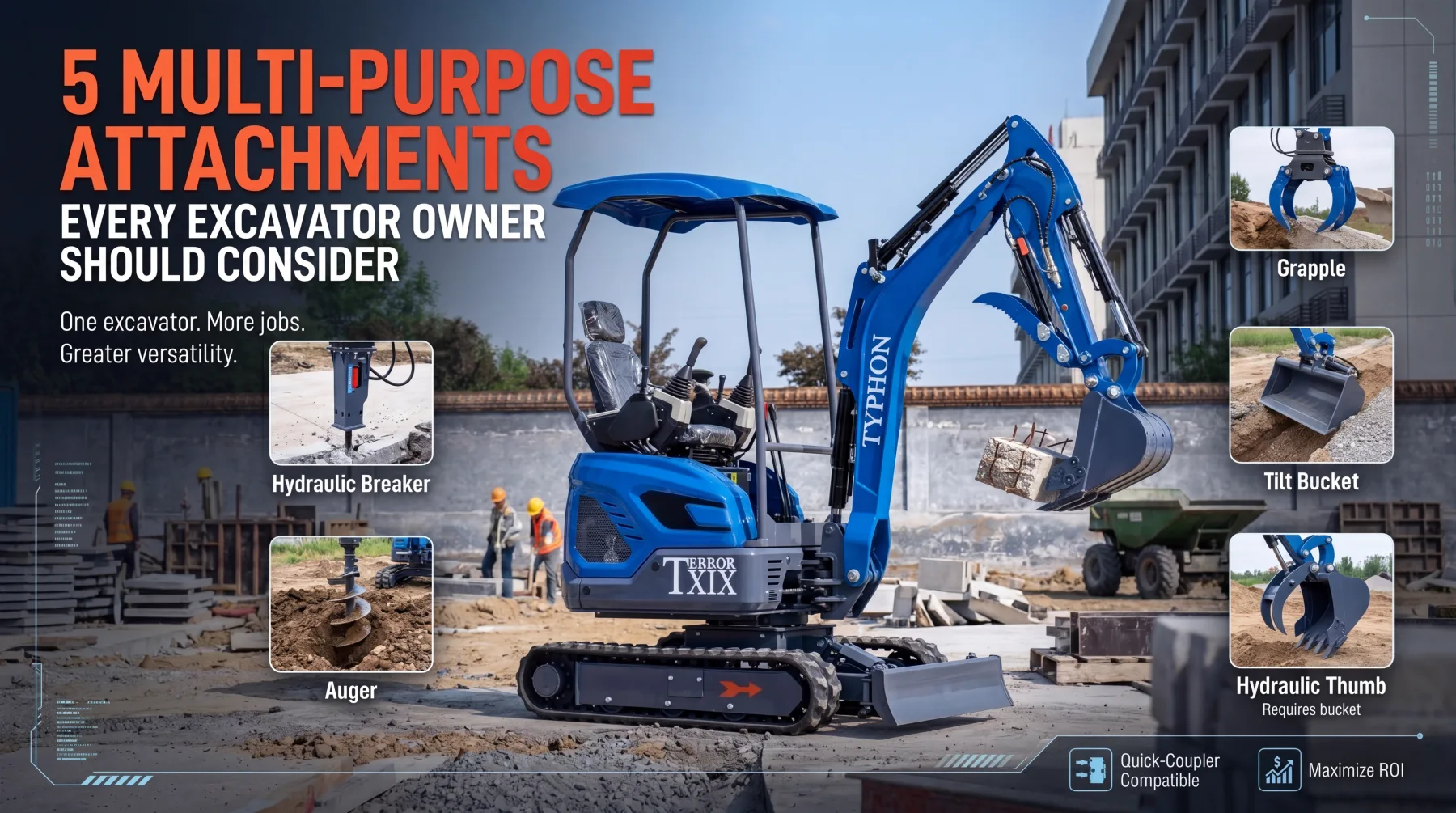
Multi-Purpose Attachments Every Excavator Owner Should Consider
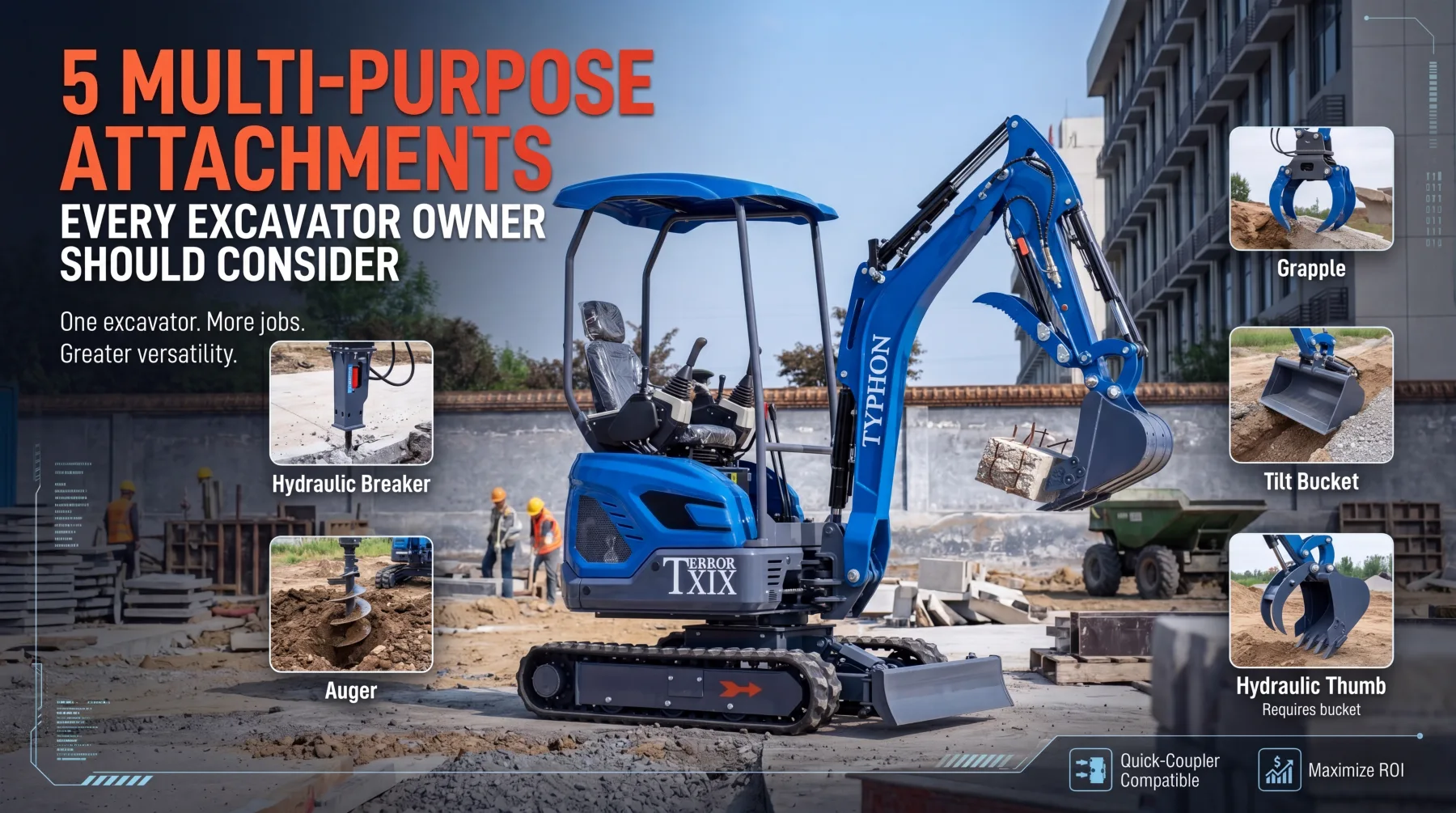
An excavator is one of the most valuable machines on any job site, but its true potential comes from the attachments you pair with it. The right attachment turns a single machine into a fleet of specialized tools, letting you break concrete in the morning and sort scrap in the afternoon without renting extra equipment. That versatility saves money, reduces downtime, and helps you take on a wider range of work with confidence. This post walks through five multi-purpose attachments every excavator owner should consider, from hydraulic breakers and augers to grapples, tilt buckets, and hydraulic thumbs. Understanding what each one does, and where it excels, helps you build a setup that meets the demands of your projects and delivers dependable results.
Hydraulic Breakers for Demolition and Hard Material Removal
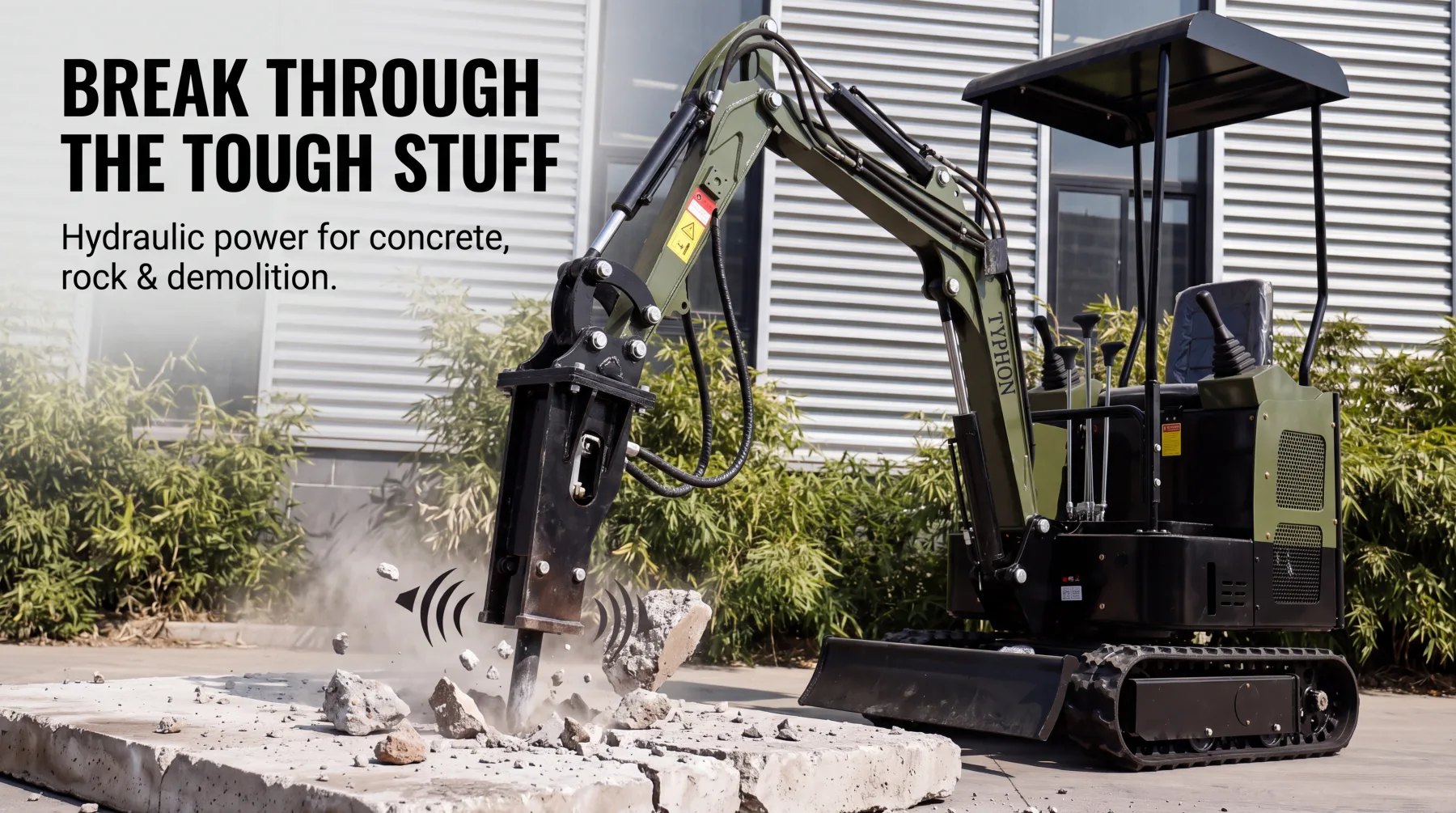
Few attachments transform an excavator as dramatically as a hydraulic breaker. Mounted in place of the bucket, it turns the machine into a powerful demolition tool capable of breaking through materials that would stop ordinary equipment cold. Concrete, rock, and other tough surfaces yield to the breaker’s repeated hammering force, letting you tackle heavy demolition and hard material removal with a machine you already own. Instead of bringing in specialized breaking equipment, you simply swap attachments and get to work.
The power behind a hydraulic breaker comes from the excavator’s own hydraulic system, which drives a piston that strikes the tool at high speed and force. That concentrated impact shatters dense material efficiently, whether you are demolishing a structure, breaking up a foundation, or removing bedrock during excavation. The result is faster progress on jobs that would otherwise demand hours of slow, difficult effort.
Hydraulic breakers prove their worth across a wide range of demanding work:
- Construction, where breaking through concrete, rock, or old structures clears the way for new buildings.
- Renovation, where selective demolition removes walls, floors, or foundations without disturbing the rest.
- Site preparation, where rock and hard ground must be broken down before grading and building can begin.
Because a breaker handles jobs that few other tools can, it becomes an essential addition for owners who regularly face demolition or hard material removal. Pairing the right breaker size with your excavator ensures the machine delivers enough force without straining its hydraulics, giving you reliable, productive performance on your toughest projects. For anyone whose work involves breaking through concrete or rock, a hydraulic breaker is one of the most practical and impactful attachments you can own.
Augers for Efficient Drilling Operations
When a job calls for holes rather than trenches, an auger attachment is the tool that makes quick, precise work of it. Attached to your excavator, an auger drills clean, accurate holes at consistent depths and diameters, turning a task that once demanded shovels or dedicated drilling rigs into a fast, controlled operation. The rotating auger bit bores straight into the ground, pulling out soil as it goes and leaving a neat hole ready for whatever comes next.
That precision and speed make augers ideal for a variety of common jobs. Rather than digging by hand or arranging separate equipment, an operator can position the excavator, drill the hole, and move to the next spot in moments. The applications are broad and cover work that many owners face regularly:
- Fencing, where evenly spaced, uniform post holes keep the finished line straight and sturdy.
- Foundations, where accurate holes support footings, piers, and structural elements.
- Landscaping, where planting trees or setting posts calls for clean, consistent holes.
- Utility installation, where holes for poles, signs, or underground services must be placed precisely.
Across all these tasks, the auger delivers repeatable accuracy that hand digging simply cannot match.
The biggest advantage an auger offers is a genuine boost in productivity. Manual digging is slow and physically demanding, and specialized drilling equipment adds rental costs and logistical hassle. An auger attachment eliminates both, letting your existing excavator handle drilling quickly and efficiently. Different bit sizes let you match the hole to the job, from narrow posts to wider foundation piers, so a single attachment covers a wide range of needs. For owners who regularly drill holes as part of their work, an auger is a straightforward, cost-effective way to complete those tasks faster and with better results.
Grapples for Material Handling and Cleanup
A grapple attachment dramatically expands what an excavator can do by giving it the ability to grab, hold, and move awkward materials with control. Where a standard bucket can only scoop, a grapple’s jaws close around objects and secure them, making it far easier to handle items that would otherwise be difficult to lift or manage. This simple change in capability opens the door to material handling and cleanup tasks that a bucket alone could never manage well.
The versatility of a grapple shows in the range of materials it handles confidently. Rather than being limited to loose soil or debris, the machine can grip and move bulky, irregular objects with precision:
- Logs, gripped securely for clearing, stacking, or loading during land work.
- Debris gathered and moved efficiently during cleanup operations.
- Rocks, lifted and repositioned without the spilling that a bucket would cause.
- Scrap materials, sorted and loaded cleanly on demolition and recycling sites.
Because the grapple holds its load firmly, operators can place materials exactly where they need them rather than dropping and repositioning repeatedly.
Grapples earn their place especially on land clearing and demolition cleanup jobs, where the work involves handling large volumes of mixed, unwieldy material. During land clearing, a grapple lets an operator pick up brush, logs, and stumps and move them to a pile or truck with ease. On demolition sites, it makes sorting and removing rubble, twisted metal, and other debris far more manageable, speeding up the cleanup that follows every teardown. That ability to grab and sort rather than merely scoop turns a slow, messy process into an organized, efficient one. For owners whose work regularly involves moving logs, debris, rocks, or scrap, a grapple is a genuinely transformative addition to the excavator’s toolkit.
Tilt Buckets for Improved Digging Flexibility
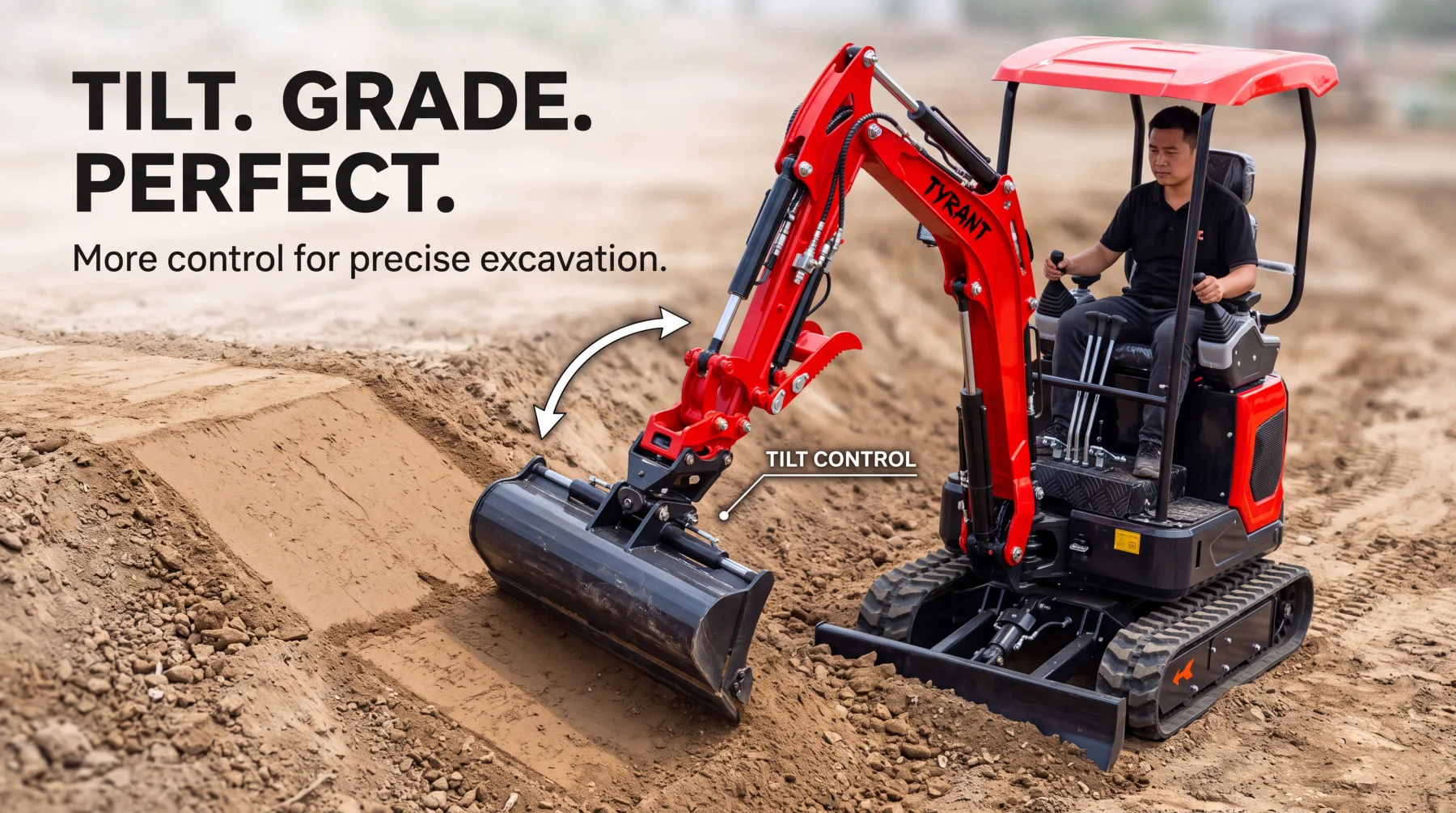
A tilt bucket brings a level of control to excavation work that a standard fixed bucket cannot offer. Its defining feature is the ability to tilt from side to side, letting the operator adjust the bucket angle without repositioning the entire machine. That simple capability makes a real difference on tasks that demand precision, giving operators the flexibility to shape the ground exactly as the job requires rather than settling for what a fixed angle allows.
This adjustable angle proves its value across several common excavation tasks:
- Digging, where matching the bucket to the terrain improves accuracy and reduces repositioning.
- Grading, where the tilt function creates smooth, even slopes and surfaces with far less effort.
- Ditching, where angled cuts and contoured channels come together cleanly and efficiently.
In each of these tasks, being able to tilt the bucket means the operator can follow the required grade or shape directly, producing better results in less time.
The greatest benefit of a tilt bucket is the accuracy it brings to detailed work. Grading a sloped surface or cutting a ditch with a fixed bucket often requires the operator to constantly reposition the machine to achieve the right angle, which is slow and rarely produces a perfectly smooth result. With a tilt bucket, the operator adjusts the angle on the fly, matching the bucket to the desired contour and completing the work in fewer passes. That control leads to cleaner finished surfaces, more precise slopes, and a professional result that reflects well on the operator and the job. For owners who regularly handle grading, ditching, or detailed excavation, a tilt bucket is a practical upgrade that improves both the quality of the work and the efficiency with which it gets done, making it a worthwhile addition to any setup.
Hydraulic Thumbs for Better Load Control
A hydraulic thumb is one of the most useful additions for owners who need to handle irregular materials, because it works hand in hand with the bucket to grip objects securely. Positioned opposite the bucket, the thumb closes against it like a hand and finger, clamping down on materials that a bucket alone could never hold. This pairing turns the excavator into a capable material-handling machine, giving operators far better control over loads that would otherwise slip, roll, or spill.
The real strength of a hydraulic thumb lies in how it manages awkward, uneven objects. Many materials on a job site simply do not fit neatly in a bucket, and trying to move them without a thumb often leads to dropped loads and wasted effort. With a thumb, the operator can grip these items firmly and move them with confidence:
- Stones, held securely for placement in landscaping, retaining walls, or removal.
- Branches, clamped and lifted cleanly during clearing and cleanup work.
- Construction debris, gripped and loaded efficiently on demolition and renovation sites.
By securing these irregular materials against the bucket, the thumb prevents the slipping and spilling that make handling them so frustrating.
That added grip greatly enhances the excavator’s versatility for handling and sorting applications. An operator can pick up a stone, place it precisely, then move on to loading branches or sorting debris, all without changing attachments. This flexibility makes the thumb especially valuable on jobs that mix digging with material handling, since the same machine can dig one moment and grip the next. Hydraulic operation gives the operator smooth, responsive control over the thumb’s movement, allowing careful placement rather than rough dropping. For owners who regularly handle stones, branches, or construction debris, a hydraulic thumb is a practical, high-value attachment that brings real control to demanding material-handling work.
Conclusion
The right attachments turn a capable excavator into a truly versatile workhorse, ready to meet whatever a project demands. Hydraulic breakers give you the power to tackle demolition and hard material removal, while augers make quick, precise work of drilling for fences, foundations, and utilities. Grapples bring control to material handling and cleanup, tilt buckets add flexibility and accuracy to grading and ditching, and hydraulic thumbs deliver the secure grip needed for handling irregular materials. Together, these five attachments cover an impressive range of tasks, letting one machine do the work of many. Investing in the attachments that match your typical projects reduces the need for rented equipment, boosts productivity, and helps you take on more varied jobs with confidence. By building a thoughtful set of multi-purpose tools around your excavator, you gain a dependable, adaptable setup that delivers reliable results and lasting value across every job site.