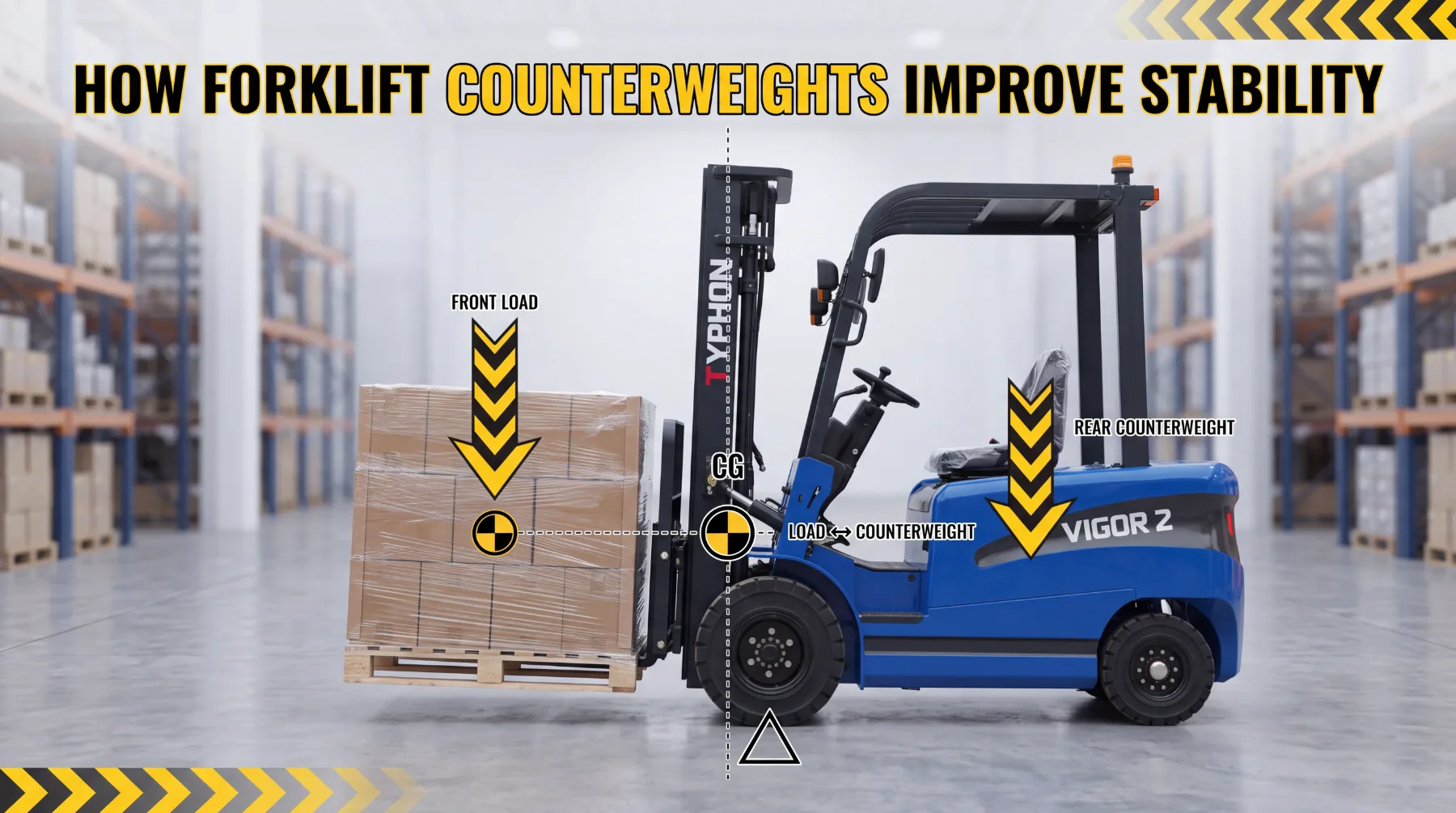
How Forklift Counterweights Improve Stability
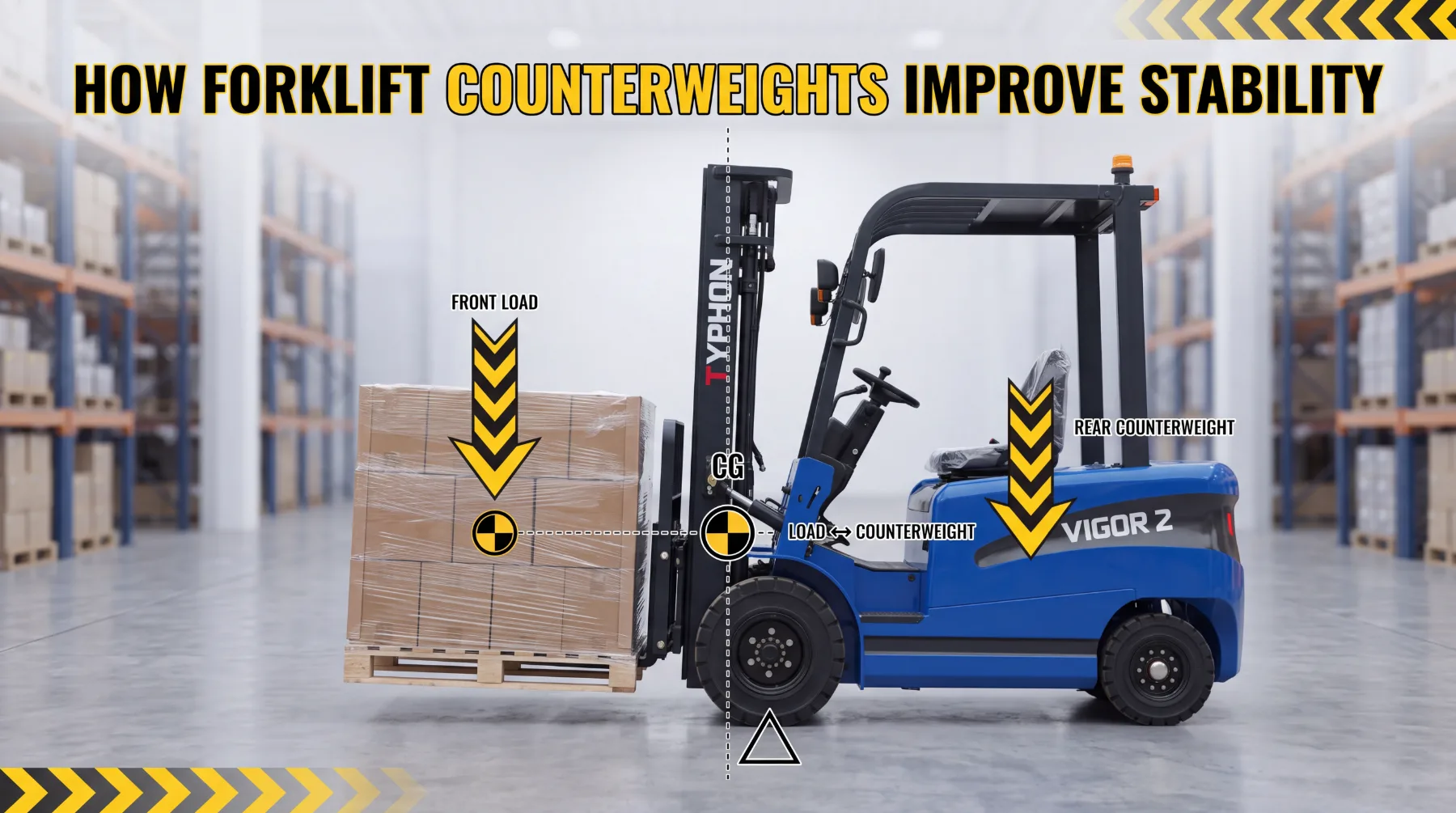 A forklift can lift and carry loads that would seem impossible for a machine its size, and the reason comes down to one carefully engineered feature: the counterweight. Positioned at the rear of the machine, the counterweight is what keeps a forklift steady when it hoists heavy material at the front. Without it, even a modest load would pull the machine forward and tip it over. Understanding how the counterweight works helps operators and equipment managers appreciate why stability matters and why it can never be taken for granted. This post breaks down five ways forklift counterweights improve stability: balancing the load, supporting the center of gravity, reducing forward tipping, improving stability during movement, and working within capacity limits. Each one plays a direct role in keeping the machine safe, the load secure, and the operation running smoothly.
Balancing the Load
At its core, the counterweight exists to balance the machine. When a forklift picks up a load on its forks, all that weight concentrates at the very front of the machine, well ahead of the front wheels. The counterweight at the rear offsets that forward weight, creating a balancing effect that keeps the forklift stable during both lifting and transport. Think of it as a seesaw: the load pulls down on one end, and the counterweight pulls down on the other, keeping the whole machine level and secure. This balancing act is what allows a compact forklift to handle loads that appear far too heavy for its size. The counterweight is engineered to work in harmony with the machine’s design, sized specifically to counter the loads the forklift is rated to carry. Because of this careful engineering, the machine stays planted on its wheels rather than pitching forward when a load goes up. For operators, understanding this relationship reinforces why loads must be handled correctly. The counterweight does its job best when the load sits properly on the forks and stays within the machine’s limits. A load that’s too heavy or positioned poorly can overcome the counterweight’s balancing effect, and that’s when stability is lost. Respecting how the counterweight balances the load is the foundation of safe forklift operation, and it’s the first thing every operator should keep in mind before making a lift.
Supporting the Center of Gravity
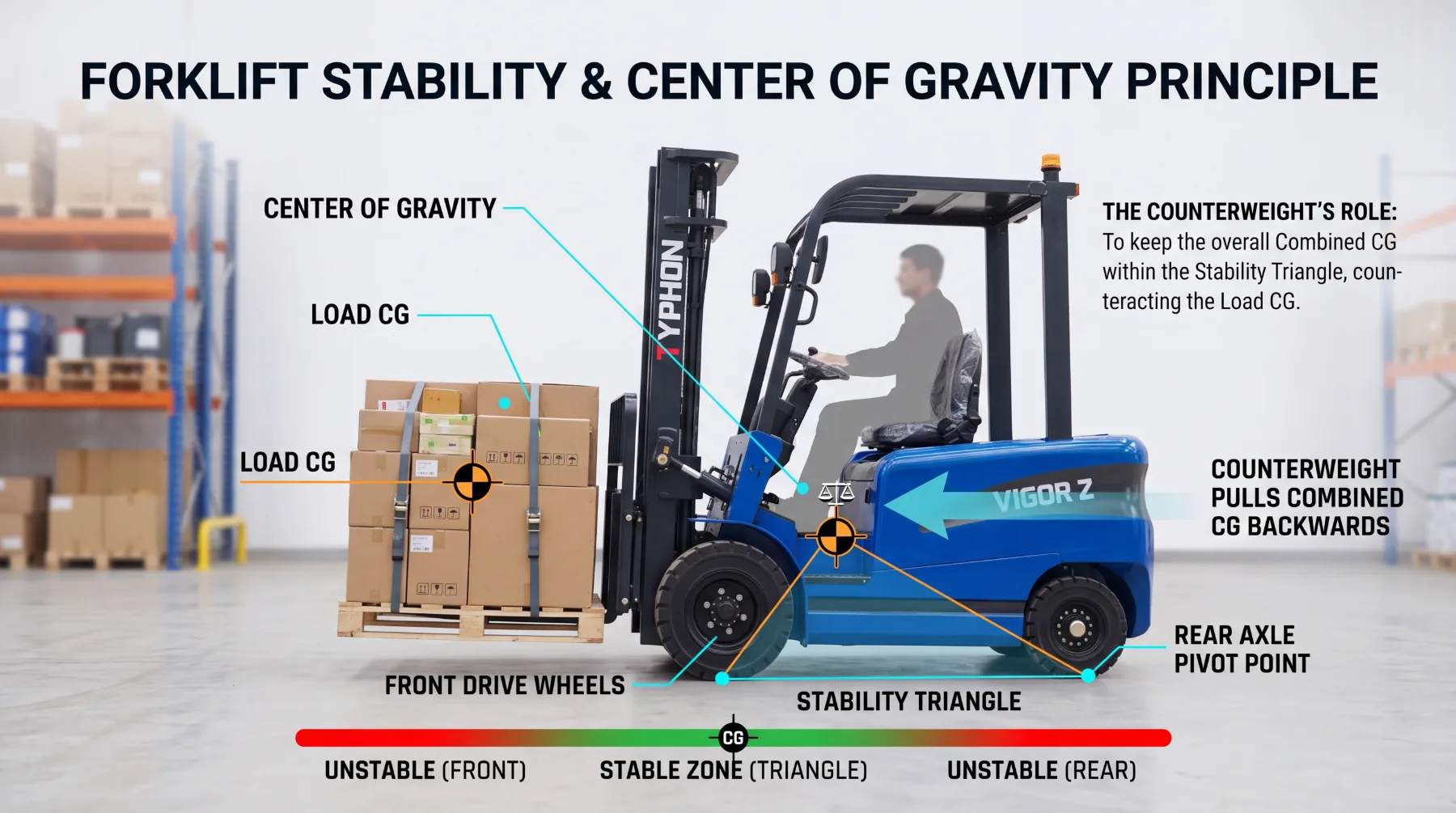 Every forklift has a center of gravity, the point around which its weight is balanced, and keeping that point in the right place is essential to stability. When a forklift picks up a load, the combined center of gravity of the machine and the load shifts. The counterweight helps keep this combined center of gravity within the forklift’s stability triangle when the machine is carrying a properly rated load, which is exactly what keeps it from tipping. The stability triangle is a key concept for anyone operating a forklift. It’s formed by the two front wheels and the pivot point of the rear axle, creating a triangular base of support. As long as the combined center of gravity stays inside this triangle, the forklift remains stable. When the center of gravity moves outside the triangle, the machine becomes unstable and can tip. The counterweight’s role is to pull the center of gravity rearward, helping keep it safely within that critical zone. Several factors influence where the combined center of gravity ends up:
- Load weight, since heavier loads shift the center of gravity farther forward.
- Load position, because a load carried too far out on the forks moves the center of gravity toward the edge of the triangle.
- Lift height, which raises the center of gravity and can reduce stability, especially side to side.
When the load is properly rated and correctly positioned, the counterweight keeps the center of gravity where it belongs. This is why matching the load to the machine matters so much. The counterweight supports stability, but it can only do so when operators keep the center of gravity inside the stability triangle through careful, informed handling.
Reducing Forward Tipping
Forward tipping is one of the most serious hazards in forklift operation, and preventing it is one of the counterweight’s most important jobs. When a heavy load is lifted at the front of the machine, its weight creates a forward tipping force that tries to rotate the forklift over its front wheels. If nothing opposed that force, the machine would pitch forward the moment the load became too heavy or reached too far out. The counterweight provides the opposing force that keeps the forklift grounded. The way this works comes down to leverage. The load acts on one side of the front wheels, which serve as a pivot point, while the counterweight acts on the other side. By placing substantial weight at the rear, the machine generates a counteracting force that resists the forward pull of the load. As long as the counterweight’s force is enough to balance the load’s tipping force, the forklift stays stable and level. The trouble begins when the tipping force exceeds what the counterweight can handle. This happens when a load is too heavy, sits too far forward on the forks, or is raised too high, all of which increase the forward tipping force. Once that force overcomes the counterweight, forward tipping becomes a real and dangerous risk. This is precisely why operators must respect the machine’s limits, keeping loads within rated capacity and positioned correctly. The counterweight offers powerful protection against forward tipping, but that protection has boundaries. Staying within them is what keeps the machine, the load, and everyone nearby safe.
Improving Stability During Movement
Stability isn’t only about standing still with a load; it matters just as much when the forklift is moving. A properly balanced forklift is far more stable when carrying loads, and that stability becomes especially important during travel. The counterweight keeps the machine grounded and balanced as it moves, helping the operator maintain control while transporting material from one place to another. A well-balanced machine handles predictably, which is exactly what an operator needs when navigating a busy work area. Movement introduces forces that a stationary machine doesn’t face. Turning, accelerating, braking, and traveling over uneven surfaces all create additional stresses that can affect balance. A forklift is most stable when it travels at low speeds across smooth, level surfaces, because these conditions minimize the forces working against its stability. Sharp turns at speed, sudden stops, or rough ground can shift the load and challenge the machine’s balance, increasing the risk of a tip-over to the side or front. Operators can support the counterweight’s stabilizing effect through sound driving habits:
- Travel at safe, moderate speeds, especially when carrying a load or turning.
- Keep the load low during transport, which lowers the center of gravity and improves stability.
- Slow down for turns and uneven surfaces, reducing the forces that can unsettle the machine.
When these practices combine with a properly balanced machine, the result is safe, controlled movement across the work area. The counterweight provides the foundation of stability, but the operator’s actions during travel determine how well that stability holds up. Careful driving lets the counterweight do its job, keeping loads steady and the machine dependable from pickup to placement.
Working Within Capacity Limits
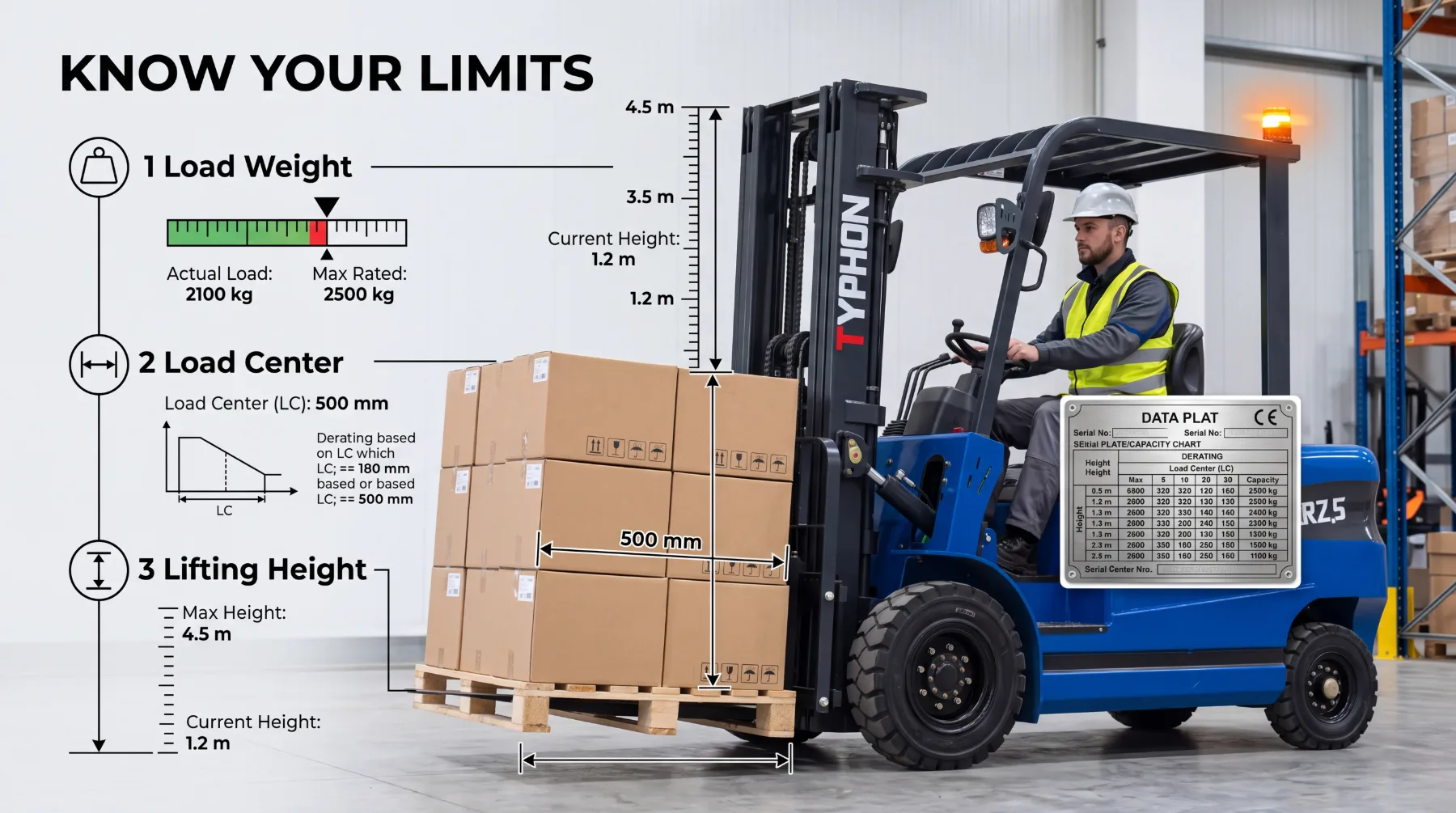 As effective as counterweights are, they have limits, and understanding those limits is essential to safe operation. A counterweight improves stability, but it cannot make a forklift capable of lifting unlimited weight. Every machine is engineered with specific rated limits, and the counterweight is designed to balance loads only up to those boundaries. Pushing beyond them overwhelms the counterweight’s ability to keep the machine stable, no matter how well the load is handled otherwise. Three factors define a forklift’s rated capacity, and all three must stay within limits for the machine to remain stable:
- Load weight, which must never exceed the maximum the forklift is rated to carry.
- Load center, the distance from the forks to the load’s center of gravity, which reduces safe capacity as it increases.
- Lifting height, since raising a load higher can lower the safe capacity and reduce stability.
These factors work together, and treating any one of them casually invites trouble. A load within the weight limit can still become unsafe if it sits too far out on the forks or is raised too high. This is why operators should always check the machine’s data plate, which lists the rated capacity under specified conditions, before making a lift. The counterweight provides the balancing force that makes safe lifting possible, but it works only within the design limits of the machine. Respecting load weight, load center, and lifting height is what keeps the counterweight effective and the forklift stable. When operators treat these rated limits as firm boundaries rather than suggestions, they get the full benefit of the counterweight’s stabilizing effect and keep every lift safe and dependable.
Conclusion
Forklift counterweights are far more than a heavy block at the back of the machine; they are the engineered foundation of everything that keeps a forklift stable. By offsetting the weight of the load on the forks, the counterweight balances the machine and holds the combined center of gravity within the stability triangle where it belongs. It provides the opposing force that resists forward tipping, and it keeps the forklift steady during travel, especially at low speeds across smooth surfaces. Yet the counterweight can only do its job within the machine’s rated limits, which is why load weight, load center, and lifting height must always stay within specification. Together, these five principles explain how counterweights improve stability and why safe operation depends on respecting them. When operators and equipment managers understand how the counterweight works and honor the machine’s limits, they protect their people, their equipment, and their loads, ensuring dependable, stable performance on every lift.