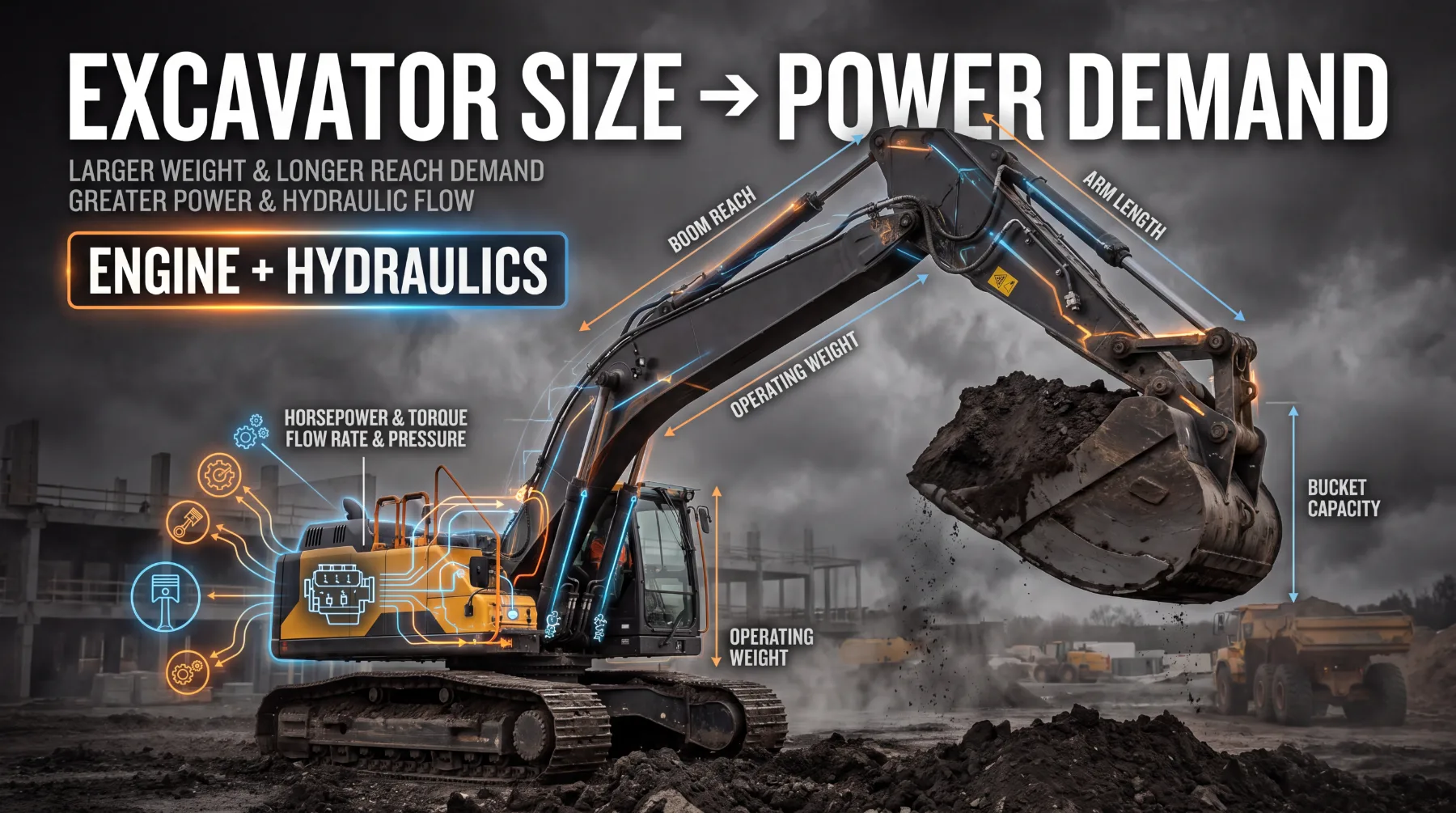
How Excavator Dimensions Influence Engine and Hydraulic Requirements
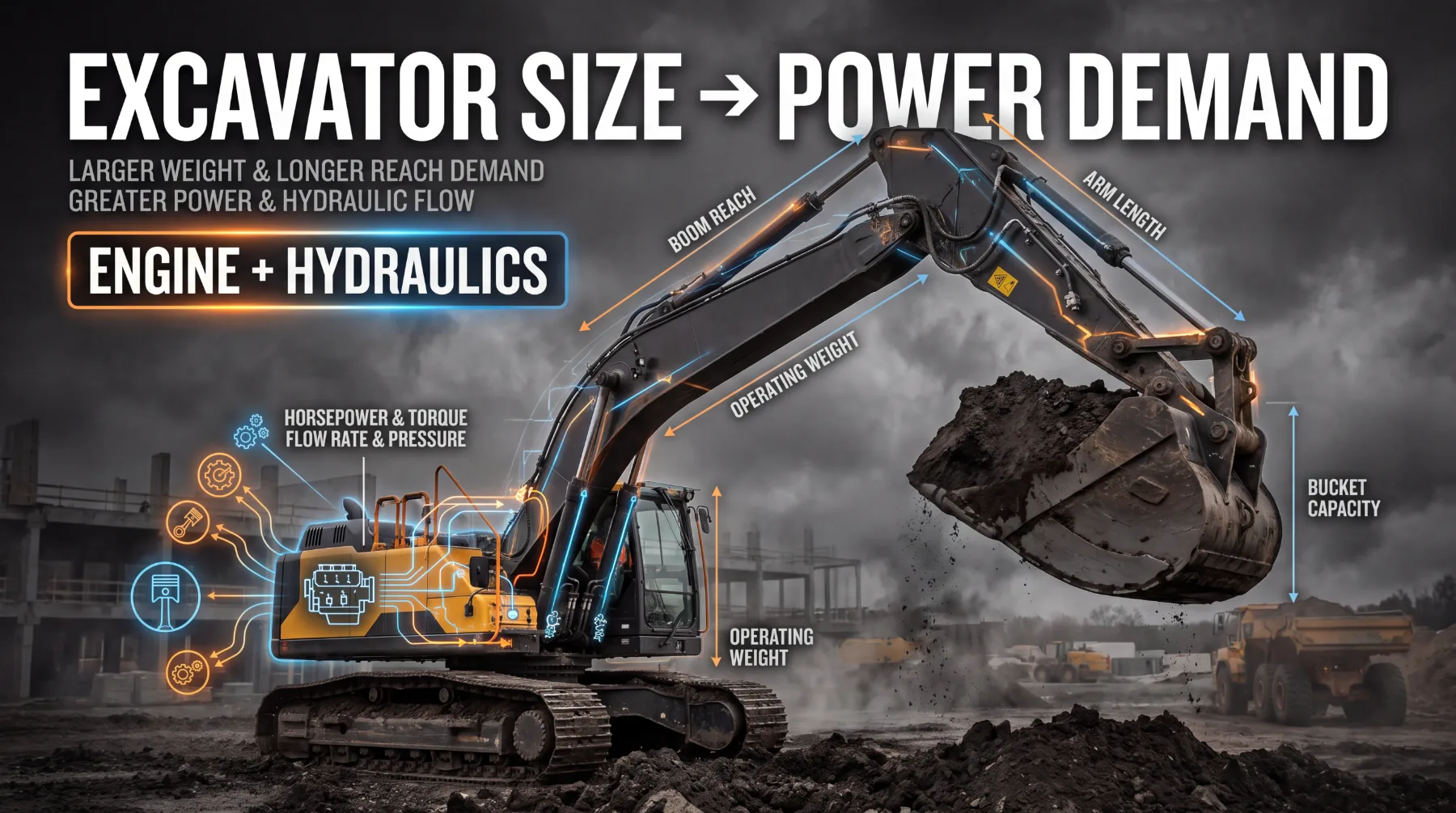
Excavator buyers often compare digging depth, reach, and bucket size, yet the machine’s dimensions have a deeper effect that runs straight to the engine and hydraulic system. Size, weight, boom length, and arm reach all shape how much power the machine needs and how its hydraulics must perform. When these elements are matched correctly, the excavator digs, lifts, and swings with steady, dependable force. When they are mismatched, you face sluggish performance, wasted fuel, or a machine that cannot handle the loads you count on. This guide explains how excavator dimensions influence engine and hydraulic requirements, so you can choose a machine that delivers reliable results on every job.
Machine Size Determines Power Requirements
The size of an excavator sets the foundation for how much engine power it needs to work effectively. A larger machine carries more weight, moves a bigger frame, and handles heavier digging loads, and all of that demand falls on the engine. Engine output has to be matched to the excavator’s operating size and workload, because an undersized engine in a large machine struggles to keep pace, while an oversized engine in a small machine simply wastes fuel and adds cost. The right balance keeps the machine responsive and efficient across the tasks it was built to perform.
Weight is one of the clearest links between size and power. A heavier excavator needs more energy to travel across a site, swing its upper structure, and drive the bucket through dense material. As machine weight climbs from compact to mid-size to large classes, engine output rises accordingly to support those movements without straining. This relationship is why operating class and engine power tend to move together on any well-designed machine.
Workload matters just as much as physical size. Two excavators of similar weight may need different engine outputs depending on the intensity of the work they face each day. Consider how power requirements connect to real conditions:
- Digging in hard ground: dense clay, rock, or compacted soil demands more sustained engine power than loose material.
- Continuous operation: long shifts of steady digging and loading keep the engine working near its capacity for extended periods.
- Heavy lifting: raising and placing heavy loads adds to the power the engine must supply through the hydraulic system.
When engine output suits both the machine’s size and its typical workload, the excavator delivers steady performance without wasting energy. Matching power to size is the first step toward a machine that works efficiently and lasts through demanding conditions.
Hydraulic Flow Supports Attachment Performance
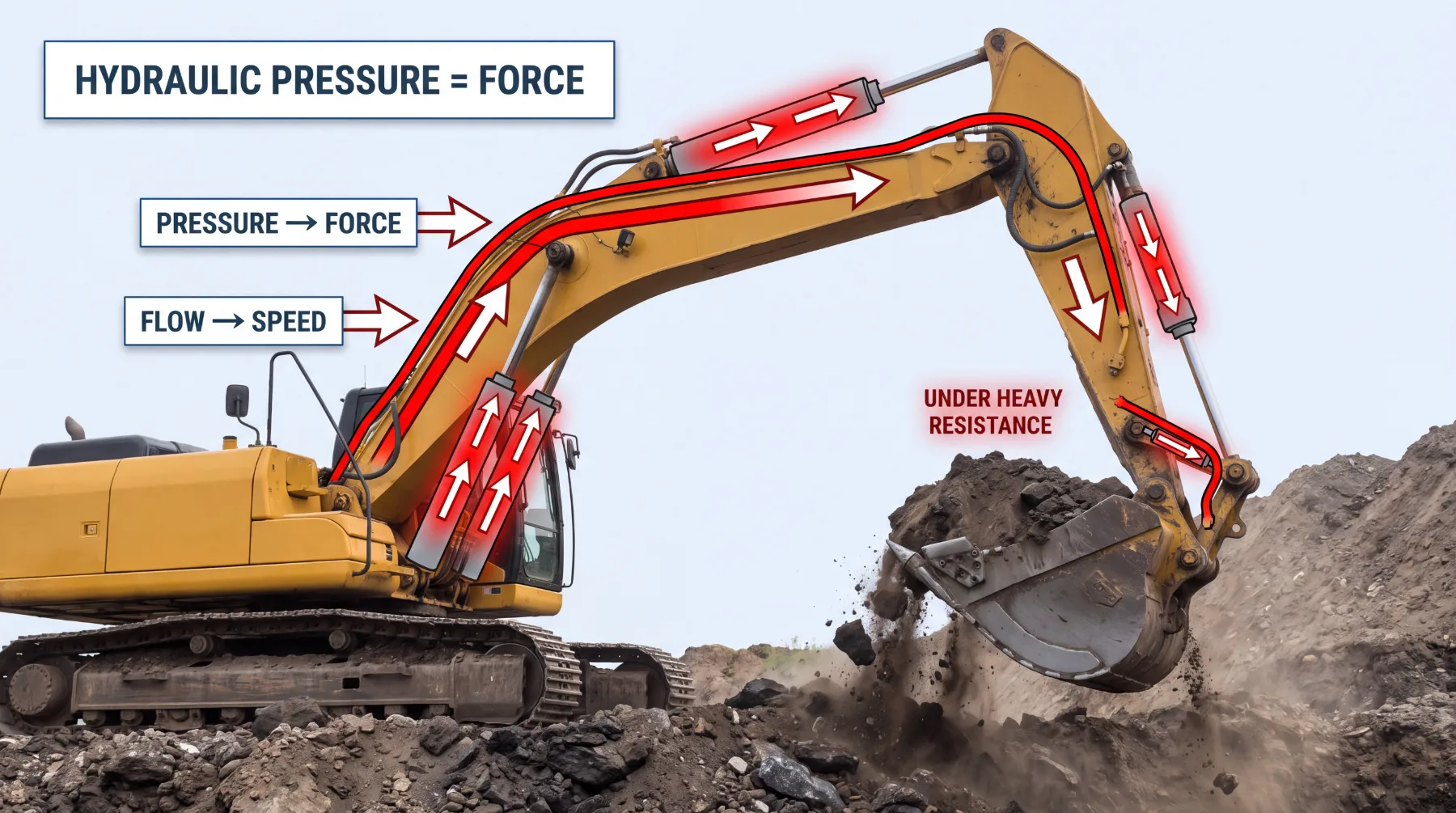
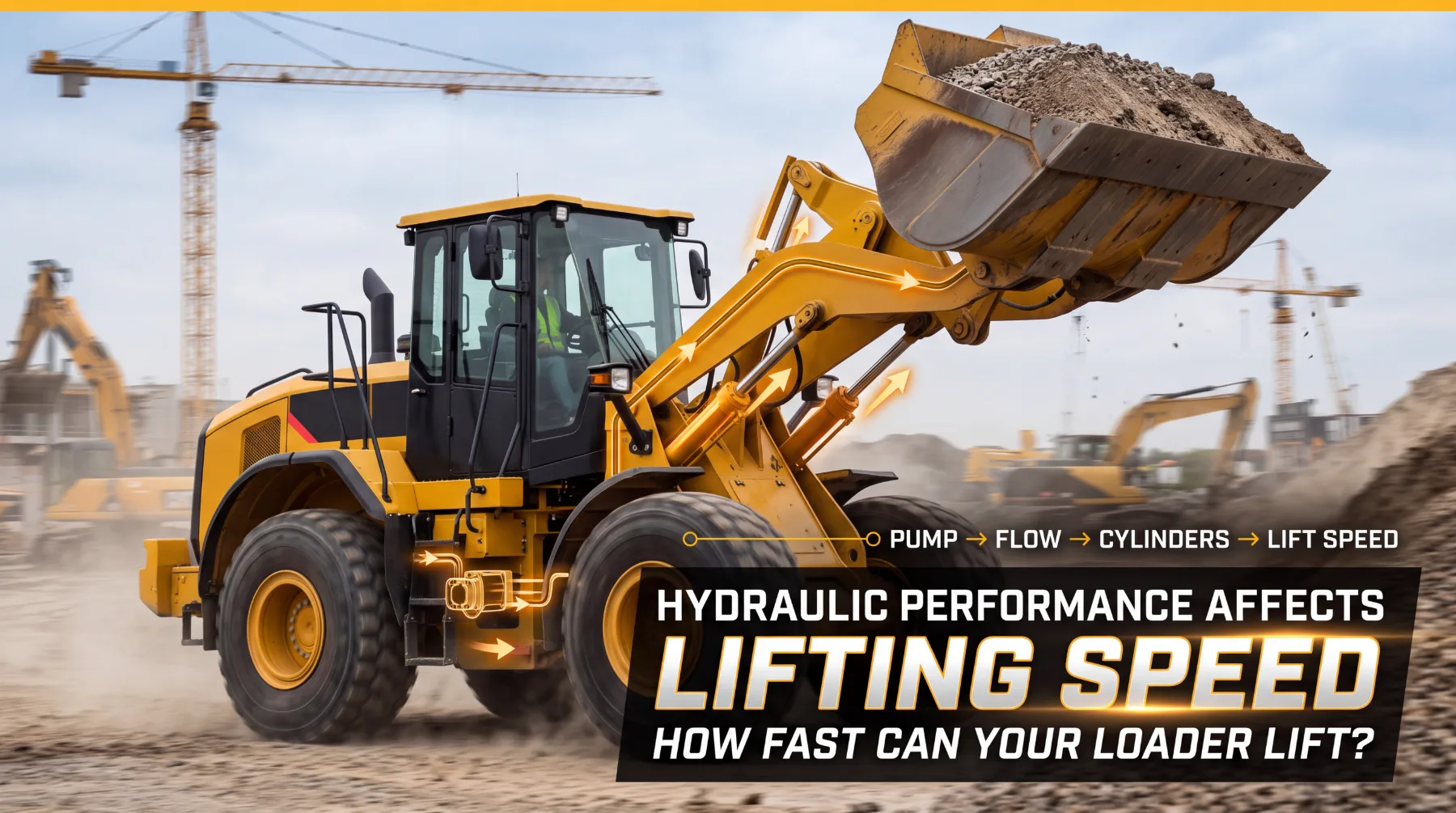
Hydraulic flow describes the volume of oil the system moves to power the excavator’s cylinders and attachments, and it is closely tied to the machine’s dimensions and operating class. Larger excavators and more demanding attachments call for higher flow, because moving bigger cylinders and running powerful tools requires more oil delivered at a steady rate. When the hydraulic system provides the flow an attachment needs, that tool operates at the speed and efficiency it was designed for. When flow falls short, attachments run slowly and the machine cannot reach its full productivity.
The relationship between flow and speed is direct. Higher flow allows cylinders to extend and retract faster, which translates into quicker cycle times for digging, loading, and swinging. It also supports the smooth, rapid operation of attachments such as breakers, augers, grapples, and thumbs. A machine sized and equipped with adequate hydraulic flow completes more cycles in a shift, moving more material and finishing tasks in less time. This is why buyers who plan to run demanding attachments should study the flow figures as carefully as the digging specifications.
Matching flow to the attachment is essential for good performance and control. An attachment starved of flow behaves sluggishly and may not develop its full working force, while a system with flow suited to the tool delivers responsive, predictable operation. Because excavator dimensions and operating class influence the flow the system can supply, larger machines generally support higher-flow attachments that smaller ones cannot drive effectively. When you consider the tools your work requires, confirm that the machine’s hydraulic flow can support them properly. A well-matched system gives operators the speed and control they need, letting each attachment perform to its potential and helping the excavator work dependably across a wide range of tasks.
Hydraulic Pressure Provides Digging Force
While flow governs speed, hydraulic pressure governs force, and it is pressure that determines how much digging and lifting power an excavator can generate through its cylinders. Pressure is the strength behind every bucket curl, arm crowd, and boom lift, pushing the cylinders to drive through resistant material and hoist heavy loads. Larger machines built for demanding work often require hydraulic systems capable of producing higher pressure, because bigger cylinders and heavier tasks call for greater force to complete them confidently.
The connection between pressure and capability shows up in the toughest parts of the job. When a bucket bites into compacted soil, rock, or frozen ground, the hydraulic pressure is what allows the cylinders to break through instead of stalling. When the machine lifts and places heavy objects, pressure supplies the force that holds and moves the load safely. An excavator with hydraulic pressure matched to its size and intended tasks handles these challenges smoothly, while a system that cannot generate enough pressure leaves the machine underpowered for the very work it should manage.
Pressure and flow must be understood together, since each controls a different aspect of performance. Consider how they combine in practice:
- Pressure: determines the maximum force the cylinders can exert for digging and lifting.
- Flow: determines how quickly the cylinders move and how fast the machine cycles.
- Both together: deliver a machine that works with both strength and speed rather than one at the expense of the other.
A machine with strong pressure but limited flow may dig with force yet move slowly, while one with high flow but low pressure may move quickly yet lack the muscle for hard material. When hydraulic pressure is matched to the excavator’s dimensions and the demands of the work, the machine develops the digging force it needs to perform reliably. That force is what allows an excavator to tackle difficult ground and heavy loads with the confidence operators depend on.
Boom and Arm Size Affect Hydraulic Demand
The boom and arm are the excavator’s primary working members, and their dimensions have a direct effect on how much the hydraulic system must deliver. Longer or heavier booms and arms increase the force the hydraulics have to generate, because extending reach changes the leverage the cylinders work against. A longer arm places the load farther from the machine, which increases the demand on the hydraulic system to control and move that load. Their size therefore must be considered carefully when selecting the engine and hydraulic components, since the working geometry shapes the power the machine truly needs.
Reach and force exist in a balance that the hydraulic system has to manage. A longer boom and arm extend the excavator’s working range, letting it dig farther and reach deeper, but that extended geometry asks more of the cylinders throughout the range of motion. Holding a load at full extension, curling the bucket at distance, and lifting with a long arm all place greater strain on the hydraulics than the same actions performed with a shorter, more compact configuration. The weight of the boom and arm themselves also adds to the load the system must move with every cycle.
This is why the arrangement of boom and arm should factor into the choice of engine and hydraulic capacity. A machine fitted with a long-reach configuration needs hydraulics and engine output sized to support that added demand, otherwise performance suffers at the extended positions where the work often happens. Matching the components to the working members ensures the excavator maintains its force and control across the full range of reach. When the boom and arm dimensions are accounted for in the hydraulic and engine selection, the machine handles both close-in digging and far-reaching tasks dependably, giving operators consistent strength wherever the bucket needs to work.
Balance Engine Power With Hydraulic Capacity
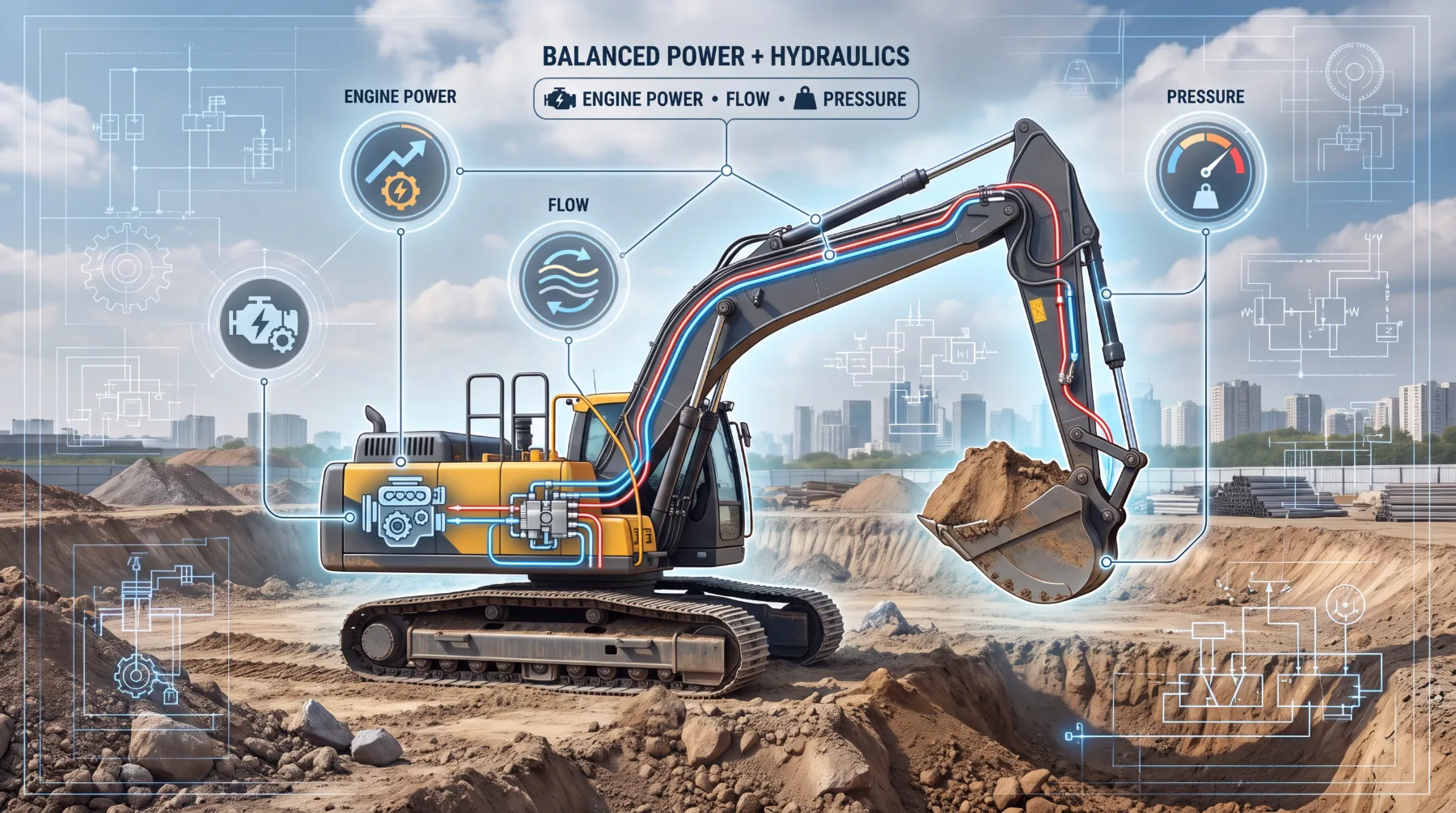
The most capable excavator is not simply the one with the biggest engine or the highest hydraulic figures. It is the one where engine power, hydraulic flow, and hydraulic pressure work together as a matched system. These three elements should never be selected independently, because each depends on the others to deliver performance. The engine supplies the energy, the hydraulic pump converts it into flow and pressure, and the balance among them determines how well the machine digs, lifts, and moves. A properly matched system helps the excavator deliver consistent performance without wasting power.
When one element is out of step with the others, the whole machine suffers. An engine too small to drive the hydraulic pump cannot sustain the flow and pressure the work requires, so performance drops under load. Hydraulics sized beyond what the engine can support leave power untapped and add unnecessary cost. A system with high flow but insufficient pressure moves quickly yet lacks force, while one with strong pressure but limited flow develops force slowly. Balance across all three is what produces a machine that works with both speed and strength in the conditions it faces.
Matching these components also protects efficiency. A well-balanced excavator uses its engine power effectively, converting fuel into productive work rather than losing it to mismatched systems. This keeps operating costs reasonable and helps the machine run reliably over long service life. When you evaluate an excavator, look at how its engine output, hydraulic flow, and pressure are designed to complement one another and how that combination suits your typical tasks. A machine engineered with these elements in balance delivers dependable, consistent performance day after day, giving you the confidence that it will handle your workload efficiently without straining its systems or wasting the power you pay to run.
Conclusion
Excavator dimensions do far more than define reach and digging depth. They shape the engine power the machine needs, the hydraulic flow that drives its attachments, and the pressure that generates its digging force. Boom and arm size add their own demands, and all of these elements must be balanced rather than chosen in isolation. When engine power, hydraulic flow, and hydraulic pressure are matched to the machine’s size and workload, the excavator delivers steady, efficient performance without wasting energy. Study how these systems work together and how they fit your typical tasks, and you will choose a machine that digs, lifts, and works dependably through every demanding shift.
Frequently Asked Questions
1. Why does a larger excavator need more engine power?
A larger excavator carries more weight, moves a bigger frame, and handles heavier digging loads, and all of that demand falls on the engine. The engine must supply enough energy to travel across the site, swing the upper structure, and drive the bucket through dense material. As machine weight rises from compact to mid-size to large classes, engine output rises with it to support those movements without strain. Workload matters too, since hard ground, long shifts, and heavy lifting all demand sustained power. Matching engine output to both machine size and typical workload keeps the excavator responsive and efficient.
2. What is the difference between hydraulic flow and hydraulic pressure?
Hydraulic flow is the volume of oil the system moves, and it controls how fast the cylinders extend and retract, which sets the speed of digging, loading, and attachment operation. Hydraulic pressure is the force the system generates, and it determines how much digging and lifting power the cylinders can produce. In simple terms, flow governs speed while pressure governs strength. A machine needs both working together, because high flow with low pressure moves quickly but lacks force, while strong pressure with limited flow develops force slowly. Balancing the two delivers an excavator that works with both speed and power.
3. How does hydraulic flow affect attachment performance?
Hydraulic flow determines how much oil reaches an attachment, which controls how fast and effectively that tool operates. Attachments such as breakers, augers, grapples, and thumbs each require a certain flow to run at their designed speed. When the system supplies adequate flow, the attachment works quickly and develops its full working force, completing more cycles in a shift. When flow falls short, the tool runs sluggishly and cannot reach full productivity. Because excavator dimensions and operating class influence available flow, larger machines generally support higher-flow attachments. Confirm that a machine’s flow suits the tools your work requires before choosing it.
4. Why do boom and arm size affect hydraulic demand?
Longer or heavier booms and arms increase the force the hydraulic system must generate, because extending reach changes the leverage the cylinders work against. A longer arm places the load farther from the machine, which raises the demand on the hydraulics to control and move that load. Holding a load at full extension, curling the bucket at distance, and lifting with a long arm all strain the system more than the same actions in a compact configuration. The weight of the boom and arm themselves adds to that load, so their dimensions must be considered when selecting engine and hydraulic components.
5. Why should engine power and hydraulic capacity be matched rather than chosen separately?
Engine power, hydraulic flow, and hydraulic pressure depend on one another to deliver performance, so they work best as a matched system. The engine supplies energy, the hydraulic pump converts it into flow and pressure, and the balance among them determines how well the machine digs, lifts, and moves. An engine too small cannot sustain the flow and pressure the work requires, while hydraulics sized beyond the engine’s capacity leave power untapped and add cost. A balanced system uses engine power efficiently, converting fuel into productive work, keeping operating costs reasonable, and delivering consistent, dependable performance over a long service life.