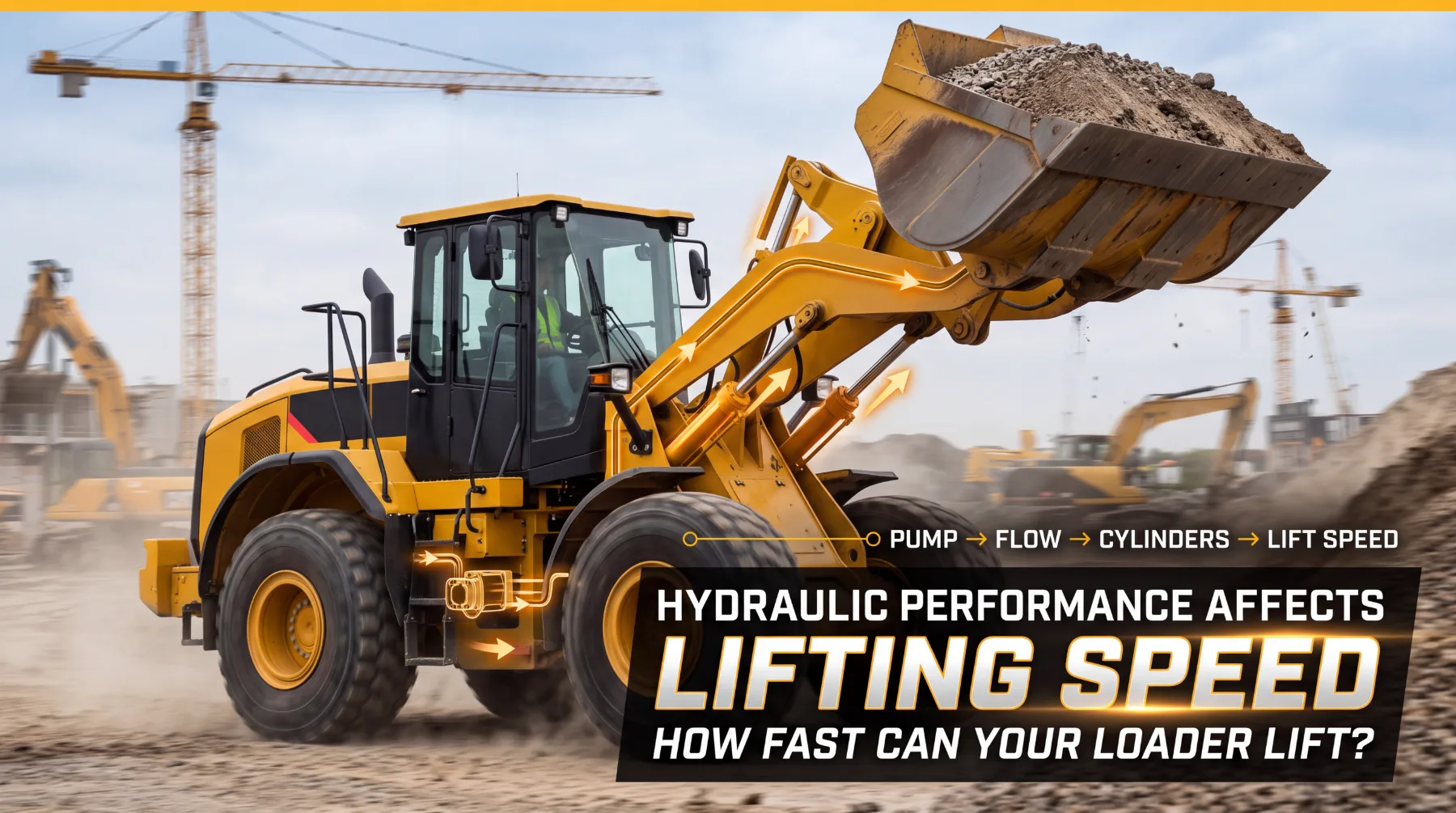
How Hydraulic Performance Affects Wheel Loader Arm Lifting Speed
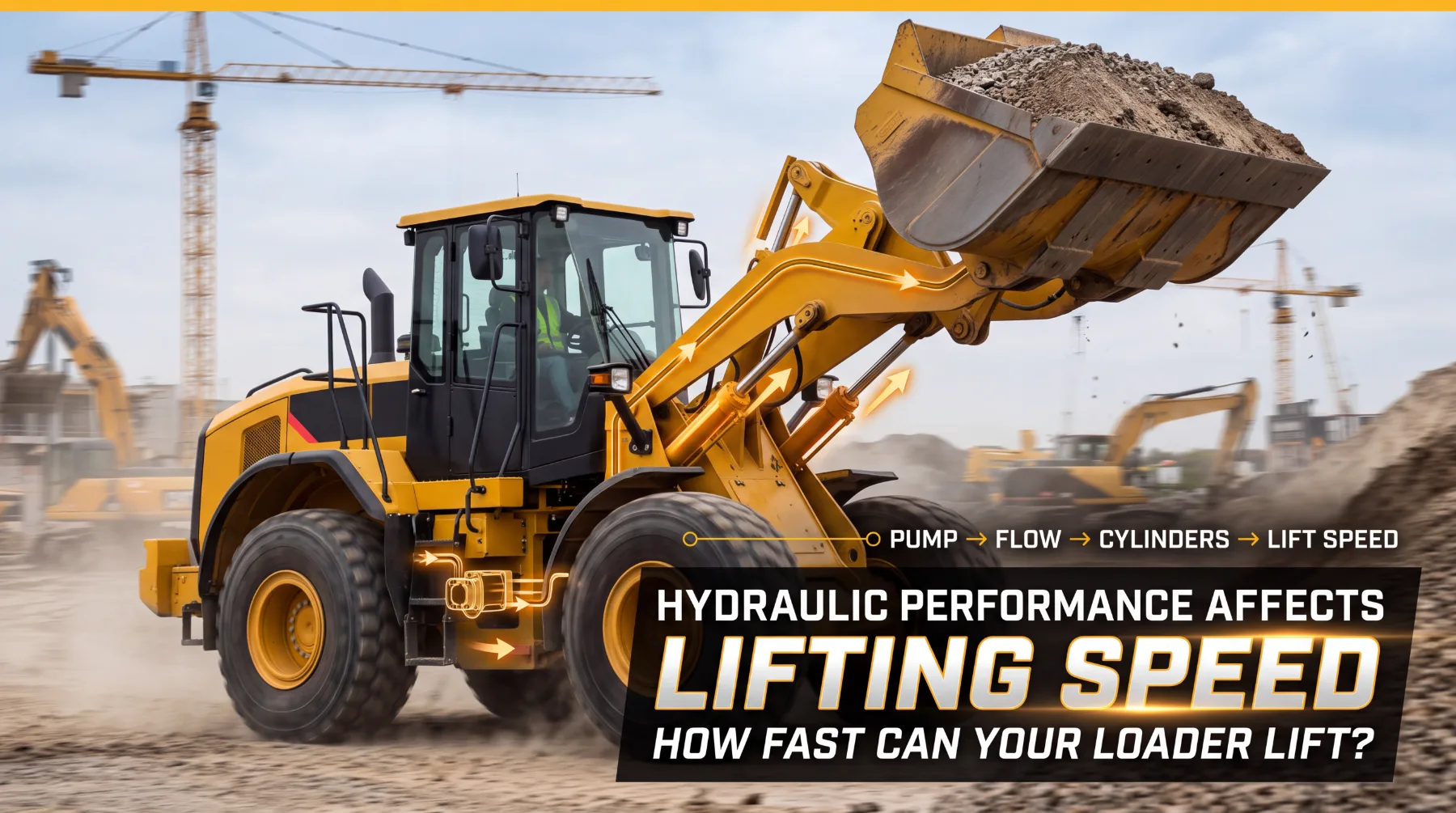
Operators often measure a wheel loader by its bucket size or lift height, yet lifting speed is what shapes how much material moves in a day. How quickly the arms raise a loaded bucket decides your cycle times, your fuel use, and how much you accomplish before the shift ends. That speed comes from the hydraulic system, where flow, pressure, cylinder sizing, and engine power all play a part. Understanding how these pieces work together helps you judge a machine’s real performance and choose one that keeps pace with your workload. Here is how hydraulic performance drives arm lifting speed.
Hydraulic Flow Directly Affects Lifting Speed
Hydraulic flow is the single biggest factor in how fast a wheel loader raises its arms. The hydraulic pump supplies oil to the lift cylinders, and the rate at which that oil arrives, measured in gallons or liters per minute, determines how quickly the cylinders extend. When more usable flow reaches the cylinders each second, the pistons move faster, and the loader arms rise more quickly as a result. When flow is limited, the same lift feels slow, no matter how strong the machine is in other respects.
Think of flow as the volume of oil filling the cylinders. A cylinder has to fill completely to extend fully, so the faster you can push oil into it, the faster the arm climbs. This is why flow capacity matters so much on machines that lift constantly through a shift. A loader with generous flow completes each raise a little quicker, and across hundreds of cycles those seconds add up to meaningful productivity.
Higher flow only helps when the rest of the system can use it, though. The pump must be able to deliver that flow reliably, and the cylinders must be sized to convert it into motion. A machine advertising strong flow figures still needs the capacity to sustain them under real working loads. When flow is well matched to the loader’s design, the arms respond briskly and predictably every cycle. That responsiveness is what keeps operators working at a steady rhythm and material moving efficiently from pile to truck throughout the day.
Hydraulic Pressure Supports Lifting Under Load
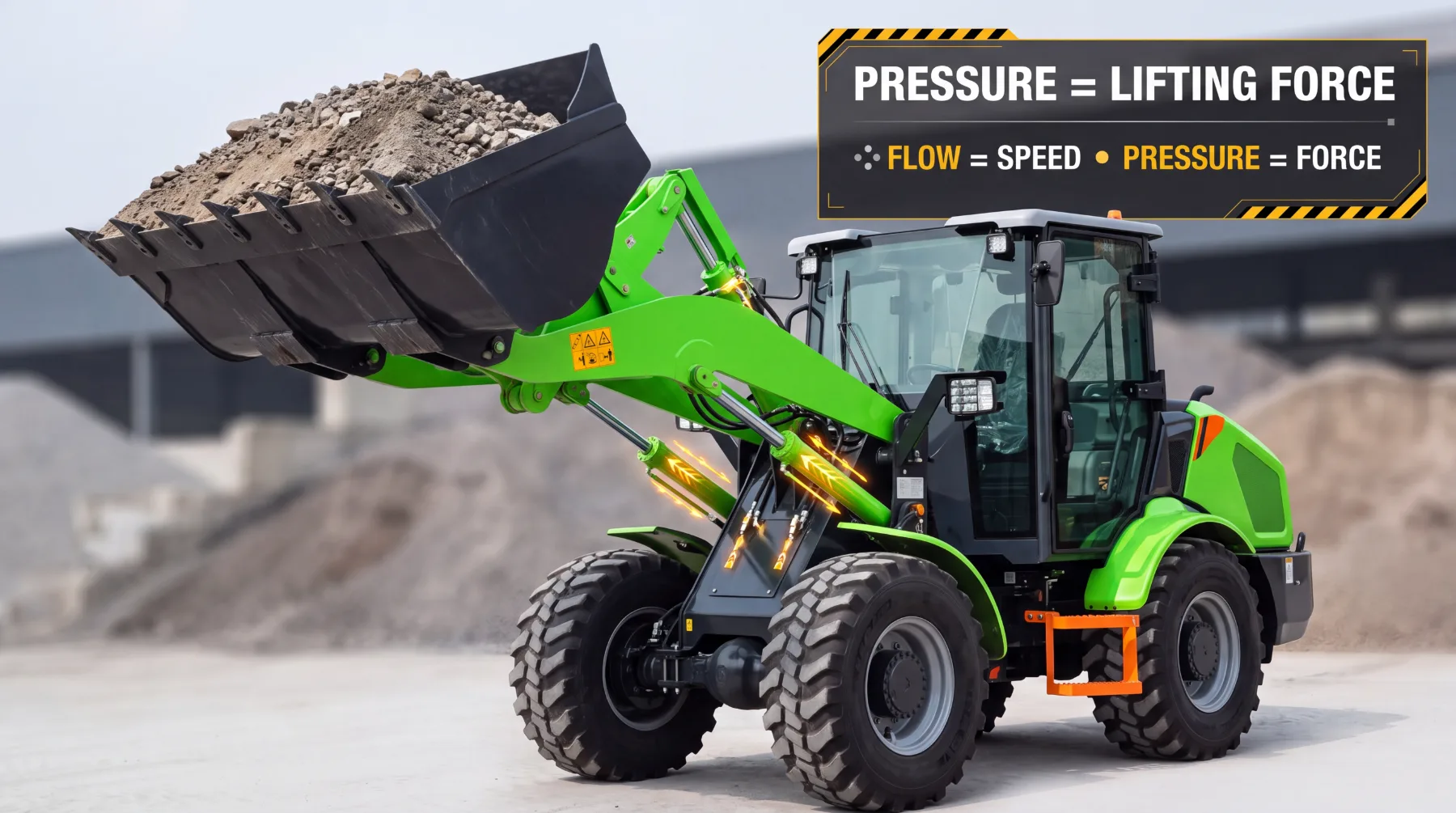
Flow sets the speed, but pressure provides the muscle. Hydraulic pressure, measured in psi or bar, represents the force the fluid applies inside the lift cylinders. That force is what actually raises the loader arm and bucket against the weight of the load and the pull of gravity. Without enough pressure, the system cannot generate the force a heavy bucket demands, and lifting slows or stalls regardless of how much flow the pump delivers.
The importance of pressure grows as loads get heavier. Lifting an empty bucket asks little of the system, so speed stays high. Lifting a bucket packed with dense material asks far more, and the hydraulic system must build enough pressure to overcome that resistance. When a loader has sufficient pressure in reserve, it maintains lifting performance under load without an excessive drop in speed. When pressure runs short, the arms labor and the raise drags out, especially near the machine’s capacity.
A helpful way to picture the relationship is to separate speed from strength. Flow decides how fast the cylinders can move, while pressure decides how hard they can push. A loader needs both working together to lift heavy loads quickly. Strong flow paired with weak pressure moves fast when empty but bogs down under weight. Strong pressure paired with limited flow lifts heavy loads but feels sluggish throughout. The machines that lift heavy buckets briskly are the ones that balance ample flow with the pressure needed to sustain force under real working loads. That balance is what delivers confident, consistent lifting shift after shift.
Load Weight Changes Actual Lift Speed
The lift speed printed on a spec sheet rarely tells the whole story, because actual speed depends heavily on what sits in the bucket. A heavily loaded bucket requires far more hydraulic force to raise than an empty one, so the system works harder and moves more slowly under weight. Lifting speed is not a fixed figure for any loader. It shifts with the load, which is why a machine that raises an empty bucket quickly can slow noticeably when fully loaded.
The reason comes down to how the hydraulic system responds to resistance. As the load increases, the pressure needed to lift it rises, and the system must devote more of its capacity to generate force rather than speed. When the load approaches the loader’s working capacity, lifting speed may decrease because the hydraulics are operating near their limits. Dense materials such as wet sand, gravel, and aggregate load the bucket heavily and put real strain on lift performance, while lighter materials allow quicker raises.
This relationship is worth keeping in mind when comparing machines or planning your work. A loader’s fastest published lift speed usually reflects lighter conditions, so your real-world results depend on the weights you handle every day. Sizing a machine around your typical loads, rather than only its empty performance, gives you a far more accurate sense of what to expect. When the hydraulic system has enough capacity to handle your heaviest routine loads comfortably, lift speed stays strong and consistent. Underestimate the load, and lifting slows exactly when you need productivity most, stretching cycle times and cutting into the material you move each hour.
Pump Capacity Must Match Cylinder Size
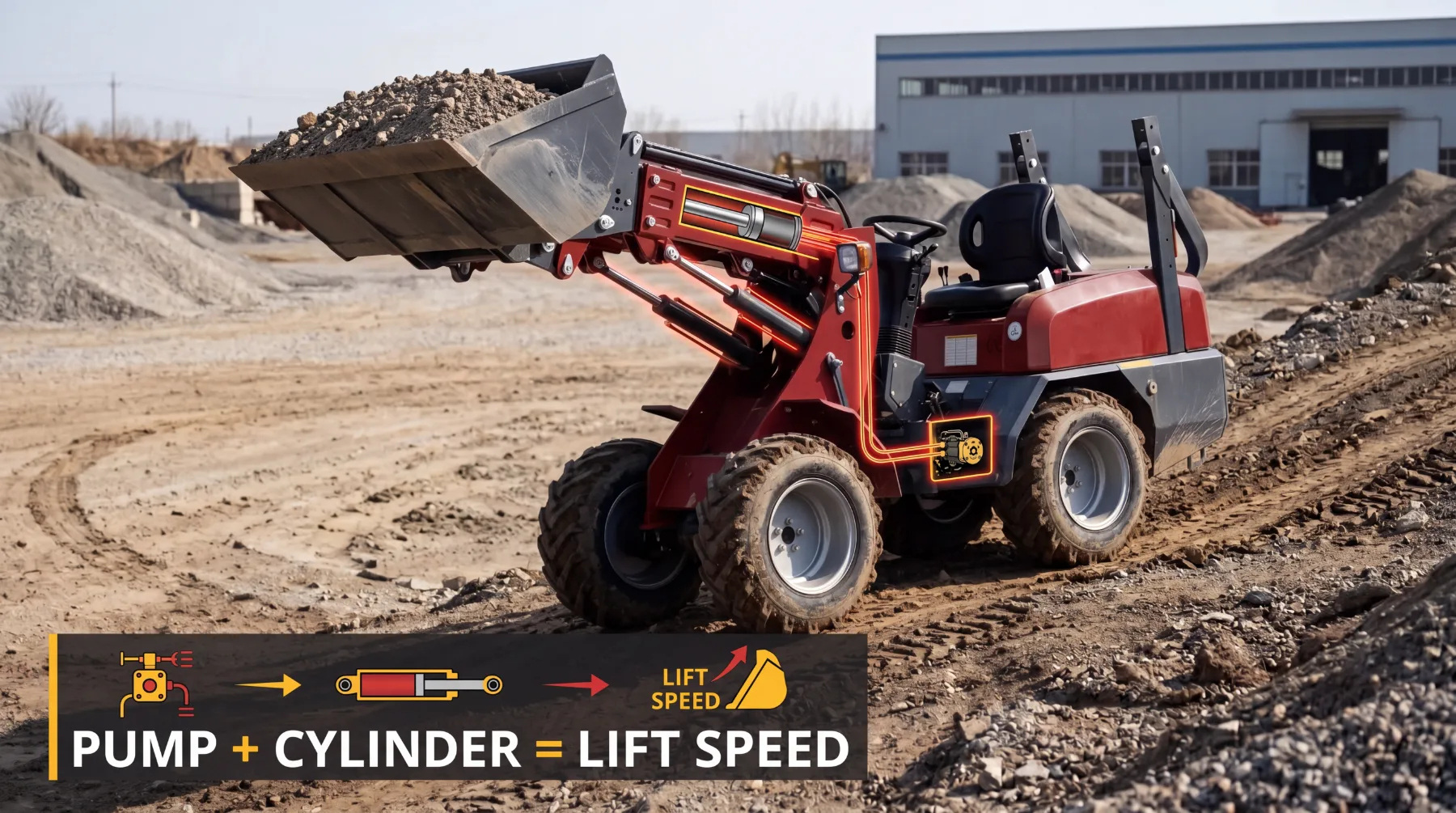
Lift speed does not come from flow alone or cylinder size alone. It comes from how well the two are matched. The pump supplies a certain volume of oil, and the lift cylinders require a certain volume to extend. The relationship between pump flow and cylinder size determines how quickly the arms move, which is why balanced engineering matters more than any single figure. A well-matched system delivers responsive lifting without demanding excessive power from the engine.
Consider how the pairing plays out. A large cylinder holds more oil, so it needs more flow to extend at a given speed. If the pump cannot supply enough flow for that cylinder, the arm moves slowly even though the machine may lift with great force. A smaller cylinder needs less oil, so it can move quickly on modest flow, though it produces less force at the same pressure. Manufacturers weigh these trade-offs carefully to suit the loader’s intended work.
Several points shape how flow and cylinder size work together:
- Cylinder volume: larger cylinders require more oil to extend, so they need matching flow to keep speed up.
- Pump output: the pump must deliver enough flow to fill the cylinders at the desired lifting speed.
- Engine efficiency: a matched system produces responsive lifting without forcing the engine to work harder than necessary.
When pump capacity and cylinder size are properly matched, the loader lifts quickly and efficiently, converting engine energy into motion with little waste. A mismatch, by contrast, either wastes flow the cylinders cannot use or starves cylinders that need more oil. Balanced sizing is what gives a wheel loader the smooth, responsive lift that productive work depends on.
Engine Power Supports Hydraulic Performance
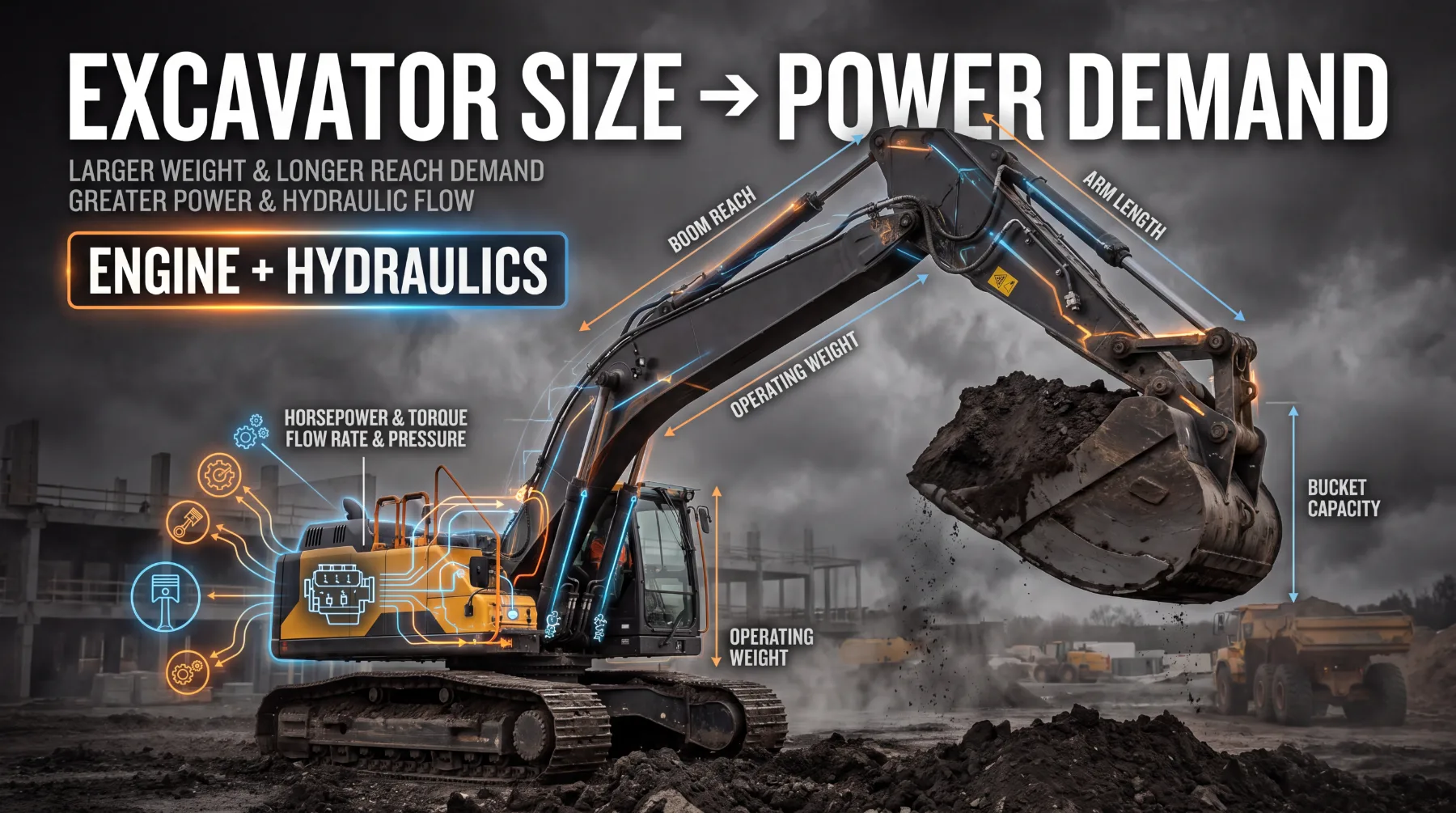
Behind every hydraulic function stands the engine. The engine supplies the power that drives the hydraulic pump, so it sets the ceiling for what the hydraulic system can achieve. When the engine produces ample power, the pump can maintain full flow and pressure even under heavy demand. When engine power falls short of the hydraulic demand, lifting performance suffers, even if the system has adequate flow and pressure ratings on paper.
This becomes clear when a loader works hard. Raising a heavy bucket draws significant power from the pump, and if the engine cannot supply that power without straining, the system cannot sustain its rated performance. The arms may lift more slowly, or the machine may lose speed the moment another function competes for power. An underpowered engine turns strong hydraulic specifications into promises the machine cannot keep under real load.
The demand grows when the loader does more than one thing at once. Driving forward while raising a loaded bucket, or steering while lifting, splits the engine’s output among competing tasks. In those moments, the engine must have enough capacity to feed the drivetrain and the hydraulic pump together. A machine with generous power handles these overlapping demands smoothly, holding its lift speed even while it travels or maneuvers. A machine short on power feels the strain, and lifting slows exactly when the work asks the most of it.
For buyers, the lesson is to view engine power and hydraulic performance as partners rather than separate specs. Strong flow, pressure, and cylinder matching all rely on an engine capable of driving them. When engine power aligns with hydraulic demand, the loader lifts quickly and reliably, delivering the performance the rest of the system was built to provide.
Conclusion
Wheel loader arm lifting speed is never the product of a single spec. It grows from the way hydraulic flow, pressure, cylinder sizing, and engine power work together as one system. Flow sets how fast the arms rise, pressure supplies the force to lift heavy loads, load weight shapes real speed, matched cylinder sizing keeps motion efficient, and engine power drives it all. When you compare machines, look past any one figure and study how the whole hydraulic system is balanced. Match that system to your typical loads and workload, and your loader will lift quickly and dependably, moving more material through every shift.
Frequently Asked Questions
1. What has the biggest effect on wheel loader lifting speed?
Hydraulic flow is the primary factor. The pump supplies oil to the lift cylinders, and the rate that oil arrives determines how fast the cylinders extend and the arms rise. Higher usable flow moves the cylinders faster, producing quicker lifts, provided the rest of the system can use that flow. Pressure, cylinder size, and engine power all contribute as well, but flow directly controls the speed of the motion. When flow is well matched to the loader’s design, the arms respond briskly and consistently through every cycle.
2. What is the difference between hydraulic flow and hydraulic pressure?
Flow and pressure do two separate jobs. Flow, measured in gallons or liters per minute, controls how fast the lift cylinders move, so it governs lifting speed. Pressure, measured in psi or bar, provides the force needed to raise the arm and bucket against the load. A loader needs both. Strong flow with weak pressure lifts quickly when empty but bogs down under heavy loads, while strong pressure with limited flow lifts heavy material but feels slow. Balanced flow and pressure deliver fast, confident lifting under real working conditions.
3. Why does my loader lift more slowly when the bucket is full?
Because a loaded bucket requires far more hydraulic force than an empty one. As the load increases, the pressure needed to raise it rises, and the system devotes more of its capacity to generate force rather than speed. When the load approaches the loader’s working capacity, lifting speed can drop as the hydraulics work near their limits. Dense materials like wet sand and aggregate strain lift performance the most. Published lift speeds usually reflect lighter conditions, so your real speed depends on the weights you handle daily.
4. Why does pump capacity need to match cylinder size?
Because lift speed depends on the relationship between the two. Cylinders need a specific volume of oil to extend, and the pump must supply enough flow to fill them at the desired speed. A large cylinder starved of flow moves slowly despite lifting with force, while a small cylinder can move quickly on modest flow but produces less force. A properly matched system delivers responsive lifting without forcing the engine to work harder than necessary, converting engine energy into motion efficiently rather than wasting flow or starving cylinders.
5. Can engine power affect lifting performance even if the hydraulics are strong?
Yes. The engine drives the hydraulic pump, so it sets the ceiling for what the system can achieve. If engine power is insufficient for the hydraulic demand, lifting performance suffers even when flow and pressure ratings look strong on paper. Raising a heavy bucket, or lifting while driving and steering, draws significant power. An underpowered engine cannot sustain full flow and pressure under that strain, so the arms lift more slowly. Matching engine power to hydraulic demand is essential for reliable, responsive lifting under real load.