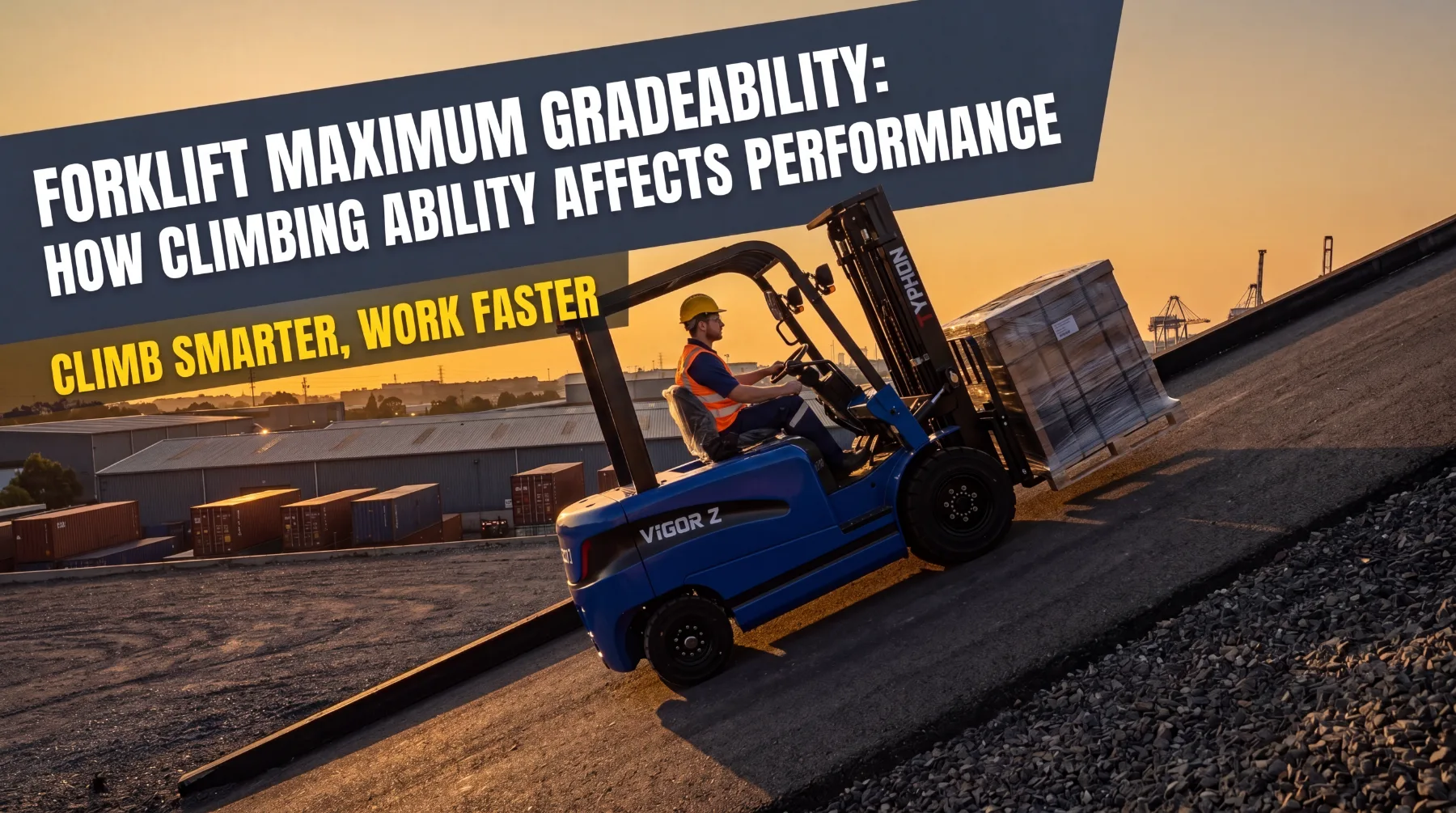
Forklift Maximum Gradeability: How Climbing Ability Affects Performance
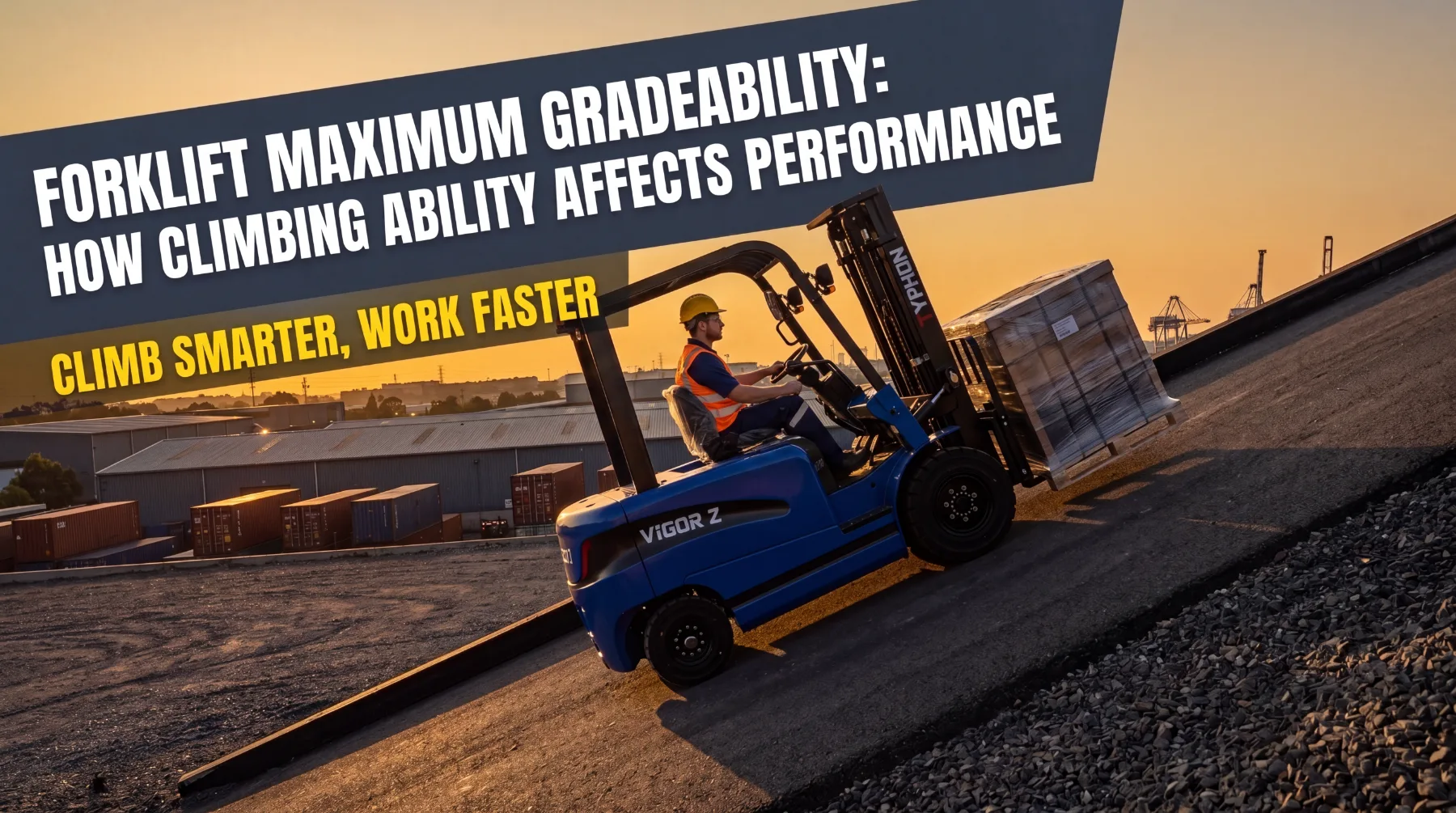 Not every jobsite is flat. Loading docks have ramps, storage yards slope for drainage, and construction sites rarely offer perfectly level ground. When a forklift struggles to climb even a modest incline, everything slows down, and safety risks start to climb along with the grade. That's where maximum gradeability comes in. Gradeability tells you how well a forklift can handle slopes, and it's one of the most overlooked specifications when buyers compare machines. This post breaks down what gradeability really means, how load weight and traction affect climbing ability, and how slope impacts your daily productivity. By the end, you'll know how to choose a forklift with the right climbing capability for your specific jobsite conditions.
Gradeability Shows How Well a Forklift Handles Slopes
Maximum gradeability is the steepest incline a forklift can climb under a defined set of conditions. It's usually expressed as a percentage, where a 20% grade means the surface rises 20 feet for every 100 feet of horizontal distance. This single number gives you a practical measure of how the machine will perform on ramps, sloped yards, and the uneven ground you find across real jobsites. It helps to understand how manufacturers arrive at this figure. Gradeability ratings are typically measured under controlled conditions, often with a specific load and on a clean, dry surface with good traction. That means the published number represents a best-case scenario. In everyday operation, wet pavement, worn tires, or a heavier load can lower the grade your forklift can safely handle. Why does this matter to you? Because a spec that looks impressive on paper may not match what you experience on site. When you review gradeability, consider whether the rating reflects a loaded or unloaded machine, since that detail changes everything about how you interpret it. Here are the key points to keep in mind when reading a gradeability rating:
- Loaded vs. unloaded: Ratings often list both figures, and the loaded number is what matters most for material handling.
- Percentage vs. degrees: Most specs use percentage grade, so confirm the unit before comparing machines.
- Test conditions: Published figures assume ideal traction and surface conditions.
Understanding gradeability gives you a reliable starting point for matching a forklift to your terrain. It turns a vague sense of "this hill looks steep" into a measurable specification you can plan around.
Load Weight Changes Climbing Performance
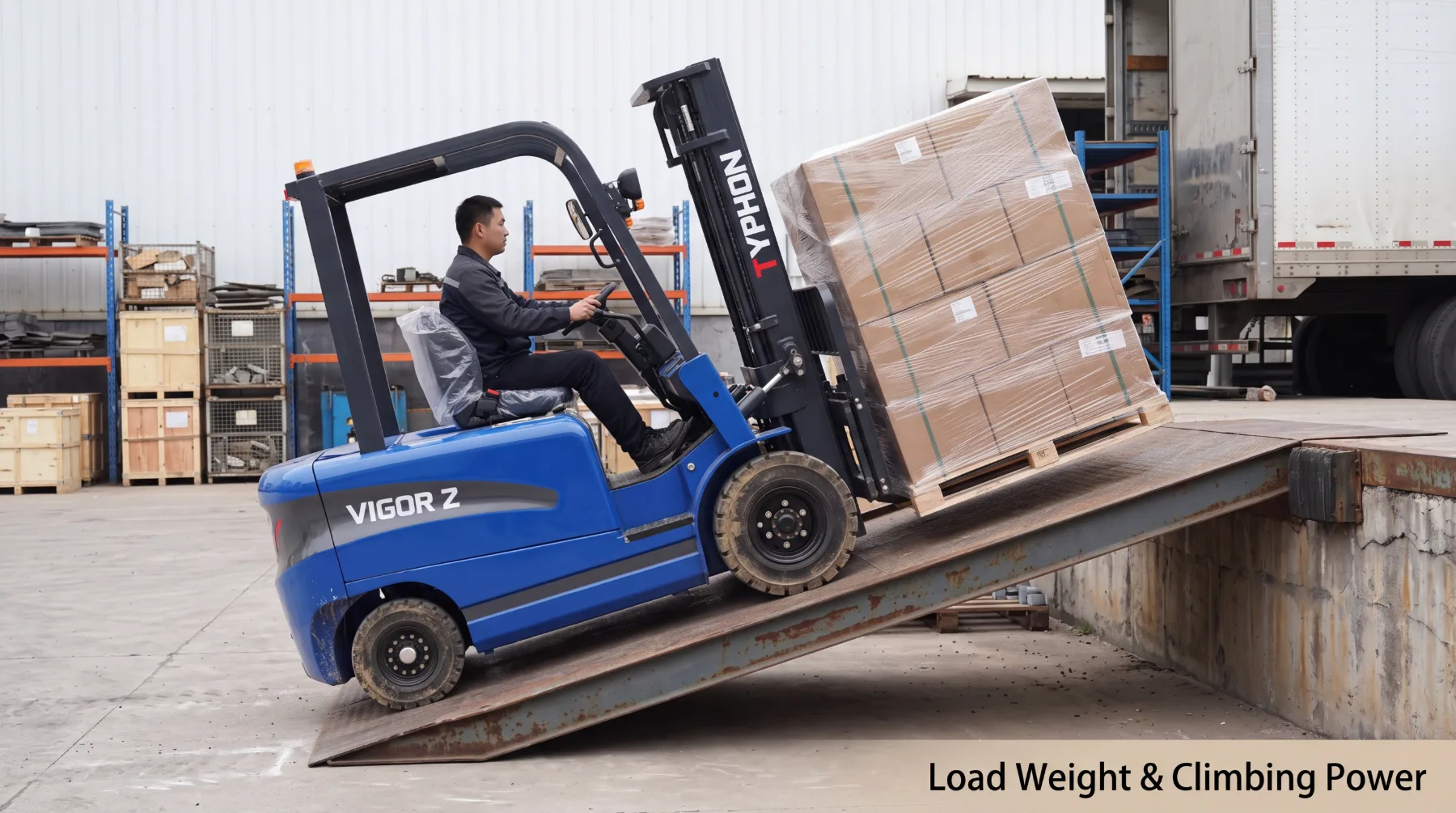 A forklift's climbing ability is not fixed. It shifts depending on how much weight the machine is carrying, and that relationship is direct: the heavier the load, the harder the climb. An unloaded forklift may handle a ramp with ease, while the same machine carrying a full pallet struggles to maintain momentum on that identical slope. The reason comes down to physics. Climbing a grade requires the forklift to move both its own weight and the weight of its load against gravity. As the load increases, the engine and drivetrain must work harder to produce enough force to keep moving uphill. This extra demand can reduce climbing speed and make it difficult to maintain the steady momentum that safe ramp travel requires. Load position adds another layer. A heavy load raised high shifts the machine's center of gravity forward and upward, which affects both stability and traction on an incline. This is why operators are trained to keep loads low while traveling on slopes and to point the load uphill when climbing. Consider how load weight plays out in practice:
- A forklift climbing a ramp at capacity may travel noticeably slower than one carrying a light load.
- Momentum matters, since losing speed partway up a steep grade can leave the machine unable to recover.
- Repeated heavy climbs place added strain on the transmission, brakes, and tires over time.
The practical lesson is to match your expected loads to the forklift's loaded gradeability rating, not its unloaded figure. If your operation regularly moves heavy pallets across ramps, plan around the machine's performance under a full load. That approach keeps travel safe, predictable, and efficient across every trip up the slope.
Traction Is Just as Important as Engine Power
It's tempting to assume that a more powerful engine automatically means better hill-climbing ability. Power certainly helps, but it only matters if the tires can put that power to the ground. A forklift with plenty of engine output will still spin its wheels and stall on a grade if it can't maintain grip. Traction, in short, is where climbing ability is either won or lost. Several factors work together to determine how much traction a forklift has on a slope. Tire condition is one of the most important, since worn or smooth tires grip far less than tires with good tread. The surface itself plays an equally large role. Dry concrete offers strong grip, while wet, icy, or loose gravel surfaces dramatically reduce it. Weight distribution and drivetrain design round out the picture, influencing how effectively the machine transfers power to the driving wheels. When traction falls short, the symptoms are easy to spot: wheel spin, loss of forward momentum, and a machine that feels like it's fighting the hill rather than climbing it. If you're seeing this on a grade the forklift should handle comfortably, the problem is often traction rather than power. A few practical checks can help you protect climbing performance:
- Inspect tire tread regularly and replace tires before they wear smooth.
- Match tire type to your surface, since pneumatic, cushion, and specialty tires each perform differently.
- Keep ramps clean and dry where possible to preserve grip.
Strong engine power and reliable traction go hand in hand. A machine that balances both will climb confidently, while one that relies on power alone will disappoint the moment conditions turn slippery. When you evaluate gradeability, think about the whole system, not just the horsepower rating.
Slope Affects Speed and Productivity
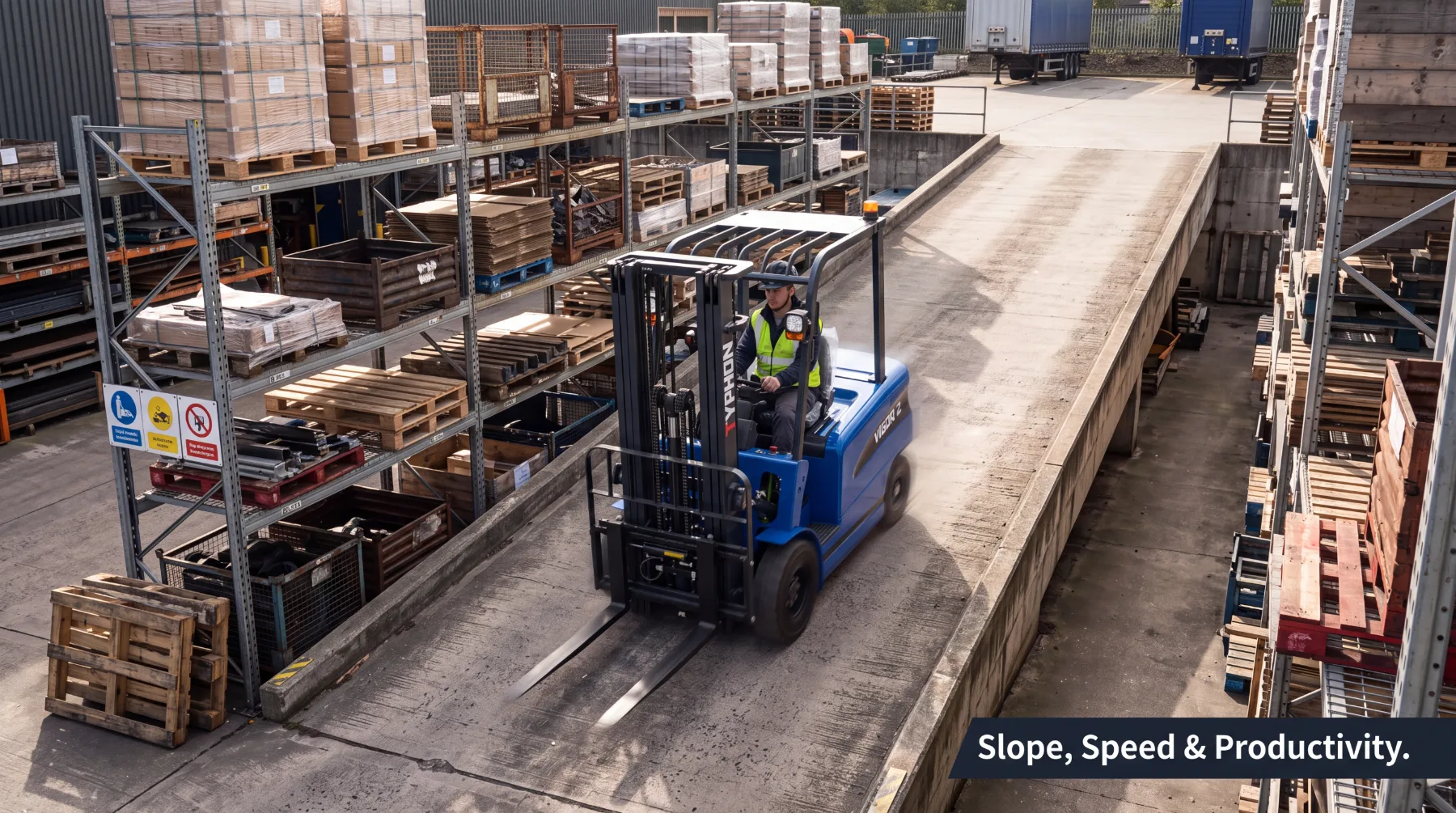 Every incline on your jobsite has a cost, and that cost is measured in time. Climbing a steep grade forces a forklift to slow down, especially when it's carrying a heavy load. Those reduced travel speeds add up quickly across a shift, extending the time needed to move materials from one point to another. On a busy site with frequent ramp travel, the difference can affect your entire throughput. The impact grows with both the steepness of the slope and the frequency of the climbs. A forklift that makes dozens of trips up an incline each day will lose meaningful productive time if it crawls up every grade. Multiply that delay across multiple machines and multiple shifts, and slow climbing becomes a genuine operational bottleneck. A machine with suitable gradeability, by contrast, maintains stronger travel speeds and keeps materials flowing. Ask yourself a simple question: how many times per shift does your forklift travel up a slope? If the answer is "often," then climbing speed deserves serious attention when you choose a machine. There's also a safety dimension to consider. When operators feel pressure to make up for slow ramp travel, they may rush transitions between flat and sloped ground or take corners on grades too quickly. A forklift with comfortable gradeability reduces that pressure by handling slopes smoothly at a reasonable pace. Choosing a machine with headroom above your steepest regular grade pays off in two ways. It preserves travel speed so productivity stays high, and it keeps the forklift operating well within its safe limits rather than straining at the edge of its capability. That combination of speed and safety is what keeps a sloped jobsite running efficiently.
Choose Gradeability Based on the Jobsite
The right gradeability rating isn't a universal number. It depends entirely on the conditions your forklift will face day to day. Before you compare machines, take time to understand your own site, because the demands of a flat warehouse are worlds apart from those of a sloped outdoor yard or a multi-level ramp system. Start by assessing the slopes your forklift will actually encounter. Measure or estimate the steepest grade the machine must climb regularly, then look for a forklift whose loaded gradeability comfortably exceeds that figure. Building in a margin ensures the machine performs well even when conditions are less than ideal, such as after rain or as tires wear over time. Several jobsite factors should guide your decision together:
- Slope steepness: Identify your steepest regular grade and choose a machine that handles it under load.
- Surface conditions: Wet, loose, or uneven surfaces reduce traction, so plan for real-world grip, not lab conditions.
- Travel distances: Long uphill hauls magnify the effect of slower climbing speeds.
- Typical load weights: Heavier loads reduce climbing ability, so size gradeability around your normal, not lightest, loads.
Beyond the numbers, think about how these factors combine on your specific site. A short, steep ramp handled occasionally is a different challenge than a long, moderate grade traveled hundreds of times a day. The machine that fits one may fall short in the other. Selecting a forklift with enough climbing capability protects both safety and efficiency. It gives your operators confidence on every incline and keeps materials moving without the delays and risks that come from asking a machine to work beyond its limits. When gradeability matches the jobsite, everything downstream runs more smoothly.
Conclusion
Maximum gradeability is far more than a line on a spec sheet. It shapes how safely and efficiently your forklift moves materials across ramps, slopes, and uneven ground. Load weight, traction, and slope steepness all influence real-world climbing performance, which means the smartest choice comes from matching a machine's loaded gradeability to the actual demands of your site. Assess your steepest regular grade, factor in your typical loads and surface conditions, and choose a forklift with enough climbing capability to handle it all with room to spare.
Frequently Asked Questions
1. What does forklift gradeability actually mean? Gradeability is the steepest incline a forklift can climb under specified conditions, usually shown as a percentage. A 20% grade means the surface rises 20 feet over 100 feet of horizontal distance. The figure reflects the machine's ability to handle ramps and slopes, but keep in mind that published ratings often assume ideal traction, a clean dry surface, and a specific load. Real-world performance can vary based on your conditions. 2. Why does my forklift climb better when it's empty? Climbing a slope requires the machine to move both its own weight and the weight of its load against gravity. When the forklift is empty, the engine and drivetrain have far less total weight to push uphill, so climbing feels easier and faster. As you add load, the machine works harder, climbing speed drops, and maintaining momentum becomes more difficult. Always plan around the loaded gradeability rating for accurate expectations. 3. Can a powerful engine make up for poor traction on slopes? No. Engine power only translates into climbing ability if the tires can grip the surface and transfer that power to the ground. If traction is poor because of worn tires, wet pavement, or loose gravel, a powerful forklift will simply spin its wheels and lose momentum. Strong climbing performance depends on both adequate power and reliable traction working together, not power alone. 4. How much gradeability do I need for my jobsite? Identify the steepest grade your forklift must climb regularly, then choose a machine whose loaded gradeability comfortably exceeds that figure. Building in a safety margin accounts for wet surfaces, worn tires, and heavier loads. Also consider travel distances and your typical load weights, since long hauls and heavy pallets both increase the climbing demand. Matching the rating to your real conditions keeps operation safe and efficient. 5. Does steep terrain affect how quickly I can move materials? Yes. Climbing steep grades reduces travel speed, especially under heavy loads, which increases the time needed to move materials across a site. When a forklift makes frequent trips up an incline, that lost time adds up across a shift and can become a real bottleneck. A machine with suitable gradeability maintains stronger travel speeds on ramps, helping keep productivity high while operating safely within its limits.