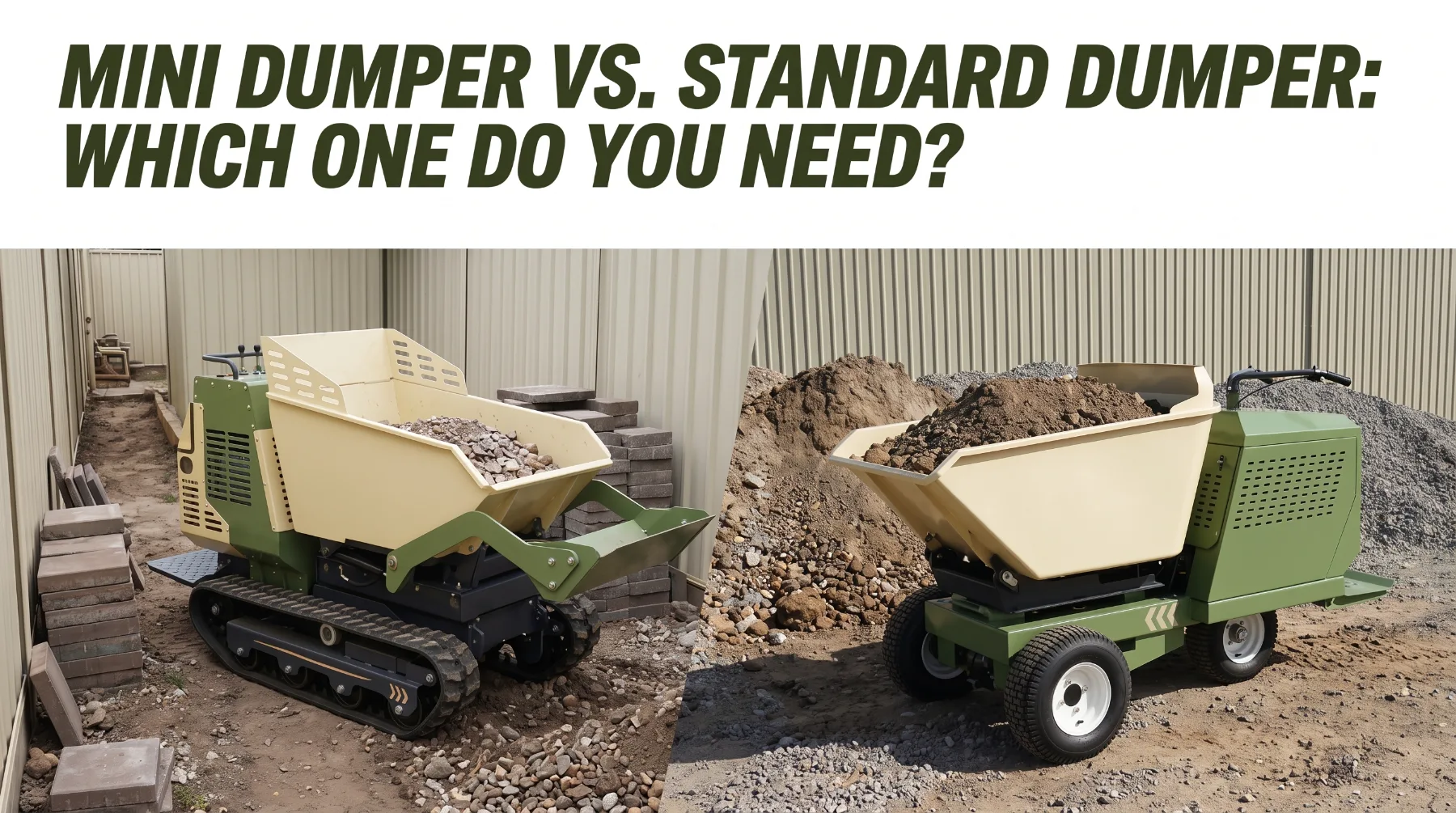
Mini Dumper vs. Standard Dumper: Which One Do You Need?
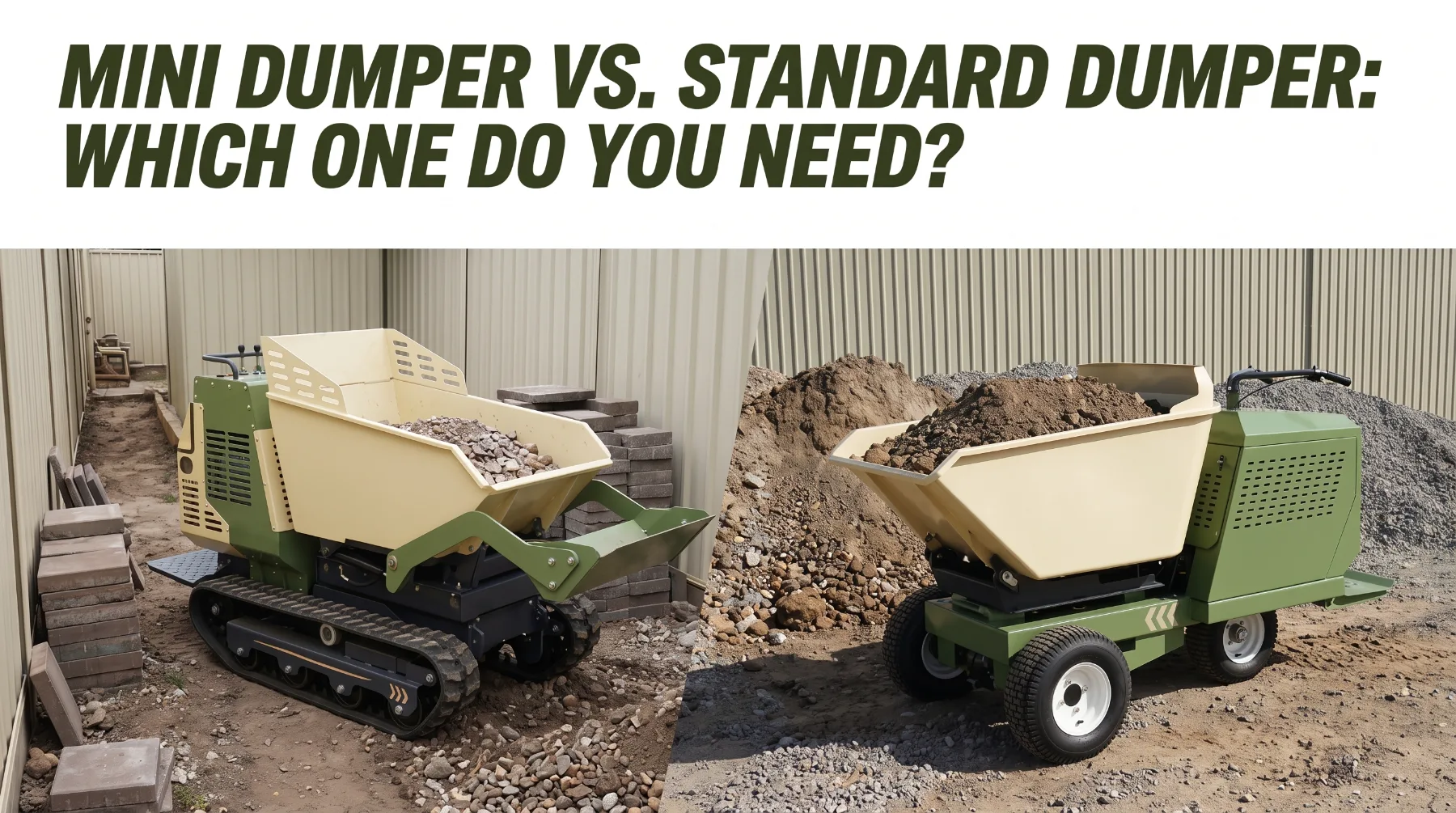
Choosing the wrong dumper can quietly drain your budget and slow your whole crew. Pick a machine that’s too big, and you’ll fight to squeeze it through tight access points. Pick one that’s too small, and you’ll waste hours making extra trips. Both mini dumpers and standard dumpers move material efficiently, but they solve very different problems on the ground. The right choice comes down to your space, your payload, and the conditions you work in every day. This guide breaks down how these two machines compare across the factors that matter most, so you can match the right dumper to the right job and keep your project moving on schedule.
Size and Maneuverability
The most obvious difference between these machines is their footprint, and that difference shapes how you work. Mini dumpers are built with compact dimensions that let them slip into places larger equipment simply cannot reach. Narrow pathways, tight backyards, indoor demolition sites, and cramped urban jobs all favor a smaller machine. When space is limited, a mini dumper turns tight corners, threads through doorways, and repositions quickly without a lot of back-and-forth. That agility keeps work flowing where a bigger unit would stall.
Standard dumpers trade that nimbleness for scale. They’re designed for open work areas where there’s plenty of room to move, turn, and haul without obstruction. On large construction sites, quarries, and expansive earthmoving projects, their size becomes an advantage rather than a limitation. The extra bulk poses no problem when the site has the space to accommodate it.
Here’s how the two compare on maneuverability:
- Mini dumpers handle tight corners, narrow gates, and confined interiors with ease
- Mini dumpers reposition quickly in small work zones with minimal turning space
- Standard dumpers excel in open areas where reach and hauling volume matter more than agility
- Standard dumpers need wider turning radius and clear travel lanes to operate safely
The practical takeaway is simple. Match the machine’s size to the tightest point it must pass through on a regular basis. If your work happens in confined spaces, the mini dumper’s maneuverability keeps you productive. If your site is wide open, the standard dumper’s scale won’t hold you back, and its capacity gives you a clear edge.
Load Capacity and Hauling Needs
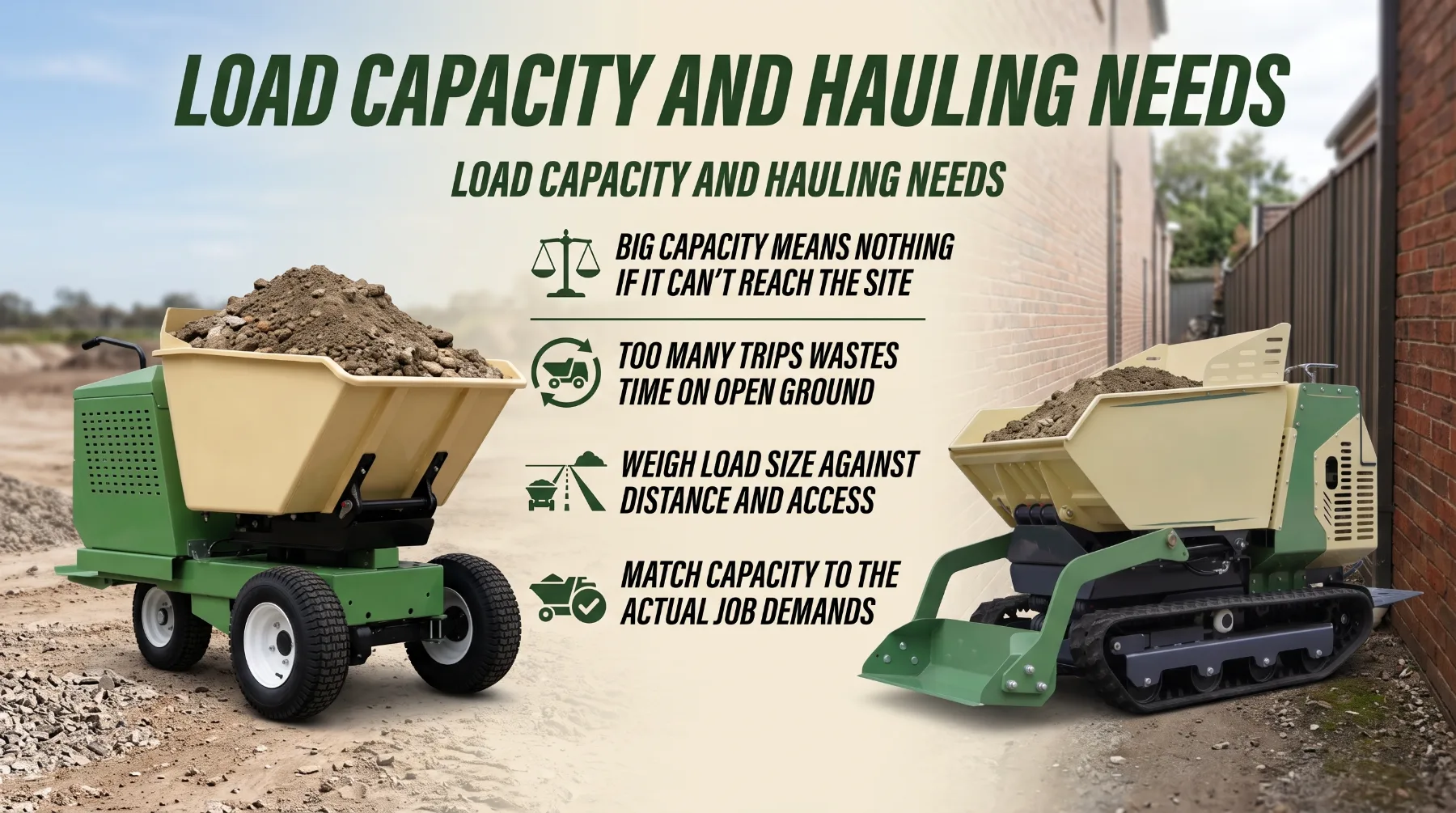
How much material you need to move, and how far, should heavily influence your decision. Standard dumpers generally carry larger loads, which makes them the stronger choice for moving significant volumes of soil, gravel, sand, and construction materials. When a project demands steady, high-volume hauling, a standard dumper covers more ground with each trip. That efficiency reduces cycle times and keeps large jobs advancing at a productive pace.
Mini dumpers approach the work differently. Their smaller capacity suits jobs where loads are modest and access matters more than raw volume. In these situations, making more frequent trips with a compact, maneuverable machine often beats trying to force a large dumper into a space it was never meant to enter. For landscaping, small-scale construction, and confined renovation work, the mini dumper’s size and handling more than offset its lighter payload.
Think through your hauling needs before committing:
- High-volume projects with long haul distances reward the standard dumper’s larger capacity
- Confined or delicate sites favor the mini dumper, even if it means more trips
- Mixed material types may call for evaluating both bucket volume and weight limits
- Travel distance matters, since longer hauls make larger loads more efficient per trip
There’s a balance to strike here. A standard dumper that carries three times the load but cannot reach the work area offers no real advantage. Likewise, a mini dumper making dozens of trips across a wide open site wastes time it doesn’t need to. Weigh your typical load size against the distance and access involved. When capacity aligns with the actual demands of the job, you move material efficiently without paying for scale you can’t use or straining a machine beyond its practical limits.
Jobsite Access
Access is often the deciding factor, and it’s one that operators underestimate until they’re stuck at the gate. A mini dumper can be far easier to transport to the site and put to work where entry points are restricted. Narrow gates, tight pathways, low-clearance areas, and confined work zones all become manageable with a compact machine. In residential settings, historic properties, and dense urban jobs, that ability to get in and start working is worth more than extra load capacity ever could be.
Standard dumpers typically require more room, both to reach the work area and to operate once they’re there. They need wider access routes, more generous turning space, and clear travel lanes. On sites built to accommodate heavy equipment, this poses no issue. But when access is genuinely limited, a large dumper can be impossible to deploy, no matter how capable it is otherwise.
Before you choose, walk the access route the machine will actually use. Consider a few key checkpoints:
- Gate and doorway width compared to the machine’s overall dimensions
- Pathway conditions including slopes, turns, and surface stability along the route
- Overhead clearance for indoor work or areas with low ceilings and obstructions
- Transport logistics such as how the machine gets loaded, delivered, and unloaded
Transport is part of the access equation too. Mini dumpers are generally lighter and simpler to haul, which lowers the cost and effort of getting equipment to and from each job. For contractors who move between multiple small sites, that convenience adds up quickly. If your work regularly involves tight entry points or hard-to-reach areas, the mini dumper’s access advantage becomes one of the strongest reasons to choose it. When access is wide open, the standard dumper faces no such constraint and delivers on its larger capacity.
Terrain and Ground Conditions
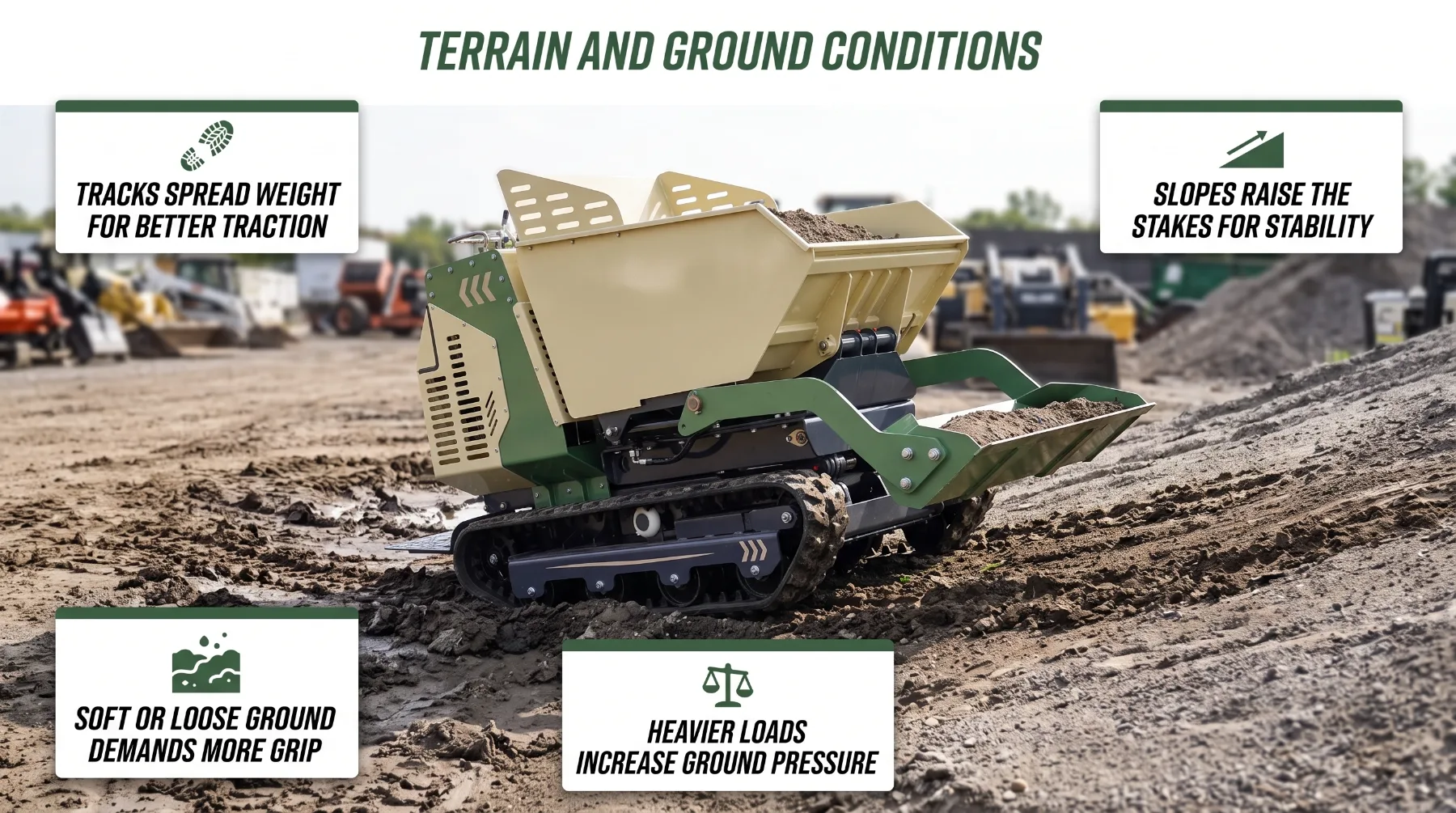
The ground you work on affects performance just as much as the load you carry. Uneven terrain, soft soil, mud, and sloped surfaces all challenge a dumper’s stability and traction. Track-driven and compact dumper designs shine here, spreading weight across a wider footprint to stay planted where wheeled machines might slip or sink. On difficult ground, that traction keeps the machine moving safely and reduces the risk of getting bogged down or losing control on a grade.
The right choice depends heavily on the surfaces you face most often. Firm, level, well-prepared ground gives you flexibility to run almost any machine. Rough, muddy, or unstable conditions narrow your options and reward designs built for grip and balance. Slopes add another layer of complexity, since stability under load becomes critical for both safety and productivity.
Match your machine to the conditions with these factors in mind. Terrain type sets the baseline, so soft or loose ground demands better traction than a paved surface. Slope steepness raises the stakes for stability, especially when the machine is fully loaded. Surface conditions like mud, gravel, or debris influence how well tracks or wheels maintain grip. The type of material being transported also matters, since heavier loads shift the machine’s balance and increase ground pressure.
There’s a safety dimension woven through all of this. A dumper that stays stable on uneven ground protects both the operator and the load, while a poorly matched machine can feel unpredictable or even tip on a bad grade. Track designs generally offer an edge on tough terrain, but they aren’t always necessary on firm, flat sites. Assess your typical ground conditions honestly, then choose the design that keeps the machine steady and productive where you actually work. When traction and stability fit the terrain, you gain confidence and efficiency in equal measure.
Choosing Based on the Application
Pulling everything together comes down to reading your specific project accurately. The best dumper size isn’t a fixed answer, because it depends entirely on the combination of factors your job presents. Available space, required payload, travel distance, and the nature of the project all work together to point you toward the right machine. Experienced site managers weigh these elements as a whole rather than fixating on any single spec.
Start by defining how and where the machine will work. A tight residential landscaping job has completely different demands from a large commercial earthmoving operation. Weighing the following factors helps you land on the right fit:
- Available space at the tightest access point and within the work area itself
- Required payload based on the volume and weight of material you’ll move
- Travel distance between loading and dumping points across the site
- Project type and whether it favors agility or high-volume hauling
- Ground conditions including terrain, slopes, and surface stability
Once you understand these needs, the choice usually becomes clear. If your work is defined by confined spaces, restricted access, and modest loads, the mini dumper is the practical answer. If your project spans open ground with large volumes to move over meaningful distances, the standard dumper delivers far more value per trip.
Some operations benefit from having both on hand, each assigned to the work it handles best. A standard dumper can manage bulk hauling across the main site while a mini dumper handles the tight corners and delicate areas a larger machine can’t reach. Rather than asking which dumper is better overall, ask which one removes the most friction from your specific application. When you align the machine to the work this way, efficiency follows naturally and your project stays on time and on budget.
Conclusion
Mini dumpers and standard dumpers aren’t rivals so much as specialists built for different demands. A mini dumper gives you the agility, access, and easy transport that confined and delicate jobsites require. A standard dumper delivers the load capacity and hauling power that large, open projects depend on. Trying to force one into the other’s role usually costs you time, money, and productivity that a better match would have saved.
The smart choice starts with an honest look at your work. Measure your tightest access point, estimate your typical load size, consider your haul distances, and assess the terrain you cover most often. Let those real conditions guide the decision rather than a single number on a spec sheet. For many contractors, the answer is clear once the site is properly evaluated, and for some, keeping both machines available offers the greatest flexibility.
Ready to match the right dumper to your next project? Review your jobsite requirements, compare the factors above, and reach out to discuss which machine fits your operation best. Making that decision with confidence keeps your crew productive and your projects on track.
Frequently Asked Questions
1. What is the main difference between a mini dumper and a standard dumper?
The core difference is size and capacity. Mini dumpers are compact machines built for tight spaces, restricted access, and smaller loads, making them ideal for confined jobsites and delicate work areas. Standard dumpers are larger and carry greater volumes of material, which suits open sites and high-volume hauling. The right choice depends on your available space, payload needs, and the conditions where you work most often. Neither is universally better, since each is designed to solve a different set of jobsite challenges.
2. Can a mini dumper handle heavy construction materials?
Yes, mini dumpers can move heavy materials like soil, gravel, and debris, but within their smaller capacity limits. They’re well suited to jobs where loads are modest and access matters more than raw volume. If your project involves moving large quantities over long distances, a standard dumper will be more efficient because it carries more per trip. For confined sites or work where a larger machine can’t reach, a mini dumper’s ability to make frequent trips often outweighs its lighter payload.
3. Which dumper works better on soft or uneven ground?
Track-driven and compact dumper designs generally perform better on soft, muddy, or uneven terrain. They spread the machine’s weight across a wider footprint, which improves traction and stability while reducing the risk of sinking or slipping. On firm, level ground, both mini and standard dumpers can operate effectively. When your site includes slopes or unstable surfaces, prioritize a design built for grip and balance, since stability under load is essential for both safety and productivity.
4. How do I know if I need a standard dumper instead of a mini dumper?
Choose a standard dumper when your project involves large volumes of material, long haul distances, and open work areas with generous access. If your site can accommodate a larger machine and you need to move significant quantities efficiently, the standard dumper’s greater capacity reduces cycle times and keeps big jobs moving. If access is restricted, space is tight, or loads are modest, a mini dumper is the more practical choice. Walking your site and measuring access points helps clarify the decision.
5. Is it worth having both a mini and a standard dumper?
For many operations, yes. Having both machines lets you assign each to the work it handles best. A standard dumper can manage bulk hauling across the main site while a mini dumper handles tight corners, narrow access points, and delicate areas a larger machine can’t reach. If your projects regularly involve a mix of open ground and confined spaces, running both in parallel often improves overall efficiency and helps keep your schedule on track. Evaluate your typical workload to decide if the investment makes sense.