

Understanding Stone Crusher Output Size and Production Rate
Getting the most from a stone crusher means understanding two closely linked ideas: the size of the material it produces and how quickly it can produce it. These factors shape everything from the quality of your finished aggregate to how well a machine fits the demands of a given project. Operators who grasp how output size and production rate work together make smarter decisions, waste less material, and keep jobs moving on schedule.
This guide walks through the key elements that govern crusher performance. From the mechanisms that determine particle size to the variables that affect throughput, you will gain a clear, practical picture of what drives results. By the end, you will be better equipped to match a crusher’s capabilities to the work in front of you and to run it with confidence.
What Determines Crusher Output Size?
The size of the material a crusher produces is not a single fixed number. It is the result of several factors working together, and understanding each one gives you real control over the finished product. At the most basic level, output size depends on the crushing mechanism, the gap setting, the feed material, and the final product you are aiming for. Adjusting any of these can change both the size and the consistency of what comes out the other end.
The crushing mechanism sets the foundation. Different crusher types break material in different ways, whether through compression, impact, or shearing action, and each approach produces a characteristic size and shape of finished product. Once the mechanism is chosen, the gap setting becomes the most direct lever an operator has. This is the space through which crushed material must pass before it exits the machine. A tighter gap forces material to be broken smaller before it can escape, while a wider gap allows larger pieces through.
Feed material and the target product round out the picture. The type of rock or concrete going in, along with its hardness and structure, influences how it fractures and what sizes result. Meanwhile, the desired final product guides how all the other settings are dialed in.
Several elements combine to determine output size:
- The crushing mechanism, which establishes how material is broken and its basic size and shape
- The gap setting, the primary adjustment for controlling how small material must be before it exits
- The feed material, whose hardness and composition affect how it fractures
- The desired final product, which sets the target the other factors are tuned to meet
When these elements are balanced with intention, a crusher delivers consistent, predictable results suited to the job at hand.
Feed Size Matters
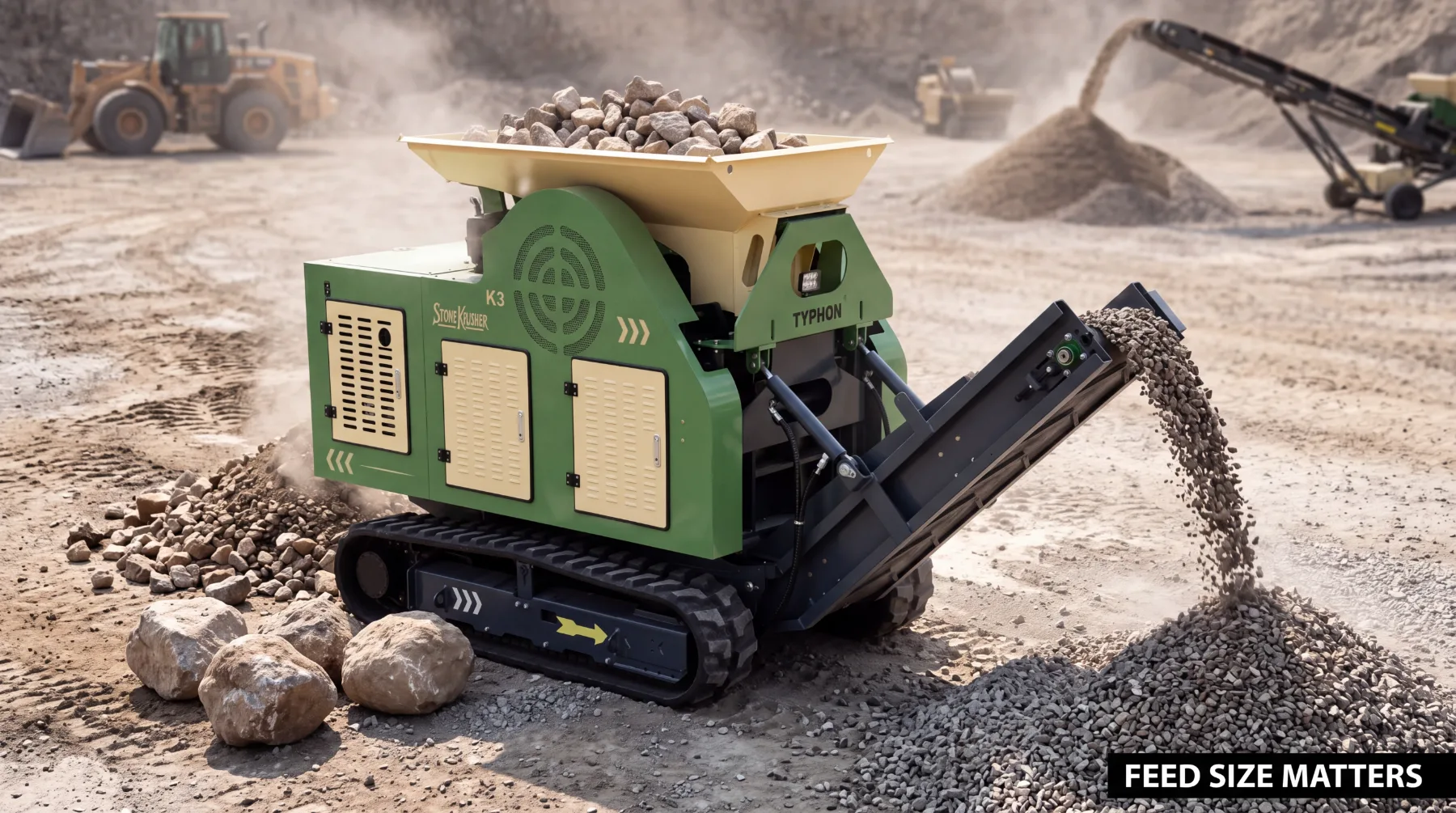
What you put into a crusher has a direct effect on what you get out of it and how smoothly the process runs. The size and type of material entering the machine influence crushing efficiency, output consistency, and even the wear the equipment experiences over time. Feeding material that falls within the machine’s recommended limits is one of the simplest ways to maintain steady, reliable performance shift after shift.
When feed material is properly sized, the crusher can process it in a controlled, efficient manner. The machine works within its designed capacity, breaking material evenly and moving it through the system at a predictable pace. Oversized material, on the other hand, can cause problems. Pieces too large for the chamber may bridge across the opening, create blockages, or place excessive strain on the crusher as it struggles to break them down. This not only slows production but can also lead to uneven output and added wear on critical components.
The type of material matters just as much as its size. Harder, denser rock behaves differently from softer stone or recycled concrete, and each responds to the crushing process in its own way. Understanding how your feed material fractures helps you anticipate the results and keep the operation running smoothly.
Maintaining consistent feed is a practical habit that pays off. Rather than overwhelming the machine with large surges of material, feeding it steadily and evenly keeps the crushing action stable and the output uniform. This kind of controlled feeding protects the equipment, supports consistent particle size, and helps the crusher perform at its best. When feed size and type are managed with care, the entire process becomes more efficient and far more predictable.
Understanding Production Rate
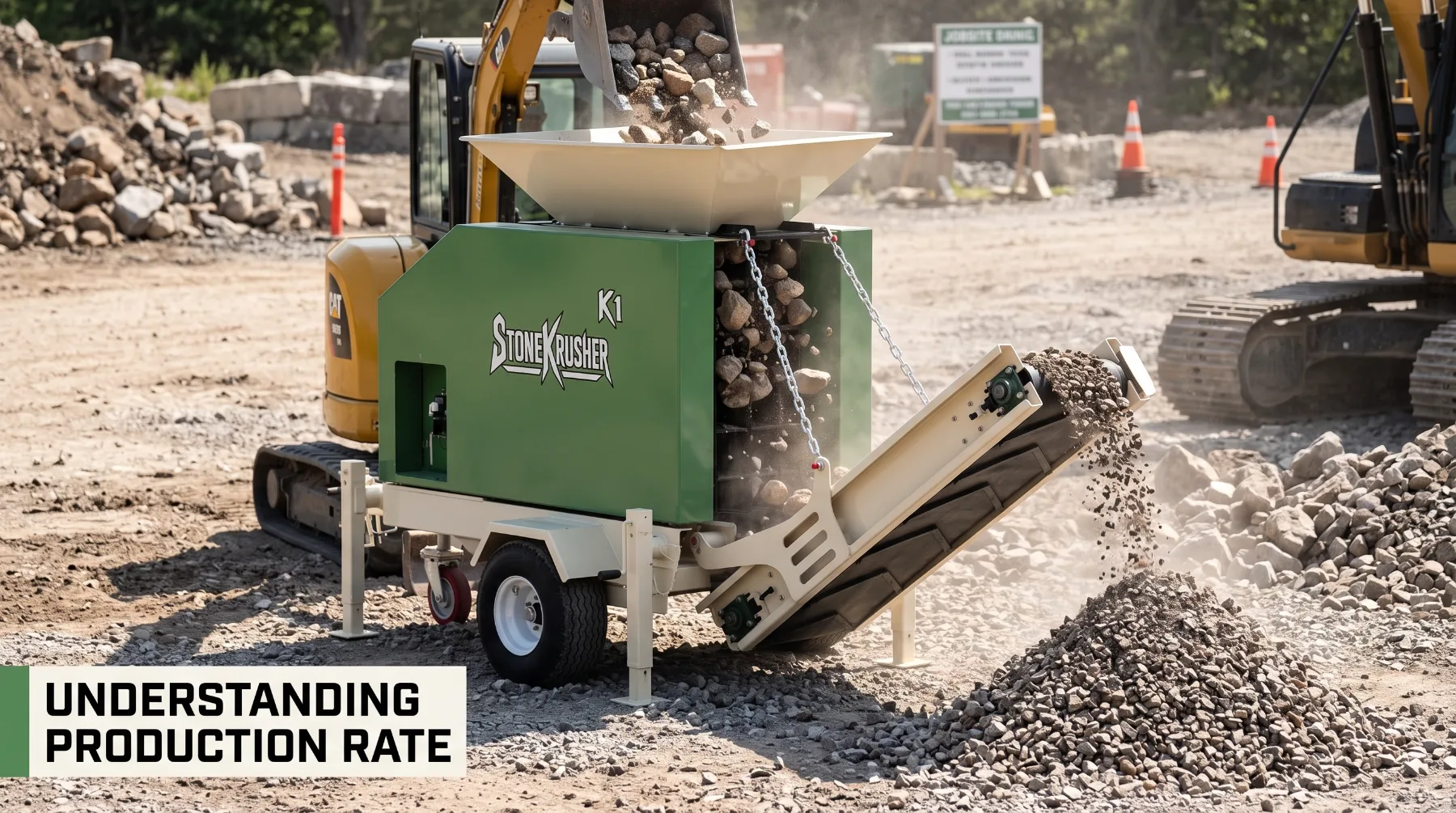
Production rate describes how much material a crusher can process over a given period, and it is one of the most important measures of a machine’s real-world performance. Most often, this rate is expressed in tons per hour, giving operators a clear sense of how quickly they can work through a pile of material or complete a phase of a project. A higher production rate means more material processed in less time, which directly affects project timelines and overall efficiency.
It is important to recognize that the production rate stated for a crusher represents its capability under favorable conditions. Actual output in the field can vary considerably depending on a range of factors, and understanding these variables helps set realistic expectations for any given job.
Several conditions influence how much material a crusher actually processes:
- Material hardness, since harder rock takes more effort and time to break than softer stone
- Feed size, because material properly sized for the machine moves through more efficiently than oversized pieces
- Moisture content, as wet or sticky material can slow the flow and cause buildup within the system
- Operating conditions, including how consistently the machine is fed and the settings in use
Each of these factors can raise or lower the effective production rate. Damp material may cling and reduce throughput, while very hard rock demands more from the crushing mechanism and slows the pace. Even the way an operator feeds the machine plays a role, since a steady, well-managed feed keeps material moving at a consistent rate.
By understanding production rate as a figure shaped by these real conditions, operators can plan more accurately. Rather than assuming peak performance in every situation, they can account for the material and environment at hand, leading to better scheduling, more realistic estimates, and a smoother operation overall.
Crusher Settings Affect Results
The settings on a crusher are powerful tools that shape both the final particle size and the rate at which material moves through the system. Adjusting these settings lets an operator tune the machine to produce exactly the output a job requires, but it is important to understand that particle size and throughput are connected. Changing one often affects the other, and finding the right balance is part of running a crusher well.
The most direct setting is the one that controls the gap through which material passes before exiting. Tightening this gap produces a finer output, forcing material to be broken smaller before it can leave the machine. Opening it up yields a coarser product and generally allows material to pass through more quickly. This relationship between fineness and speed is central to how a crusher performs.
Producing a finer output typically comes with a trade-off. When material must be broken down to smaller sizes, it spends more time in the crushing process, which can slow how quickly it moves through the system. In practical terms, aiming for a very fine product may reduce the effective production rate compared to producing a coarser material. This is not a drawback so much as a reality to plan around. If a job calls for fine aggregate, the operator can expect processing to take somewhat longer and can schedule accordingly.
Understanding this balance helps operators make informed choices. Rather than viewing settings as a simple matter of picking a size, they can weigh the desired particle size against the production pace the job demands. Adjusting settings thoughtfully, with both output size and throughput in mind, allows a crusher to deliver the right material at a practical rate. This kind of informed control is what separates efficient operation from guesswork and helps ensure the finished product meets the project’s requirements.
Matching Output to the Job
The right output size is ultimately defined by how the crushed material will be used. Different applications call for different particle sizes and consistencies, so matching a crusher’s capabilities to the intended end use is essential for practical, efficient processing. Producing material that suits the job avoids wasted effort, unnecessary reprocessing, and material that simply does not fit the purpose.
Consider how varied the end uses can be. Material destined for road base needs a specific size and gradation to compact properly and provide a stable foundation. Landscaping projects often call for particular aggregate sizes chosen for both function and appearance. Construction fill has its own requirements, generally focused on stability and drainage rather than fine finish. Recycling applications, such as processing concrete or asphalt for reuse, depend on producing a consistent, usable product from reclaimed material.
Common applications and their output considerations include:
- Road base, which requires a graded aggregate that compacts firmly for a durable foundation
- Landscaping, where specific sizes are selected for drainage, appearance, and ground cover
- Construction fill, which needs material suited to stability and proper settling
- Recycling, where concrete or asphalt is processed into a consistent, reusable product
Matching the crusher’s output to these requirements makes the entire operation more practical. When the machine is set to produce the size the job actually needs, the material is ready to use without extra handling, and the process flows efficiently from crushing to placement. This alignment also helps with planning, since knowing the target output guides both the settings and the expected production rate.
Thinking about the end use before crushing begins is a straightforward but valuable habit. It ensures the finished material serves its purpose on the jobsite and helps operators get dependable, cost-effective results from every load they process.
Conclusion
Output size and production rate are the two measures that define how well a stone crusher serves a project. Output size is shaped by the crushing mechanism, gap setting, feed material, and target product, while feed size and type play a major role in keeping performance steady. Production rate, expressed in tons per hour, reflects the machine’s capability but shifts with material hardness, moisture, feed size, and operating conditions. Crusher settings tie these ideas together, influencing both particle size and throughput, often with a trade-off between fineness and speed.
Understanding how these factors interact allows operators to run their equipment with confidence and precision. By matching a crusher’s output to the demands of the job, whether road base, landscaping, construction fill, or recycling, you get material that is ready to use and a process that runs efficiently. A clear grasp of output size and production rate turns a stone crusher from a powerful machine into a dependable, well-managed part of your operation.
Frequently Asked Questions
1. What is the main factor that controls the output size of a stone crusher?
While several factors work together to determine output size, the gap setting is the most direct control an operator has. This is the space through which crushed material must pass before it exits the machine. Tightening the gap forces material to be broken into smaller pieces before it can escape, producing a finer output, while widening it allows larger pieces through for a coarser product. That said, the gap setting works alongside the crushing mechanism, the feed material, and the desired final product. The mechanism establishes how material is broken and its basic size and shape, the feed material’s hardness affects how it fractures, and the target product guides how everything is tuned. Balancing all of these gives you consistent, predictable results, but the gap setting remains the primary lever for adjusting size day to day.
2. Why does feed size have such a big impact on crusher performance?
Feed size directly affects how efficiently a crusher can process material and how consistent the output will be. When material falls within the machine’s recommended size limits, the crusher works within its designed capacity, breaking material evenly and moving it through the system at a predictable pace. Oversized material creates problems. Pieces too large for the chamber can bridge across the opening, cause blockages, or place excessive strain on the machine as it struggles to break them down. This slows production, leads to uneven output, and adds wear to important components. The type of material matters too, since harder rock behaves differently from softer stone or recycled concrete. Feeding material steadily and within limits is one of the simplest ways to maintain reliable performance, protect the equipment, and keep particle size consistent throughout the operation.
3. What does production rate mean and why does actual output vary?
Production rate refers to how much material a crusher can process over a given period, most often measured in tons per hour. It gives operators a clear sense of how quickly they can work through material or complete a phase of a project. However, the production rate stated for a machine represents its capability under favorable conditions, and actual field output can vary considerably. Several factors influence the real rate: material hardness, since harder rock takes more time to break; feed size, because properly sized material moves through more efficiently; moisture content, as wet or sticky material can slow the flow and cause buildup; and general operating conditions, including how consistently the machine is fed. Understanding production rate as a figure shaped by these real conditions helps operators plan accurately and set realistic expectations rather than assuming peak performance every time.
4. Does producing a finer output reduce how much material I can process?
Yes, in most cases producing a finer output involves a trade-off with production rate. When material must be broken down to smaller sizes, it spends more time in the crushing process before it can exit the machine, which can slow how quickly it moves through the system. Tightening the gap setting to achieve a fine product means material is worked more thoroughly, so the effective production rate is often lower than when producing a coarser material. This is not a flaw but a reality to plan around. If a job calls for fine aggregate, you can expect processing to take somewhat longer and schedule the work accordingly. Understanding this balance between particle size and throughput lets you make informed choices, weighing the desired output size against the pace the job requires so the machine delivers the right material at a practical rate.
5. How do I choose the right output size for my project?
The right output size depends entirely on how the crushed material will be used, so the best approach is to consider the end use before crushing begins. Different applications have different requirements. Road base needs a graded aggregate that compacts firmly to provide a stable foundation. Landscaping often calls for specific sizes chosen for drainage, appearance, and ground cover. Construction fill requires material suited to stability and proper settling, while recycling focuses on turning reclaimed concrete or asphalt into a consistent, reusable product. Matching the crusher’s output to these requirements makes the operation more practical, since material set to the correct size is ready to use without extra handling or reprocessing. Knowing your target output also guides both the machine settings and the expected production rate, helping you plan the work and get dependable, cost-effective results from every load.